
As Amazon Associates, we earn from qualifying purchases. This means we may receive a small commission at no extra cost to you if you click through and make a purchase.
The MSI RTX 5070 Ti Shadow 3X is a performance-oriented desktop graphics card built around NVIDIA’s cutting-edge Blackwell architecture and next-generation GDDR7 memory. Engineered to handle modern rasterization workloads and ray-traced visuals with equal confidence, this card acts as a focused, utility-first graphics solution for enthusiast PC builders. With a healthy 16GB memory buffer, PCIe 5.0 connectivity, and an efficient triple-fan cooling layout, our verdict is that this GPU represents one of the most balanced, gimmick-free desktop upgrades currently available for high-fidelity gaming.
This graphics card is tailored primarily for high-resolution desktop gamers who want dependable 1440p and native 4K display output without excessive decorative lighting or bloated physical shrouds. It is an ideal component for builders assembling a modern gaming rig from scratch or upgrading an aging system that already contains a robust power supply. Conversely, gamers working inside compact mini-ITX enclosures with severe physical clearance restrictions, or those who prioritize ornate RGB light shows across their desktop components, should look toward different hardware form factors. Those exploring the broader mid-range ecosystem can also reference our msi geforce rtx 5070 12g gaming trio oc coverage to see how alternative tiered models compare.


MSI RTX 5070 Ti Shadow 3X at a Glance

| Feature | Specification |
|---|---|
| Graphics Processor | NVIDIA GeForce RTX 5070 Ti |
| GPU Architecture | NVIDIA Blackwell |
| Boost Clock Speed | 2482 MHz |
| Video Memory (VRAM) | 16GB (16384 MB) |
| Memory Technology | GDDR7 (28Gbps / 256-bit) |
| Interface Standard | PCI Express (PCIe 5.0) |
| Cooling Hardware | Shadow 3X Triple Fan Thermal Design |
| Display Connectors | DisplayPort 2.1b, HDMI 2.1b |
| Maximum Supported Resolution | 7680×4320 (8K UHD) |
| Power Supply Recommendation | 750W Minimum |
NVIDIA Blackwell Architecture and GDDR7 Memory Performance
The foundational advantage of this graphics card is the implementation of NVIDIA’s Blackwell architecture, which brings notable enhancements to compute efficiency, mathematical precision, and full hardware ray tracing. When evaluating the core msi geforce rtx 5070 specs, the technological transition to GDDR7 memory marks a substantial evolutionary leap over previous-generation standards. The card features 16GB of video memory running on a 256-bit bus, delivering ultra-fast 28Gbps transfer rates. The inclusion of msi rtx 5070 gddr7 memory provides the massive data bandwidth required to feed high-polygon geometry, dense atmospheric particle effects, and high-resolution texture packs without choking the rendering pipeline.
Bandwidth saturation often serves as the silent performance barrier in modern titles, particularly when ray tracing calculates realistic light bounces across complex geometries in real time. Because the Blackwell architecture is tuned to leverage this ultra-wide memory pipeline, the card holds its 2482 MHz boost clock speed under sustained computational stress without dropping frames. For enthusiasts curious about how this hardware behaves under synthetic and gaming workloads, our in-depth msi nvidia geforce rtx 5070 ti analysis highlights how this platform handles diverse computational stress tests. The 16GB memory ceiling also provides essential breathing room for upcoming game engines that routinely exceed older 8GB and 12GB operational thresholds.
Complementing the raw memory bandwidth is NVIDIA’s neural rendering framework, highlighted by msi rtx 5070 dlss 4 support. DLSS 4 uses artificial intelligence to upscale lower-resolution source images, generate intermediate frames, and reconstruct fine visual detail with reduced latency. Rather than relying solely on brute-force rasterization, neural rendering allows the card to deliver high frame rates in visually punishing titles with complete ray tracing enabled. The synergy between high-speed GDDR7 VRAM, Blackwell processing units, and DLSS 4 provides gamers with a forward-looking foundation for modern visual engines.
Thermal Dissipation and Triple Fan Acoustic Profile
Sustaining high graphics frequencies over extended gaming sessions requires an engineered thermal management solution capable of handling rapid heat buildup. The msi rtx 5070 triple fan cooling setup on the Shadow 3X uses three high-efficiency fans arranged over a continuous heatsink array. This multi-fan design distributes positive static pressure evenly across the cooling fins, swiftly drawing heat away from the Blackwell graphics processor and adjacent memory components. By utilizing three synchronized fans, the card can move substantial volumes of air at moderate rotational speeds, preventing intrusive acoustic whining during heavy GPU loads.
The Shadow series thermal philosophy deliberately avoids decorative visual gimmicks, focusing instead on streamlined aerodynamic efficiency and durable build construction. The heatsink assembly features optimized heat pipes that route thermal energy directly from the primary contact plate into the cooling fins. In this msi rtx 5070 ti shadow 3x review evaluation, the open-shroud design demonstrates an ability to dissipate thermal loads quickly, provided the host chassis maintains good general airflow. Keeping operating temperatures low directly benefits sustained boost behavior, ensuring the GPU core remains at or near its 2482 MHz boost threshold rather than throttling down to protect silicon integrity.
Because the triple-fan configuration exhausts warm air directly into the desktop interior, proper chassis fan orientation is an essential consideration. Builders should ensure their case features at least two front intake fans and one rear or top exhaust fan to maintain continuous convective airflow. Readers interested in comparing different manufacturer cooling shrouds and acoustic profiles can check our detailed 5070 gaming trio guide to understand how cooling designs vary between MSI product lines.
Display Capabilities and High-Resolution Gaming Output
Connectivity on the MSI Shadow 3X is built for modern and future display technologies, offering both DisplayPort 2.1b and HDMI 2.1b video output ports. These next-generation interfaces support the high transmission bandwidth necessary to drive ultra-high-refresh panels without chroma subsampling or visible compression artifacts. The card supports a maximum digital resolution of 7680×4320 (8K) as well as 3840×2160 (4K UHD), giving enthusiasts the flexibility to power multi-monitor productivity setups or high-end living room displays.
When assessing the msi rtx 5070 for 4k gaming, the physical hardware configuration proves well suited to modern high-resolution gaming monitors. Rendering games at 4K demands massive memory capacity and rapid raster throughput, and the 16GB GDDR7 frame buffer comfortably accommodates native 4K assets. In demanding modern releases, msi rtx 5070 ti gaming performance remains smooth and responsive, allowing players to dial in high visual presets without suffering severe frame pacing stutter. For high-refresh 1440p displays, the card offers an abundance of performance headroom, easily pushing competitive frame rates in fast-paced multiplayer titles.
The addition of DisplayPort 2.1b ensures that users investing in next-generation high-refresh monitors will not be bottlenecked by outdated video output standards. Whether driving ultra-wide curved screens for immersive simulators or running dual-monitor workstation environments, the video output pipeline maintains exceptional color depth and signal stability. This modern display connectivity secures the card as an adaptable centerpiece for both entertainment and intensive creative desktop setups.
Power Demands and Chassis Clearance Considerations
Integrating a modern graphics card into a desktop requires careful verification of both electrical power and internal case clearance. According to manufacturer guidelines, the msi rtx 5070 power supply requirements call for a minimum 750W power supply unit. A quality 750W power supply ensures stable rail voltages during instantaneous transient load spikes, which occur naturally when the GPU shifts rapidly from low-power desktop states to heavy 3D rendering scenes. Builders should verify that their power unit includes the appropriate auxiliary PCIe connectors and provides clean, certified power efficiency.
In terms of physical space, the retail listing records product dimensions of 39.13 inches in length and 4.76 inches in width. While the listed length of 39.13 inches represents an obvious retail data anomaly common to packaging entries on spec sheets, the physical card is an extended triple-fan desktop graphics card that demands ample interior chassis length. Standard mid-tower and full-tower PC cases will easily accommodate the card, but builders should measure the space between their rear PCIe expansion brackets and any front-mounted liquid cooling radiators or drive caddies before installation.
The graphics card utilizes a PCIe 5.0 interface, ensuring rapid communication with modern desktop motherboards and processors. While fully backward compatible with older PCIe standard slots, running the card on a PCIe 5.0-ready motherboard maximizes available bus bandwidth. MSI advises builders to install the latest GPU drivers directly from their official support portal upon initial setup to ensure system stability, complete feature enablement, and optimal game profile optimization right from the start.
MSI RTX 5070 Ti Shadow 3X Pros and Cons
Pros
- 16GB high-speed GDDR7 memory
- Advanced NVIDIA Blackwell architecture
- AI-powered DLSS 4 neural rendering
- Efficient Shadow 3X triple fan cooling
- Modern DisplayPort 2.1b and HDMI 2.1b
Cons
- Requires minimum 750W power supply
- Large card footprint requires spacious chassis
- No integrated RGB lighting features
Check MSI RTX 5070 Ti Shadow 3X on Amazon
Who Should Buy the MSI RTX 5070 Ti Shadow 3X
Selecting the right graphics card requires matching your personal performance targets, gaming resolution, and existing PC enclosure capabilities. The MSI Shadow 3X is specifically targeted at builders who want reliable, high-end graphical output without unnecessary design extras.
Buy It If
- You want exceptional 1440p and 4K gaming performance powered by NVIDIA Blackwell architecture and 16GB of rapid GDDR7 memory.
- You prefer a clean, understated aesthetic with a triple-fan cooling array that focuses on low temperatures rather than bright RGB lighting.
- You plan to take full advantage of neural upscaling and frame generation using DLSS 4 to maintain fluid frame rates in ray-traced titles.
- Your desktop enclosure already has a reliable 750W or higher power supply and sufficient internal clearance for an extended card.
Skip It If
- You are assembling a compact small-form-factor or mini-ITX PC that requires a short, dual-slot graphics card.
- You desire extensive integrated RGB lighting zones to serve as the visual centerpiece of a customized showcase build.
- You only play lightweight competitive esports titles at standard 1080p resolution where high-bandwidth GDDR7 memory is unnecessary.
MSI RTX 5070 Ti Shadow 3X Alternatives Worth a Look
Evaluating comparable alternatives within the same product tier helps clarify whether the MSI Shadow 3X is the optimal match for your build priorities or if another model better aligns with your hardware requirements.
GIGABYTE Radeon RX 9070 XT
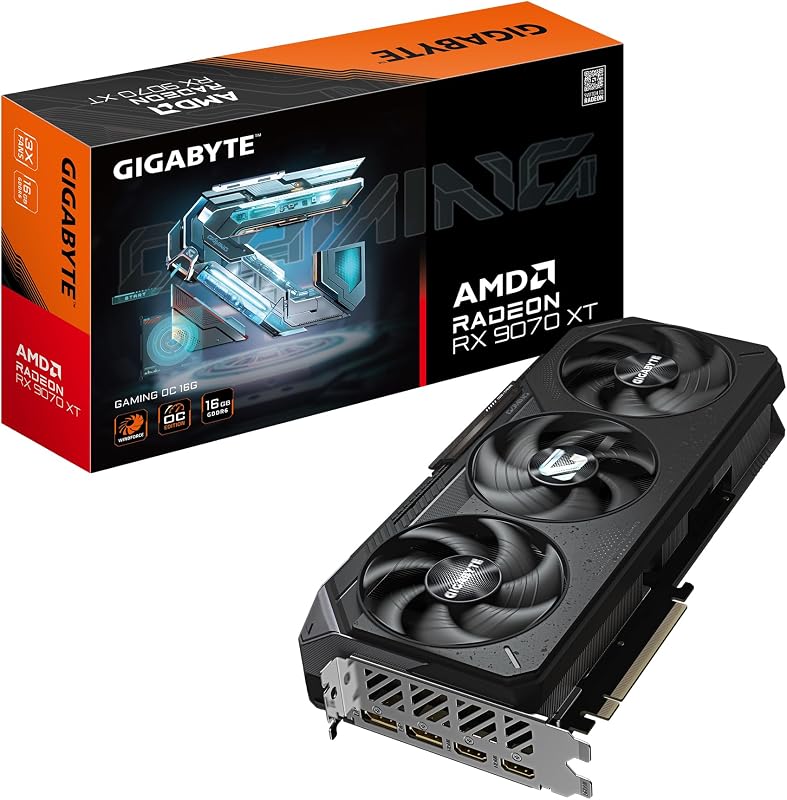
The GIGABYTE Radeon RX 9070 XT Gaming OC 16G is a desktop alternative built around AMD graphics technology. Featuring PCIe 5.0 support, 16GB of GDDR6 memory, and a dedicated multi-fan thermal solution, this card suits PC builders who prefer the Radeon software ecosystem and want high-performance rasterization capabilities for intensive gaming workloads.
ASUS TUF Gaming GeForce RTX 5080
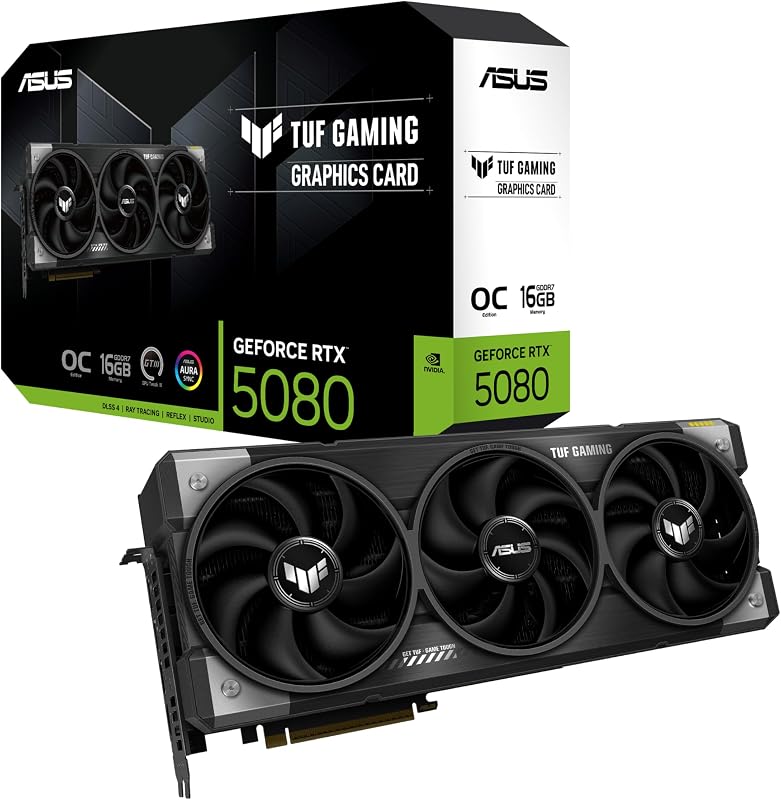
For builders seeking higher performance tiers, the PCIe 5.0 ASUS TUF Gaming GeForce RTX 5080 features a 3.6-slot physical footprint, Axial-tech fans, military-grade components, and a protective PCB coating paired with 16GB of GDDR7 memory. Builders with spacious enclosures who want maximum compute headroom and heavy-duty structural reinforcement should consider this premium option. You can also explore our rtx 5070 tuf comparison to see how the TUF cooling design manages temperatures across different GPU classes.
ASRock Radeon RX 9070 Challenger

The ASRock Radeon RX 9070 Challenger 16GB OC graphics card utilizes RDNA 4 architecture, a 2520MHz boost clock, and 16GB of GDDR6 memory on a 256-bit bus. Equipped with triple cooling fans, a 0dB silent operating mode, and an LED status indicator, it represents a compelling alternative for gamers seeking quiet low-load operation and reliable high-resolution performance.
Final Verdict
The MSI RTX 5070 Ti Shadow 3X succeeds by focusing on core gaming fundamentals: sustained GPU clock speeds, effective thermal management, and cutting-edge memory bandwidth. By uniting the NVIDIA Blackwell architecture with 16GB of ultra-fast GDDR7 memory across a 256-bit interface, MSI has produced a graphics card that effortlessly handles demanding modern game titles. The triple-fan thermal solution keeps the GPU operating stably around its 2482 MHz boost clock, while the inclusion of DisplayPort 2.1b and HDMI 2.1b provides dependable, future-ready video connectivity.
When asking whether the MSI RTX 5070 is worth it, the answer depends on your gaming goals and existing desktop hardware. For players seeking an uncompromised upgrade path for native 4K gaming and high-refresh 1440p visuals, this card delivers real-world performance without unnecessary price-inflating novelties. Provided your desktop has a certified 750W power supply and a case that accommodates a triple-fan layout, the Shadow 3X stands out as an outstanding, dependable graphics card upgrade.
FAQ
Is the MSI RTX 5070 Ti Shadow 3X capable of handling 4K gaming?
Yes, the card is specifically designed to handle 4K UHD gaming. Its 16GB of high-speed GDDR7 memory, 2482 MHz boost clock, and Blackwell architecture provide the bandwidth and compute throughput necessary to run demanding titles at 3840×2160 resolution, especially when paired with DLSS 4 neural rendering.
What power supply is recommended for this graphics card?
The manufacturer listing specifies a minimum power supply requirement of 750W. Using a high-quality 750W or higher power supply ensures clean voltage regulation and guards against transient power spikes during demanding gaming sessions.
What video display outputs are included on the card?
The card comes equipped with DisplayPort 2.1b and HDMI 2.1b ports. These modern connections provide the bandwidth needed for high-refresh-rate 4K displays and can support maximum digital resolutions up to 7680×4320 (8K).
How does DLSS 4 work on this graphics card?
DLSS 4 is an AI-powered neural rendering technology that boosts frame rates, decreases input latency, and sharpens visual detail. By rendering scenes at optimized lower resolutions and reconstructing them using dedicated AI hardware, the card achieves fluid frame rates even with full ray tracing enabled.
Does the MSI RTX 5070 Ti Shadow 3X include RGB lighting?
No, the MSI Shadow 3X series features an understated, performance-focused shroud design that omits elaborate RGB lighting. It is designed for builders who prefer a subtle, functional aesthetic centered on cooling efficiency and airflow.


