
As Amazon Associates, we earn from qualifying purchases. This means we may receive a small commission at no extra cost to you if you click through and make a purchase.
The MSI RTX 5070 Ti Gaming Trio is a full-sized desktop graphics card built around NVIDIA’s Blackwell architecture, paired with 16GB of ultra-fast GDDR7 video memory and an expansive triple-fan thermal assembly. Engineered for high-refresh 1440p gaming and intensive content creation tasks, this factory-overclocked card provides modern DLSS 4.0 frame-generation capabilities alongside heavy-duty thermal management. Our one-line verdict: it delivers exceptionally cool and quiet operation with stellar modern gaming performance, provided your desktop computer case has the substantial interior clearance necessary to handle its massive physical frame.
This card represents an ideal upgrade for PC builders who prioritize whisper-quiet acoustic control under heavy workloads and desire future-proof display support. If you run an expansive mid-tower or full-tower chassis and want steady frame rates without noisy fan spin-ups, this model hits the sweet spot. On the other hand, builders planning compact small-form-factor systems or users with older, cramped cases should look elsewhere, as its sheer footprint creates immediate physical fitment bottlenecks. If you are researching similar options across this generation, our detailed msi nvidia geforce rtx 5070 ti breakdown covers how different engineering styles compare.


MSI RTX 5070 Ti Gaming Trio at a Glance

| Feature Specification | Listing Detail |
|---|---|
| Graphics Processor | NVIDIA GeForce RTX 5070 Ti (Blackwell Architecture) |
| GPU Boost Clock Speed | 2572 MHz |
| Video Memory Configuration | 16 GB GDDR7 (28 Gbps bandwidth, 256-bit bus) |
| Memory Clock Speed | 1750 MHz |
| Cooling Assembly | TRI FROZR 4 with 3 STORMFORCE double ball bearing fans |
| Acoustic Control | ZERO FROZR zero-RPM silent idle mode |
| Physical Dimensions and Weight | 338 mm length, 2.5-slot profile, 1310 grams weight |
| Power Consumption & Connector | 250W power consumption, 16-pin connector |
| Recommended Power Supply | 650W or greater |
| Display Output Ports | 3x DisplayPort 2.1b, 1x HDMI 2.1b (up to 4K at 480Hz) |
Physical Dimensions, Form Factor, and PC Case Clearance
Understanding the exact 5070 gaming trio dimensions is critical before finalizing your build plans. The MSI RTX 5070 Ti Gaming Trio measures an imposing 338mm in total length and occupies 2.5 PCIe expansion slots inside your chassis. At a measured weight of 1310 grams, it is a substantial piece of hardware that requires serious structural planning. While standard dual-fan graphics cards generally fit inside almost any generic ATX tower, a 338mm card stretches into territory commonly reserved for flagship cooling designs. Buyers must carefully measure the distance between the rear expansion brackets and any front-mounted case fans, liquid-cooling radiators, or drive cages before attempting installation.
In addition to raw horizontal length, the card’s 2.5-slot profile demands vertical clearance on your motherboard. The heatsink assembly hangs down beyond the initial two PCIe bracket spaces, which can obstruct adjacent PCIe slots often used for sound cards, capture cards, or extra expansion risers. Motherboard layout planning is essential to prevent blocking essential front-panel system headers along the bottom edge of the board. Furthermore, the 1310-gram weight means that GPU sag over extended periods is a real mechanical consideration. Using an anti-sag support bracket or chassis pillar is strongly recommended to protect both your motherboard PCIe slot and the card’s structural integrity.
The structural rigidity of the card is reinforced by a solid metal backplate, which runs the entire length of the PCB. This metal plate prevents twisting and PCB warping, while also featuring a dedicated perforated design at the rear end. This flow-through cutout allows hot exhaust air to pass directly through the cooling fins toward your case’s top and rear exhaust fans, rather than recirculating warm air back down toward the motherboard surface. Builders with compact mid-towers will need to double-check their case specifications, as front-mounted AIO radiators frequently reduce maximum GPU clearance by 30mm or more, turning what looks like a compatible enclosure into an uncomfortably tight fit.
Thermal Architecture and Acoustic Profile of Tri Frozr 4
MSI equips this card with the rtx 5070 ti tri frozr 4 cooling solution, an engineering suite designed to maintain aggressive clock speeds without generating noticeable acoustic distraction. The cooling assembly relies on three proprietary STORMFORCE fans, each engineered with seven uniquely textured blades designed to optimize directed airflow while minimizing aerodynamic turbulence. Underneath the shroud, these fans spin on double ball bearings, which ensure smooth rotation, minimize mechanical friction, and significantly extend long-term operational lifespan compared to basic sleeve-bearing alternatives.
Direct thermal contact is handled by a nickel-plated copper baseplate paired with precision-machined heat pipes. The baseplate draws thermal energy away from the graphics silicon and the surrounding GDDR7 memory modules simultaneously, distributing the heat across an Airflow Control fin radiator array. Dedicated thermal pads line the critical power delivery stages and electrical components, ensuring that heat escapes uniformly into the fin stack. For users comparing cooling designs across different product tiers, reading our evaluation of the msi geforce rtx 5070 12g gaming trio oc provides helpful perspective on how triple-fan setups manage thermal loads across various GPU configurations.
When it comes to everyday noise, the msi 5070 gaming trio noise level remains exceptionally well-mannered thanks to ZERO FROZR technology. This automated 0 RPM feature keeps all three fans completely stationary whenever the GPU is idling, browsing desktop applications, or processing light multimedia playback. As temperatures rise during demanding gaming sessions or 3D rendering tasks, the fans smoothly engage without sudden auditory spikes. Even under sustained gaming stress, the oversized heatsink array allows the fans to run at modest rotational speeds, keeping operating sound levels at a soft, unintrusive hum that easily blends into background ambient room noise.
Blackwell Architecture and GDDR7 Gaming Performance
Under the shroud, the msi rtx 5070 ti gaming trio oc harnesses NVIDIA’s Blackwell architecture, delivering a substantial technological leap for modern desktop rendering. Out of the box, the card operates with a factory-tuned GPU clock speed of 2572 MHz and a memory clock speed of 1750 MHz. This silicon foundation includes extreme 4th-generation RTX ray-tracing hardware, enabling accurate, real-time light simulation, realistic reflections, and lifelike atmospheric ambient occlusion. The architecture is engineered specifically to excel at high-refresh QHD and 1440p resolutions, while comfortably handling 4K gaming across modern titles.
Memory bandwidth is a standout highlight, as this model features 16GB of next-generation GDDR7 memory running across a 256-bit interface at a swift 28 Gbps. This advanced rtx 5070 ti gddr7 performance eliminates data bottlenecks that commonly plague complex high-resolution texture packs and dense ray-traced game worlds. The generous 16GB memory buffer ensures that gamers and creative professionals will not quickly hit VRAM limits when loading large ray-traced assets or running generative AI models, making the card far more durable for long-term gaming than older generations limited to 12GB or less.
Gamers leveraging the 5070 gaming trio for gaming will also benefit from support for NVIDIA DLSS 4.0. This modern neural rendering technology leverages dedicated AI processing cores to generate high-quality frames and optimize overall latency. DLSS 4.0 helps boost frame rates significantly in computationally heavy games without muddying visual clarity, ensuring that titles with demanding path tracing or full ray tracing run smoothly. Whether you are playing fast-paced competitive esports titles that benefit from stable high frame rates or exploring vast open-world single-player titles with maximum graphic settings, the combination of Blackwell execution units and GDDR7 memory ensures steady, fluid output.
Power Requirements, Electrical Protection, and PSU Sizing
Understanding the 5070 gaming trio power requirements is crucial for ensuring stable, safe system operation. The MSI RTX 5070 Ti Gaming Trio features a specified power consumption of 250W under maximum load, drawing juice through a single 16-pin power connector. MSI lists the official 5070 gaming trio psu requirements at a 650W power supply unit or greater. This 250W power rating demonstrates notable energy efficiency for a card in this performance bracket, allowing users with existing quality 650W or 750W power supplies to upgrade without necessarily needing to replace their entire power unit.
Beneath the cooling shroud, the printed circuit board incorporates robust electrical engineering designed to withstand prolonged heavy usage. MSI has integrated high power limit circuits alongside high-end electrical protectors on the PCB. These onboard protections guard the core silicon against sudden voltage spikes, transient load fluctuations, and electrical irregularities. For builders who want to compare how power configurations differ among contemporary enthusiast graphics cards, our breakdown of the rtx 5070 tuf details alternative hardware architectures and electrical delivery approaches.
When assembling your rig, proper power cable connection is essential. The modern 16-pin connector must be seated completely and firmly into the graphics card header, with no extreme bending near the connector head. Ensure your power supply provides clean, dedicated power cables from the PSU rather than using daisy-chained splitters. If you pair this graphics card with an energy-intensive high-core-count desktop CPU, upgrading to a 750W or 850W power supply is smart practice to provide comfortable headroom for system-wide transient power spikes during intense multitasking or peak gaming loads.
Display Outputs and External Connectivity
The MSI RTX 5070 Ti Gaming Trio is outfitted with an up-to-date suite of external display connectors, featuring three DisplayPort 2.1b connections and a single HDMI 2.1b port. This modern port configuration supports ultra-high resolutions up to 7680×4320 (8K), making the card an adaptable solution for multi-monitor workstations, high-end sim rigs, and cutting-edge gaming displays. The HDMI 2.1b interface supports up to 4K resolution at an incredible 480Hz refresh rate, delivering ultra-fluid motion on the newest high-refresh monitors and high-end OLED panels.
The card communicates with the host system via a modern PCIe 5.0 x16 interface, maximizing available bus bandwidth between the motherboard and graphics memory. Content creators working with multi-screen setups can run up to four displays simultaneously, organizing timelines, preview monitors, and system monitors across separate displays without needing additional hardware splitters. The presence of the newest DisplayPort 2.1b standard ensures that as newer monitor generations release with expanded transmission bandwidth, this graphics card will support high refresh rates without relying on heavy display stream compression.
MSI RTX 5070 Ti Gaming Trio Pros and Cons
Pros
- Whisper-quiet TRI FROZR 4 triple-fan cooling system
- Zero-RPM mode for silent desktop idle operation
- Fast 16GB GDDR7 memory with 28 Gbps bandwidth
- Modern DisplayPort 2.1b and HDMI 2.1b output ports
- Reinforced metal backplate with perforated thermal airflow
Cons
- Massive 338mm length challenges smaller PC cases
- Substantial 1310-gram weight requires anti-sag support
- Requires modern 16-pin power connector
Check MSI RTX 5070 Ti Gaming Trio on Amazon
Who Should Buy the MSI RTX 5070 Ti Gaming Trio
Evaluating whether this card matches your specific build requires balancing physical chassis constraints against your performance expectations. Below is a practical breakdown to help you make a confident decision.
Buy It If
- You prioritize near-silent operation: The TRI FROZR 4 cooling assembly, STORMFORCE double ball bearing fans, and ZERO FROZR 0 RPM mode keep acoustic output minimal even under prolonged gaming loads.
- You own a spacious mid-tower or full-tower case: Your chassis has well over 340mm of horizontal GPU clearance, accommodating the 338mm length without interfering with front intake fans or liquid cooling radiators.
- You play demanding titles at 1440p or 4K: The combination of 16GB GDDR7 memory, Blackwell architecture, and DLSS 4.0 ensures ample frame rates in modern games with intensive ray tracing.
- You want modern display bandwidth: You plan to run high-refresh displays using native DisplayPort 2.1b or HDMI 2.1b outputs supporting up to 4K at 480Hz.
Skip It If
- You build inside compact or mini-ITX cases: At 338mm long and 2.5 slots wide, this card simply will not fit inside standard small-form-factor enclosures.
- Your current power supply lacks 16-pin support: If you run an older, lower-wattage power supply under 650W or lack modern 16-pin cabling, an upgrade to your power supply will be necessary first.
- You only play lightweight esports titles at 1080p: If your gaming consists strictly of less-demanding esports games on a standard 1080p monitor, the 16GB GDDR7 frame buffer and heavy triple-fan cooling package offer far more hardware than your needs require.
MSI RTX 5070 Ti Gaming Trio Alternatives Worth a Look
If the physical dimensions or technical specifications of this card do not perfectly align with your build requirements, several other graphics cards from the same hardware generation provide distinct alternatives.
GIGABYTE Radeon RX 9070 XT
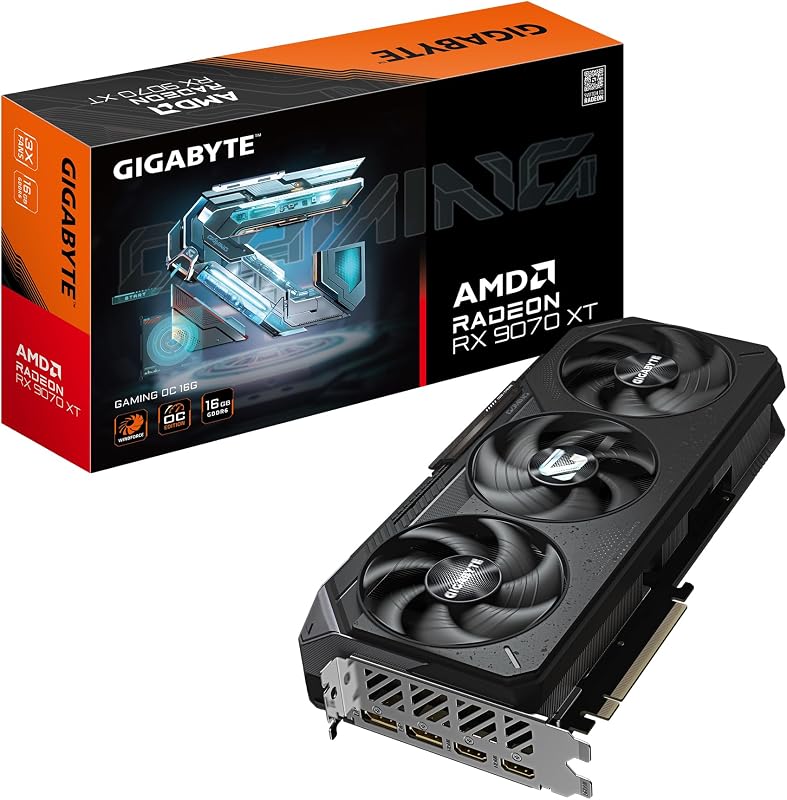
The GIGABYTE Radeon RX 9070 XT Gaming OC 16G is a dedicated alternative featuring 16GB of GDDR6 memory on a PCIe 5.0 interface. Shoppers who favor AMD’s ecosystem or want an alternative factory-overclocked triple-fan cooler with high memory capacity will find this model worth considering for balanced high-resolution gaming.
PCIe 5.0
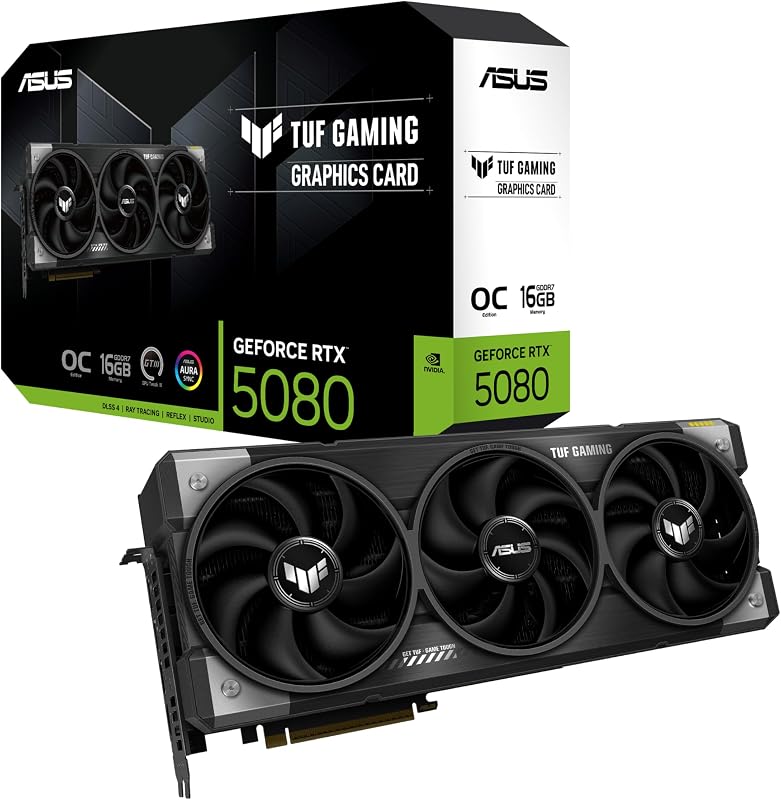
Shoppers seeking upper-tier performance can consider the PCIe 5.0 ASUS TUF Gaming GeForce RTX 5080 OC Edition. Featuring a massive 3.6-slot profile, Axial-tech fans, military-grade components, and protective PCB coating alongside 16GB of GDDR7 memory, it represents a step up for enthusiasts with extensive case space who demand maximum graphics horsepower.
ASRock Radeon RX 9070 Challenger

The ASRock Radeon RX 9070 Challenger 16GB OC graphics card features RDNA 4 architecture, a 2520MHz boost clock, 16GB GDDR6 memory on a 256-bit bus, and a PCIe 5.0 interface. With triple cooling fans, a 0dB silent mode, and an integrated LED indicator, it offers a compelling alternative for gamers seeking solid 16GB performance with straightforward aesthetics.
Final Verdict
When asking is 5070 gaming trio worth it, the answer depends almost entirely on physical chassis compatibility and acoustic priorities. The MSI RTX 5070 Ti Gaming Trio brings together the robust efficiency of NVIDIA’s Blackwell architecture with an oversized TRI FROZR 4 cooling system that effortlessly keeps temperatures and noise levels low. With 16GB of rapid GDDR7 memory, factory overclocking to 2572 MHz, DLSS 4.0 capabilities, and cutting-edge DisplayPort 2.1b connectivity, it stands as an exceptionally capable card for enthusiasts seeking fluid 1440p and 4K gaming experiences.
The sole significant compromise is its physical footprint. At 338mm in length and weighing 1310 grams, it demands a spacious chassis with generous clearance and proper anti-sag support. If your desktop case can comfortably accommodate its 2.5-slot profile and you have an adequate 650W or greater power supply, this graphics card delivers a refined, whisper-quiet gaming experience that will serve your desktop for years to come.
FAQ
Is the 5070 Gaming Trio worth it for 1440p gaming?
Yes, the MSI RTX 5070 Ti Gaming Trio is specifically optimized for high-refresh 1440p (QHD) gaming. With 16GB of rapid GDDR7 memory, a 2572 MHz boost clock, 4th-generation ray tracing, and DLSS 4.0 support, it handles modern graphically demanding games at high settings with fluid frame rates.
What are the exact 5070 Gaming Trio dimensions and will it fit standard PC cases?
The card measures 338mm in length, occupies 2.5 PCIe expansion slots, and weighs 1310 grams. It easily fits inside most spacious mid-tower and full-tower ATX cases, but it may cause clearance issues in compact mid-towers with front-mounted liquid cooling radiators and will generally not fit inside small-form-factor chassis.
What are the 5070 Gaming Trio PSU requirements and power cable needs?
MSI recommends a minimum power supply rating of 650W or higher. The card has a rated power consumption of 250W and draws power via a single 16-pin power connector. Ensure your power supply has the appropriate cables and sufficient wattage headroom for your CPU and components.
How quiet is the MSI 5070 Gaming Trio noise level during intense gaming?
The noise level is exceptionally low thanks to the TRI FROZR 4 thermal design and STORMFORCE double ball bearing fans. During desktop browsing and light workloads, ZERO FROZR technology stops the fans entirely for complete 0 RPM silence. Under heavy gaming loads, the large heatsink allows the fans to spin at modest speeds, producing only a gentle, unobtrusive airflow sound.
What display outputs are available on the MSI RTX 5070 Ti Gaming Trio?
The card provides four rear display outputs: three DisplayPort 2.1b ports and one HDMI 2.1b port. This layout supports multi-monitor setups and ultra-high resolutions up to 8K (7680×4320), with HDMI 2.1b supporting up to 4K resolution at 480Hz on compatible high-refresh monitors.


