
As Amazon Associates, we earn from qualifying purchases. This means we may receive a small commission at no extra cost to you if you click through and make a purchase.
The MSI GeForce RTX 5070 Ti Gaming Trio OC Plus enters the desktop hardware market as a serious contender for gamers and creative professionals targeting high-refresh 1440p visuals. Powered by the advanced NVIDIA Blackwell architecture and paired with 16GB of rapid GDDR7 memory, this factory-overclocked card is engineered to balance high computational power with quiet, controlled thermal operation. Based on our research into the official specifications and hardware capabilities, this graphics card stands out as a reliable, whisper-quiet powerhouse that delivers top-tier performance for mid-to-high-end desktop setups.
This graphics card directly serves enthusiasts who want fluid frame rates in demanding modern titles without dealing with intrusive fan noise or thermal throttling. It is equally suited for digital artists and video editors requiring substantial high-bandwidth memory for complex production tasks. However, builders working within compact mini-ITX enclosures or those reluctant to update an older power supply with standard 8-pin connectors should look elsewhere, as the substantial physical dimensions and modern 16-pin power setup require adequate case volume and appropriate system infrastructure. Those evaluating lower-tier options might also look into our review of the msi geforce rtx 5070 to see where the physical and memory differences lie.


MSI GeForce RTX 5070 Ti Gaming Trio OC Plus at a Glance

| Hardware Attribute | Specification Detail |
|---|---|
| Graphics Processor | NVIDIA GeForce RTX 5070 Ti (Blackwell Architecture) |
| GPU Boost Clock | 2572 MHz |
| Video Memory | 16 GB GDDR7 (28 Gbps, 256-bit bus) |
| Memory Clock Speed | 1750 MHz |
| Thermal Solution | TRI FROZR 4 with 3x STORMFORCE Fans and Zero Frozr Mode |
| Card Form Factor | 2.5-slot profile (PCIe 5.0 x16 interface) |
| Physical Dimensions | 338 mm length |
| Product Weight | 1310 grams |
| Power Consumption & PSU | 250W power draw; 650W recommended PSU (16-pin power connector) |
| Display Connectivity | 3x DisplayPort 2.1b, 1x HDMI 2.1b (Up to 8K at 7680×4320 or 4K at 480Hz) |
1440p Gaming Performance and Blackwell Architecture
The foundation of this graphics accelerator rests on NVIDIA’s Blackwell GPU architecture, which brings fourth-generation ray tracing technology and DLSS 4.0 frame rate enhancements to desktop PCs. In terms of raw processing speed, the factory-overclocked boost clock reaches 2572 MHz out of the box, giving it an edge over non-overclocked baseline configurations. When paired with high-performance desktop processors, the card is tailored specifically to saturate high-refresh-rate QHD monitors, maintaining crisp visual fidelity even when resource-intensive lighting effects are fully enabled.
Memory bandwidth is often a limiting factor at higher rendering resolutions, but the inclusion of geforce rtx 5070 ti 16gb gddr7 memory provides substantial headroom. Operating across a 256-bit memory bus with a transfer rate of 28 Gbps and a base memory clock of 1750 MHz, this configuration handles texture streaming and geometry loading seamlessly. Enthusiasts seeking an ideal balance will find that deploying the msi rtx 5070 ti for 1440p gaming eliminates the stutter and visual degradation often caused by memory bandwidth bottlenecks in previous-generation cards.
In addition to raw rendering power, the architecture’s integration of DLSS 4.0 uses dedicated AI processing blocks to generate supplementary frames while maintaining image sharpness. This makes modern ray-traced titles run smoothly without forcing users to dial back demanding graphic presets. Readers who follow MSI’s performance tiers will note similar architectural traits in our coverage of the 5070 gaming trio, though the Ti variant brings upgraded clock frequencies and expanded computing units to tackle more aggressive graphical loads.
Thermal Engineering and Acoustic Profile with Tri Frozr 4
Keeping a high-performance graphics card cool without generating annoying acoustic whine requires intricate thermal design. The rtx 5070 ti tri frozr 4 cooling system built into this card relies on three specialized Stormforce fans. Each fan features seven textured blades engineered to channel airflow smoothly across the underlying heatsink fins while minimizing air turbulence. Double ball bearings support the fan hubs, providing stable long-term rotation and durability under continuous operating temperatures.
Directly beneath the shroud, heat dissipation is managed through a nickel-plated copper baseplate paired with precision-machined heat pipes and an Airflow Control radiator. The heat pipes draw thermal energy away from the GPU die and GDDR7 memory modules, transferring it rapidly into the aluminum fin stack. Supplementary thermal pads make direct contact with auxiliary board components, ensuring that voltage regulation modules remain well within safe operating thresholds even during heavy rendering sessions.
For everyday productivity and casual tasks, the card features Zero Frozr technology. When operating temperatures drop below a predetermined threshold, the fans stop spinning completely, resulting in absolute 0 RPM silent operation. Once 3D gaming or rendering loads ramp up, the fans spin up smoothly without abrupt acoustic spikes, keeping the overall rig quiet while ensuring the GPU core sustains its 2572 MHz boost speed under load.
Dimensions, Case Clearance, and Build Quality
Physical planning is critical before adding this graphics card to your setup. The msi rtx 5070 ti dimensions come in at a substantial 338 mm in length, occupying a 2.5-slot profile within your PC chassis. Weighing 1310 grams, it is a substantial piece of desktop hardware that requires adequate horizontal room and clearance from front-mounted radiators or case intake fans. Standard mid-tower cases with generous interior spacing or full-tower enclosures provide the smoothest installation experience.
To support this mass and eliminate PCB bending over time, MSI integrates a reinforced metal backplate. The backplate not only provides rigid structural integrity across the length of the 338 mm frame, but it also incorporates a perforated design. This cut-out section allows warm exhaust air to pass straight through the radiator toward case exhaust fans, preventing heat from pooling against the rear surface of the circuit board.
Underneath the exterior shroud, the electrical construction emphasizes long-term reliability. The custom PCB features dedicated high-power-limit circuits alongside robust electrical protectors designed to guard sensitive components against power irregularities. The card also incorporates tasteful RGB lighting elements along its side profile, which can be coordinated with the rest of your system lighting without distracting from the overall aesthetic.
Power Supply Requirements and Modern Connectivity
Stable clean power is mandatory for modern high-performance desktop hardware. According to the manufacturer specifications, the msi rtx 5070 ti power supply requirements call for a recommended power supply unit of 650W or higher. The graphics card itself has a rated power consumption of 250W under typical operating conditions. Power delivery is handled via a modern 16-pin power connector, which consolidates current delivery and streamlines interior cable management compared to legacy multi-cable arrays.
Connecting the card to external displays reveals forward-looking connectivity. The rear I/O plate provides three DisplayPort 2.1b connections alongside a single HDMI 2.1b port. This interface suite supports display resolutions up to an 8K maximum of 7680×4320. For competitive players and enthusiasts running ultra-fast monitors, the HDMI 2.1b port is capable of driving 4K panels at refresh rates up to 480Hz, ensuring absolute clarity and instant frame response.
When assembling a system around this hardware, builders should verify that their power supply includes either a native 16-pin cable or an appropriate multi-port adapter with sufficient individual rail capacity. Those looking at alternate configurations within the lineup may also want to compare this layout with the msi geforce rtx 5070 12g gaming trio oc, which caters to builds with slightly different board power and enclosure requirements.
Content Creation and Professional Workstation Utility
Beyond competitive and immersive PC gaming, the msi rtx 5070 ti content creation capabilities are well suited for demanding production pipelines. Video editors working with high-bitrate 4K or 8K footage benefit significantly from the 16GB GDDR7 buffer and 28 Gbps bandwidth, which allow timelines with multiple video streams, color grading layers, and visual effects to scrub smoothly without crashing or dropping frames.
3D animation, rendering engines, and CAD packages that leverage hardware-accelerated ray tracing take advantage of the dedicated fourth-generation RT cores found within the Blackwell processor. Complex lighting models, reflections, and ambient occlusion calculations render in less time, freeing up local system resources for other productive work. Furthermore, creator applications powered by artificial intelligence can utilize the dedicated onboard tensor processing power to accelerate image upscaling, generative drafting, and video enhancement filters.
Having a full 16GB frame buffer is also critical for modern workstation stability. While 12GB cards can occasionally hit memory limits when running large 3D scene renders or complex AI models, the 16GB memory ceiling on this 5070 Ti model provides a comfortable safety buffer, ensuring that intense background rendering tasks complete smoothly without running out of video memory.
MSI GeForce RTX 5070 Ti Gaming Trio OC Plus Pros and Cons
Pros
- Fast 16GB GDDR7 memory on a 256-bit bus
- Whisper-quiet Tri Frozr 4 cooling with Zero Frozr
- Modern DisplayPort 2.1b and HDMI 2.1b outputs
- Rigid perforated metal backplate for heat exhaust
- High factory overclocked boost clock of 2572 MHz
Cons
- Substantial 338mm length requires a spacious chassis
- Heavier 1310g build requires secure bracket support
- Demands 16-pin power connection and 650W PSU
Check MSI GeForce RTX 5070 Ti Gaming Trio OC Plus on Amazon
Who Should Buy the MSI GeForce RTX 5070 Ti Gaming Trio OC Plus
Determining whether the msi rtx 5070 ti gaming trio oc plus aligns with your upgrade path comes down to your target display resolution, chassis size, and noise preferences. Reviewing the explicit msi rtx 5070 ti specs helps clarify who benefits most from its design.
Buy It If
- You primarily target high-refresh 1440p gaming and want maximum graphical presets combined with fourth-generation ray tracing and DLSS 4.0 support.
- You value silent desktop acoustics and want a cooler featuring a 0 RPM Zero Frozr fan stop mode for daily productivity tasks.
- You work with heavy creative suites, 3D modeling, or video editing that actively utilize 16GB of fast GDDR7 memory.
- Your desktop case has ample clearance for a 338 mm length card and your power supply delivers 650W or more via a 16-pin connection.
Skip It If
- You are assembling an ultra-compact small form factor (SFF) build that cannot accommodate a 338 mm long, 2.5-slot profile card.
- You use an older, lower-wattage power supply and do not intend to upgrade to a unit that supports modern 16-pin power connections.
- You exclusively game on an entry-level 1080p 60Hz display where the processing capability and 16GB GDDR7 bandwidth would remain heavily underutilized.
MSI GeForce RTX 5070 Ti Gaming Trio OC Plus Alternatives Worth a Look
If the physical dimensions or technical focus of this model do not perfectly fit your gaming rig, there are other relevant modern graphics cards to evaluate from the current generation.
GIGABYTE Radeon RX 9070 XT
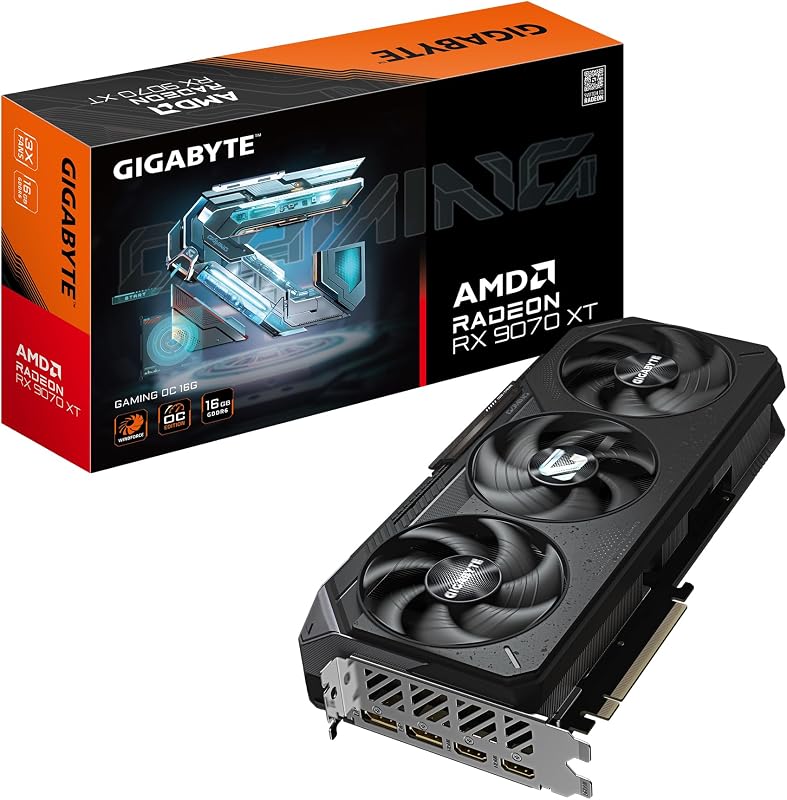
The GIGABYTE Radeon RX 9070 XT Gaming OC 16G Graphics Card presents an alternative option built on AMD architecture. It provides 16GB of GDDR6 memory on a PCIe 5.0 interface. Gamers who prioritize traditional rasterized rendering performance and prefer the AMD software ecosystem may want to evaluate this alternative against NVIDIA’s Blackwell-based solution.
PCIe 5.0
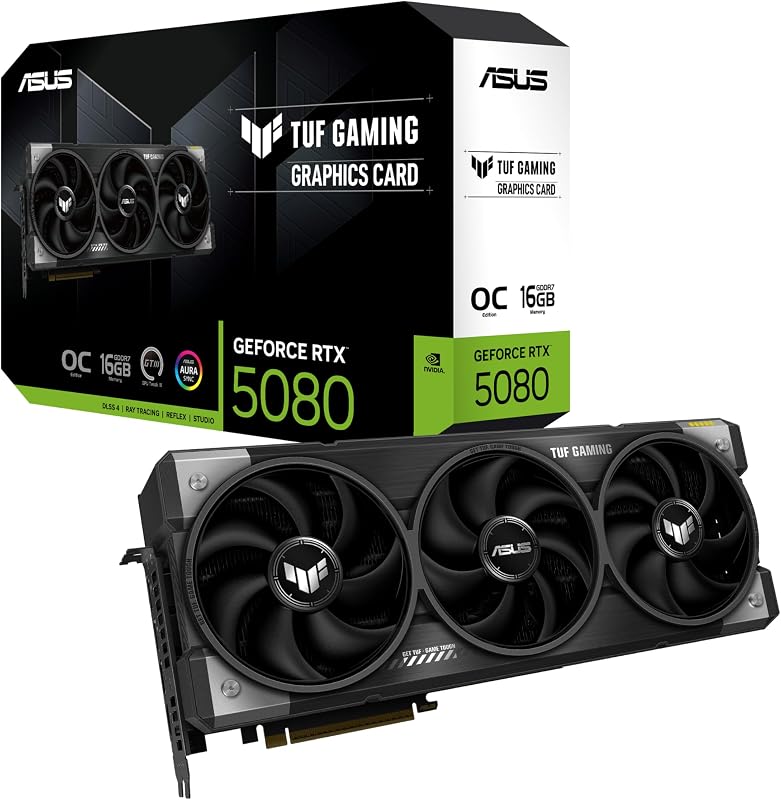
For builders seeking top-tier compute performance and heavier build specifications, the PCIe 5.0 ASUS TUF Gaming GeForce RTX 5080 16GB GDDR7 OC Edition graphics card offers a larger 3.6-slot form factor. Featuring military-grade components, protective PCB coating, and Axial-tech fans, this option is designed for enthusiasts targeting ultra-heavy 4K gaming and maximum ray tracing loads who have massive PC cases capable of housing a 3.6-slot card.
ASRock Radeon RX 9070 Challenger

The ASRock Radeon RX 9070 Challenger 16GB OC Graphics Card utilizes AMD’s RDNA 4 architecture, offering a 2520 MHz boost clock, 16GB of 256-bit GDDR6 memory, and PCIe 5.0 support. Equipped with triple fans, 0dB silent operation, and an LED indicator, it provides a capable alternative for PC builders seeking a triple-fan cooling array with standard GDDR6 video memory.
Final Verdict
The MSI GeForce RTX 5070 Ti Gaming Trio OC Plus represents a thoroughly engineered execution of modern graphics hardware. By combining NVIDIA’s Blackwell architecture and 16GB of ultra-fast GDDR7 memory with MSI’s robust Tri Frozr 4 cooling setup, this card delivers exceptional thermal discipline alongside serious computational muscle. Whether your goal is sustaining fluid 1440p gameplay with full ray tracing enabled or expediting complex video rendering workflows, the hardware provides the necessary memory bandwidth and processing stability.
So, is msi geforce rtx 5070 ti worth it for your desktop? If your PC chassis can house its 338 mm length and your power delivery setup meets the 650W, 16-pin standard, the card rewards you with cool temperatures, inaudible idle acoustics, and forward-ready DisplayPort 2.1b connectivity. It stands as a well-rounded, dependable centerpiece for any modern high-performance desktop build.
FAQ
What power supply is required for the MSI GeForce RTX 5070 Ti Gaming Trio OC Plus?
MSI recommends a power supply of at least 650W for this graphics card. The card itself consumes 250W of power under load and requires a modern 16-pin power connector to deliver stable current from your power supply unit.
Will this graphics card fit into a standard mid-tower PC case?
The card measures 338 mm in length, weighs 1310 grams, and takes up 2.5 expansion slots. While many contemporary mid-tower cases support cards of this size, you should check your case interior dimensions and front fan clearance before purchasing to ensure a proper fit.
How does the Zero Frozr fan mode operate?
Zero Frozr is an automated thermal control feature on the Tri Frozr 4 cooling system. When the GPU is running light desktop tasks and temperatures remain low, the three Stormforce fans stop spinning entirely (0 RPM mode), eliminating noise until gaming or heavy workloads raise component temperatures.
What display monitor ports are built into this graphics card?
The rear panel includes three DisplayPort 2.1b ports and one HDMI 2.1b port. This selection allows you to power multi-monitor configurations, high-refresh 4K panels at up to 480Hz, or ultra-high-resolution displays up to an 8K maximum resolution of 7680×4320.
What type of memory does the MSI RTX 5070 Ti Gaming Trio OC Plus use?
This graphics card is equipped with 16GB of next-generation GDDR7 memory operating on a 256-bit bus, providing high-speed 28 Gbps data transfer rates for demanding gaming and creative production tasks.


