As Amazon Associates, we earn from qualifying purchases. This means we may receive a small commission at no extra cost to you if you click through and make a purchase.
The Intel Core i7-14700K is an unlocked 14th-generation desktop processor engineered to balance extreme single-core responsiveness with dense multicore computing power. Equipped with 20 physical cores and 28 processing threads, this processor aims to provide enthusiasts and PC builders with near-flagship performance across demanding modern games and creative workloads without requiring a step into commercial workstation platforms. Our verdict is that this processor represents one of the most capable hybrid desktop chips available today, delivering meaningful multithreaded uplifts alongside blisteringly fast peak frequencies for gaming systems.
This chip ideally suits ambitious desktop builders, competitive gamers targeting high refresh rates, and content creators who require swift rendering times while juggling resource-heavy background tasks. Builders who already possess an Intel 600-series or 700-series motherboard and desire a noticeable bump in computational throughput will find it particularly compelling. However, casual computer users, individuals building compact ultra-low-power desktop setups, and owners of legacy platforms outside the LGA socket ecosystem should look elsewhere, as its performance potential requires capable power delivery and dedicated thermal management.
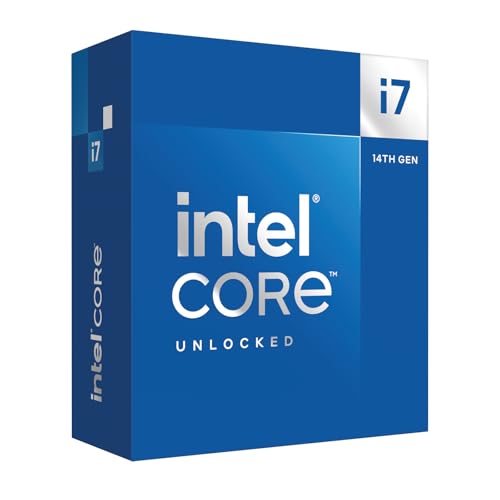
Intel Core i7-14700K at a Glance

| Attribute | Detail |
|---|---|
| Processor Model | Intel Core i7-14700K (BX8071514700K) |
| Total Physical Cores | 20 (8 Performance Cores + 12 Efficient Cores) |
| Total Concurrent Threads | 28 |
| Maximum Turbo Frequency | Up to 5.6 GHz (Intel Turbo Boost Max Technology 3.0) |
| Processor Base Power | 125 Watts |
| Secondary Cache | 33 MB |
| Integrated Graphics | Intel UHD Graphics 770 |
| Motherboard Chipset Compatibility | Intel 700-Series and Intel 600-Series (with potential BIOS update) |
| Memory Architecture Support | DDR4 and DDR5 |
| PCIe Interface Support | PCIe 5.0 and PCIe 4.0 |
Core Architecture and Computational Muscle
Understanding the official Intel Core i7-14700K specs begins with its distinct hybrid core configuration. Unlike conventional desktop processors that rely on homogeneous core designs, Intel utilizes a split setup featuring 8 Performance cores (P-cores) and 12 Efficient cores (E-cores). The P-cores take charge of latency-sensitive, heavy single-threaded actions like running primary game loops or executing complex application tasks, while the 12 E-cores tackle parallel compute workloads and background system operating threads. With 28 concurrent threads coordinated across the silicon, the processor ensures that heavy multi-tasking does not intrude upon your primary active applications.
When measuring computational advancements, the discussion of the Intel Core i7-14700K vs 13700K hinges primarily on the addition of four extra E-cores and elevated peak frequencies. While the preceding 13th Gen predecessor carried an 8 P-core and 8 E-core arrangement, the 14700K steps forward with 12 E-cores, directly boosting multi-threaded throughput. This added core density, joined with 33 MB of secondary cache, expands the processor’s capability when managing multiple complex virtual environments, compression pipelines, or distributed system workloads. Older flagship chips like the core i9 9900ks relied purely on eight symmetrical cores, illustrating how radically desktop parallel architectures have evolved to handle modern multithreaded software suites.
This layout operates under an unlocked multiplier, allowing system tuners and overclockers the flexibility to customize voltage curves and core ratios within compatible motherboard interfaces. With base power specified at 125 watts, the silicon maintains stable operating states across standard system tasks before ramping up dynamic frequencies when intensive workloads demand peak throughput.
Gaming Performance and Single-Core Responsiveness
Desktop enthusiasts exploring Intel Core i7-14700K gaming performance will appreciate the inclusion of Intel Turbo Boost Max Technology 3.0, which drives peak processor frequencies up to 5.6 GHz. In modern PC gaming, single-thread velocity and raw instruction processing speed directly influence minimum frame rates and overall frame-time consistency. Titles that rely heavily on single-thread physics, game logic calculations, and draw calls benefit directly from the high operating ceiling sustained by the processor’s 8 high-performance cores.
The processor also features integrated Intel UHD Graphics 770, which provides essential visual output directly from the motherboard I/O without requiring a discrete graphics card during initial system configuration or troubleshooting. While serious 3D gaming naturally demands an independent graphics card, having integrated display hardware provides peace of mind if you need to diagnose visual problems or operate the system while awaiting dedicated hardware updates. Furthermore, the integrated graphics architecture supports Intel Quick Sync Video, assisting media encoding pipelines without burdening discrete graphics resources.
Because the chip provides native support for PCIe 5.0 and PCIe 4.0 lanes, gamers can pair this CPU with high-bandwidth discrete graphics cards and high-speed NVMe storage. High frame rates require rapid assets streaming from storage into system memory and the GPU, and the 14700K provides the bandwidth pipeline necessary to keep stuttering to a minimum during intensive open-world gaming sessions.
Productivity and Digital Content Creation
Evaluating the Intel Core i7-14700K for video editing and content creation reveals how well the 20-core structure adapts to sustained creative operations. Video timeline playback, heavy media export queues, and 3D scene rendering thrive on dense thread counts. With 28 threads at the operating system’s disposal, video editing software can offload real-time background rendering, audio indexing, and file transcoding to the cluster of efficient cores while leaving the performance cores unencumbered for smooth, responsive timeline navigation.
Creators moving from legacy platforms or evaluating broader ecosystem options like the amd ryzen 9 5950x 3.4 ghz 16-core processor will recognize that the 14700K balances high clock speeds with heavy multi-core distribution. High-resolution raw video files and multitrack editing projects demand rapid memory bandwidth alongside computational width, and the 33 MB of cache ensures that large data sets remain close to the execution engines to reduce latency bottlenecks during project scrubbing.
Furthermore, desktop platforms designed for creation benefit immensely from running complex background tasks without crashing foreground application responsiveness. Whether compiling large code repositories in an integrated development environment, batch-processing RAW photographs, or rendering animation files while keeping open dozens of browser reference tabs, the 20-core design divides the workload intelligently across Windows 11 task scheduling systems.
Motherboard Compatibility and System Platform Options
Builders planning an upgrade must evaluate i7-14700K motherboard compatibility prior to assembling their components. Intel has maintained motherboard ecosystem continuity across two successive chipset generations, allowing the 14700K to operate on both Intel 700-series motherboards and prior Intel 600-series boards. However, users opting for an Intel 600-series board must note that a potential BIOS update is required before the motherboard will recognize and boot with this 14th Gen processor. Many motherboards offer dedicated USB flashback features to facilitate this update without needing an older CPU installed.
The processor listing specifies an LGA 771 socket parameter within the retail specifications table, though the chip is manufactured for Intel’s modern 600 and 700 series desktop desktop platform sockets. Checking your specific motherboard manufacturer’s verified CPU support list ensures complete socket and chipset matching. For users seeking cutting-edge platform transitions, alternative modern architectures such as the core ultra 9 285k require brand-new socket layouts, giving the 14700K an advantage for anyone wanting to maximize their current 600 or 700 series investment.
The memory controller architecture also presents builders with an important choice between i7-14700K DDR4 vs DDR5 support. The processor contains dual memory controller capabilities, allowing it to function alongside either mature DDR4 memory modules or higher-bandwidth DDR5 kits. This dual compatibility provides flexible budget and hardware pathways:
- DDR4 Configurations: Allow builders to carry over existing memory kits from prior desktop builds, keeping overall system transition requirements lower while still accessing 20-core performance.
- DDR5 Configurations: Provide expanded memory bandwidth and higher data transfer ceilings that reduce load times and give you the space to run modern, demanding games and bandwidth-starved creative software suites.
Power Consumption and Cooling Requirements
A crucial factor to consider when evaluating this chip is i7-14700K power consumption. The listing states a 125W Processor Base Power, representing the thermal output under standard baseline operating frequencies. However, because this is an unlocked processor featuring dynamic Turbo Boost Max Technology 3.0 up to 5.6 GHz, power draw scales dynamically upward under comprehensive all-core workloads. Sustained multithreaded tasks, such as long rendering sessions or stress benchmarks, will cause the processor to draw significantly more power than its base wattage rating.
Consequently, Intel Core i7-14700K cooling requirements are demanding. The retail package (model BX8071514700K) contains only the standalone processor and does not include a bundled thermal heatsink or fan. Anyone assembling a system around this processor must procure a capable aftermarket cooling solution. High-performance dual-tower air coolers or 240mm to 360mm all-in-one liquid cooling units are strongly advisable to prevent thermal throttling when the processor operates at maximum turbo frequencies.
Selecting an adequate power supply unit is equally essential. Builders must ensure their power supply unit provides ample 12V rail headroom to support the unlocked 125W base processor alongside a modern dedicated graphics card, high-speed storage drives, and system cooling fans.
Intel Core i7-14700K Pros and Cons
Pros
- 20 cores and 28 concurrent threads
- Up to 5.6 GHz Turbo Boost Max 3.0
- Dual DDR4 and DDR5 memory support
- Integrated Intel UHD Graphics 770
- Compatible with Intel 600 and 700 motherboards
- PCIe 5.0 and PCIe 4.0 support
Cons
- 125W base power requires robust cooling
- No cooler included in the box
- 600-series boards may require BIOS update
Check Intel Core i7-14700K on Amazon
Who Should Buy the Intel Core i7-14700K
Buy It If
- You already own an Intel 600 or 700-series motherboard and want to maximize computing performance via an in-socket processor upgrade.
- You demand high frame rates in modern games driven by clock speeds scaling up to 5.6 GHz alongside 8 dedicated Performance cores.
- You manage heavy digital content creation, rendering pipelines, or streaming workloads that can fully saturate 20 physical cores and 28 concurrent threads.
- You appreciate having the choice to configure your platform with either legacy DDR4 or modern DDR5 system memory.
Skip It If
- You intend to use a basic, low-profile stock cooler or desire a plug-and-play system without investing in substantial aftermarket thermal cooling.
- Your system workload consists strictly of everyday web browsing, office document editing, and casual media playback where 20 cores remain largely unutilized.
- You are running an older motherboard platform outside of Intel’s 600 or 700-series desktop ecosystem and cannot accommodate the required socket infrastructure.
Final Verdict
When asking is Intel Core i7-14700K worth it, the answer depends on your performance requirements and existing hardware framework. For desktop PC builders who need a versatile, heavy-lifting processor, the 14700K delivers outstanding versatility. Its 20 cores (8 P-cores and 12 E-cores) and 28 threads offer a substantial multithreaded boost over older 8-core and 16-core platforms, while its 5.6 GHz Turbo Boost velocity ensures game engines run fluidly with exceptional responsiveness. The dual compatibility with DDR4 and DDR5 memory also grants builders unique upgrade flexibility that few enthusiast platforms match.
At the same time, this processor demands respect regarding thermal management and power delivery. With a 125W base power rating that climbs under peak boost conditions, builders must budget for capable liquid or dual-tower air cooling, a robust power supply, and potentially a BIOS update if utilizing an Intel 600-series motherboard. If your computing habits regularly push desktop hardware to its limits through modern gaming, streaming, and content production, the Intel Core i7-14700K stands as a remarkably balanced and capable computational powerhouse.
FAQ
What motherboards are compatible with the Intel Core i7-14700K?
The processor is compatible with Intel 700-series and Intel 600-series chipset-based motherboards. If you are installing the processor into an Intel 600-series motherboard, you will likely need to perform a BIOS update prior to installation so the board can properly recognize the 14th-generation architecture.
Does the Intel Core i7-14700K come with a bundled CPU cooler?
No, the processor does not include a cooling fan or heatsink in the box. Because it features an unlocked multiplier and a 125-watt base power rating that expands during turbo boost, you must purchase a capable aftermarket air cooler or liquid cooling setup separately.
Can I use DDR4 memory with the Intel Core i7-14700K?
Yes, the processor provides native support for both DDR4 and DDR5 memory platforms. However, your motherboard determines which standard you can use, as a motherboard will have slots for either DDR4 or DDR5, not both simultaneously.
Does this processor feature integrated graphics?
Yes, the Intel Core i7-14700K includes integrated Intel UHD Graphics 770. This provides native video output for displays directly from your motherboard without needing a dedicated graphics card, which is helpful during system setup and troubleshooting.
How many total cores and threads does the Intel Core i7-14700K offer?
The processor features 20 physical cores divided into 8 Performance cores (P-cores) and 12 Efficient cores (E-cores). Together, these cores support 28 concurrent processing threads to manage simultaneous computing tasks.