
As Amazon Associates, we earn from qualifying purchases. This means we may receive a small commission at no extra cost to you if you click through and make a purchase.
The PNY RTX 5060 Ti 16GB is a factory-overclocked desktop graphics card engineered around NVIDIA’s Blackwell architecture, pairing high-speed memory with a restrained dual-slot footprint. As contemporary PC titles push higher texture fidelity and creative tools demand substantial memory capacity, this card presents a balanced solution for users wanting fluid 1440p visual performance without requiring an oversized chassis or a costly power supply overhaul. With a factory boost clock of 2692 MHz and next-generation memory architecture, it delivers dependable output for both gaming and workstation tasks.
This graphics card directly suits everyday desktop PC builders, competitive gamers, and multimedia creators who want generous video memory for demanding titles and local AI workloads without modifying their physical case layout. Those who prioritize native 4K rendering at maximum settings or enthusiasts looking for heavy multi-fan configurations will want to explore higher hardware tiers instead. When surveying the broader desktop upgrade market, readers reviewing the rtx 5060 ti 16g landscape will find that thermal balance and space-efficient dimensions make this specific card uniquely practical for straightforward system installations.


PNY RTX 5060 Ti 16GB at a Glance

| Hardware Attribute | Technical Specification |
|---|---|
| Graphics Processor | NVIDIA GeForce RTX 5060 Ti (NVIDIA Blackwell Architecture) |
| Video Memory | 16GB GDDR7 |
| Memory Interface Width | 128-bit |
| Memory Bandwidth | 448 GB/s |
| Base Core Clock | 2407 MHz |
| Boost Clock Speed | 2692 MHz (Factory Overclocked) |
| Bus Interface | PCI-Express x8 (PCIe 5.0) |
| Power Connectors & PSU | Single 8-pin power connector; 600W minimum system PSU |
| Cooling & Form Factor | Dual-fan cooler, 2-slot design, SFF-Ready, 9.65″L x 4.72″W |
| Display Outputs | DisplayPort and HDMI (HDMI/DP 2.1), up to 7680 x 4320 |
1440p Gaming and GDDR7 Memory Headroom
Memory capacity has become one of the primary limiting factors in modern graphics processing, making the integration of 16GB GDDR7 on the PNY RTX 5060 Ti 16GB a major operational focal point. Operating across a 128-bit memory bus with a rated bandwidth of 448 GB/s, this configuration provides the data throughput necessary to feed high-detail environments without stuttering. For gamers deploying a 5060 ti 16 for 1440p gaming, having an expanded frame buffer ensures that ultra-quality texture packs, shadow maps, and geometry streaming remain fully resident in video memory rather than spilling over into slower system RAM.
Beyond traditional rendering, this generous 5060 ti 16gb vram allocation directly impacts professional rendering engines and artificial intelligence models. While 8GB buffers often trigger out-of-memory errors in machine learning or large creative timelines, 16GB allows users to run local generative models, composite multi-layer video sequences in NVIDIA Studio, and handle complex 3D viewports smoothly. The jump to rtx 5060 ti gddr7 architecture ensures memory clock speeds of 2407 MHz, maintaining consistent data flow during heavy computational loops.
When assessing expected pny 5060 ti 16gb benchmarks across contemporary game engines, the primary benefit of the expanded memory buffer appears in sustained frame pacing. Instead of encountering sudden frame-time spikes when moving between expansive open-world zones, the large buffer accommodates background texture pre-loading effortlessly. This stability makes the card a dependable foundation for monitors operating at 2560×1440 resolutions.
Blackwell Architecture and DLSS 4.5 Integration
The core computational engine of the PNY RTX 5060 Ti 16GB is built on NVIDIA’s Blackwell architecture, which introduces refined execution units for modern graphic rendering. The silicon integrates 5th-Gen Tensor Cores dedicated to deep learning tasks, 4th-Gen Ray Tracing Cores optimized for Mega Geometry, and streaming multiprocessors specifically tuned for neural shaders. These hardware additions allow the GPU to calculate complex ray-traced lighting pipelines while delegating upscaling and frame generation tasks to specialized AI hardware.
DLSS 4.5 functions alongside this architecture to enhance real-time frame rates, reconstructing detailed images from lower native render targets while preserving sharpness. Players exploring ray-traced reflections, ambient occlusion, and dense geometry can rely on neural rendering to offset computational overhead. Those comparing different branded implementations across the market, such as the asus rtx 5060 ti 16gb, will find that NVIDIA’s underlying Blackwell feature set remains consistent in driving software compatibility across both the gaming-focused NVIDIA App and productivity-driven NVIDIA Studio environments.
The inclusion of 4th-Gen Ray Tracing Cores also accelerates workloads involving dynamic geometry and vast draw distances. By offloading bounding volume hierarchy calculations from general compute clusters, the card sustains steady throughput during scenes that feature intensive particle effects, dense foliage, and layered transparency.
Thermal Engineering and Dual-Slot Clearance
Managing heat dissipation within a restrained footprint is essential for maintaining sustained boost clocks, and the pny rtx 5060 ti dual fan assembly achieves this through targeted thermal engineering. Measuring 9.65 inches in length and 4.72 inches in width, the card adheres to a true 2-slot thickness. This modest size fulfills SFF-Ready guidelines, ensuring that builders planning a 5060 ti 16 compact build can slide the card into mini-ITX and micro-ATX chassis without blocking adjacent expansion slots or colliding with front-mounted radiator brackets.
The cooling mechanism relies on two axial fans operating in tandem across a dense finned heatsink that directly draws thermal energy away from the GPU core, memory modules, and voltage regulation circuitry. Passive cooling is supplemented by a vented metal backplate, which encourages warm air to circulate through exhaust cutouts while providing rigid structural reinforcement that prevents the printed circuit board from sagging over long periods of vertical or horizontal installation.
Because the physical dimensions remain under 10 inches, air circulation inside standard mid-tower enclosures remains unobstructed. Cool air pulled from the front intake fans reaches the dual-fan intake easily, allowing the factory overclock of 2692 MHz to operate comfortably under sustained rendering and gaming workloads without requiring aggressive, high-pitch fan speeds.
Power Demands and Hardware Installation
Power delivery on modern graphics cards has become increasingly complex, but the PNY RTX 5060 Ti 16GB retains a straightforward approach. It utilizes a single traditional 8-pin power connector, bypassing the need for specialized 12V-2×6 or 16-pin adapters that demand precise bend radiuses. PNY specifies a modest 600W system power supply requirement, making it an accessible drop-in replacement for mainstream desktop towers without demanding an immediate power supply unit upgrade.
This manageable rtx 5060 ti power consumption profile simplifies cable routing and minimizes overall internal heat output. Users evaluating total build efficiency against desktop setups, or even comparing thermal profiles across portable platforms like the lenovo legion rtx 5060, will appreciate that this desktop card delivers sustained 2692 MHz boost frequencies without demanding excessive current draw from the primary 12-volt rail.
In terms of system connectivity, the card interfaces via a PCI-Express x8 connection operating on the PCIe 5.0 standard. Physical display connections include standard DisplayPort and HDMI ports supporting the modern HDMI/DP 2.1 protocol, enabling single-cable output up to an 8K resolution maximum of 7680 x 4320 for multi-display workstations and ultra-high-definition gaming monitors.
VelocityX Software and Performance Tuning
PNY includes its proprietary VelocityX software utility to give users direct control over hardware operating parameters. Through a centralized dashboard, builders can monitor real-time operating metrics including core clock speed, memory frequency, core temperature, and fan rotation rates. This level of visibility makes it easy to confirm that the GPU is sustaining its rated 2692 MHz boost clock under load.
The software suite offers functional tuning options that allow enthusiasts to customize fan curves based on internal chassis temperatures. Builders who prioritize acoustic dampening in quiet studio environments can calibrate fan curves to run silently under idle or low-load tasks, while performance-focused users can raise fan speeds to keep thermal thresholds low during extended render jobs. Up to five custom user profiles can be saved and recalled on demand, allowing seamless switching between everyday computing and heavy gaming presets.
For shoppers asking is 5060 ti 16 worth it from an enthusiast standpoint, the combination of accessible clock adjustments via VelocityX and a solid hardware foundation provides meaningful customization. The factory overclock ensures baseline performance is strong out of the box, while manual voltage and clock sliders give experienced users room to optimize their specific configuration.
PNY RTX 5060 Ti 16GB Pros and Cons
Pros
- Generous 16GB GDDR7 memory buffer
- Compact dual-slot SFF-ready dimensions
- Factory boost overclock up to 2692 MHz
- Standard 8-pin power connector compatibility
- Reinforced vented metal backplate design
Cons
- PCIe interface limited to x8 lanes
- 128-bit memory bus width
Check PNY RTX 5060 Ti 16GB on Amazon
Who Should Buy the PNY RTX 5060 Ti 16GB
Buy It If
- You target smooth 1440p gaming with maximum texture settings and want to avoid VRAM stuttering in modern titles.
- Your PC case has limited clearance and requires an SFF-Ready, true 2-slot card under 10 inches in length.
- You run local AI models, 3D rendering engines, or video editing suites that demand a 16GB frame buffer.
- You have an existing 600W power supply and prefer using a standard 8-pin power connector without adapter cables.
Skip It If
- You intend to play demanding modern releases at native 4K resolutions with ultra ray tracing presets.
- You require a full physical x16 electrical lane connection for legacy motherboards lacking modern PCIe bandwidth speeds.
- Your build aesthetic specifically calls for a massive three-fan cooling shroud or integrated RGB lighting displays.
PNY RTX 5060 Ti 16GB Alternatives Worth a Look
If you are exploring alternatives in the desktop graphics segment to match your exact chassis, performance target, or display configuration, several competing cards offer distinct architectural features.
GIGABYTE Radeon RX 9070 XT
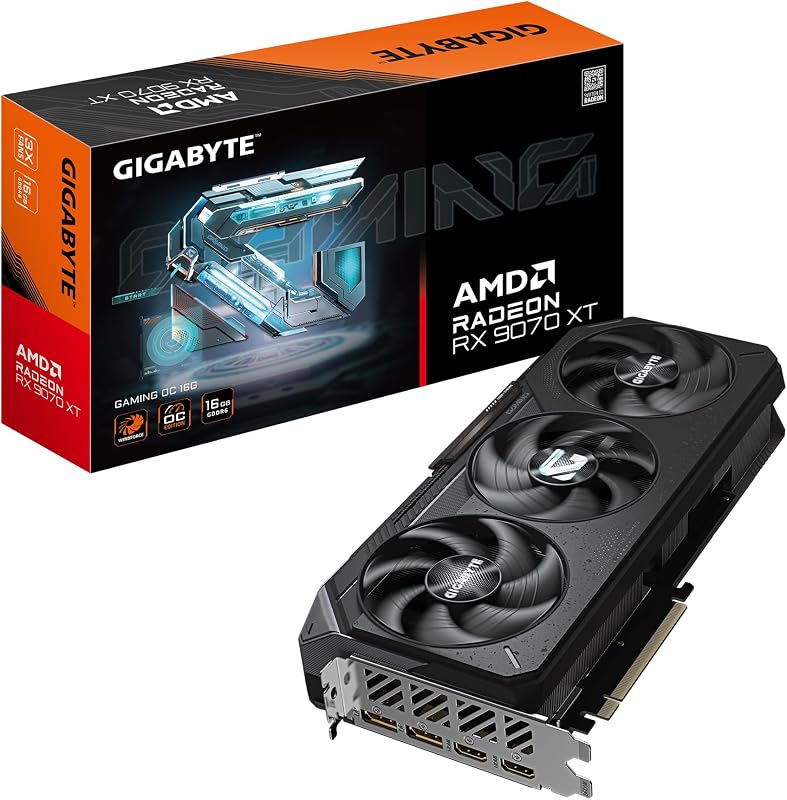
The GIGABYTE Radeon RX 9070 XT is a competing desktop graphics card featuring 16GB of GDDR6 memory and PCIe 5.0 support. Gamers who lean toward alternative graphic architectures and desire high rasterization capabilities without an emphasis on NVIDIA-specific rendering pipelines may find this card a compelling option for high-resolution gaming.
PCIe 5.0 ASUS TUF Gaming RTX 5080
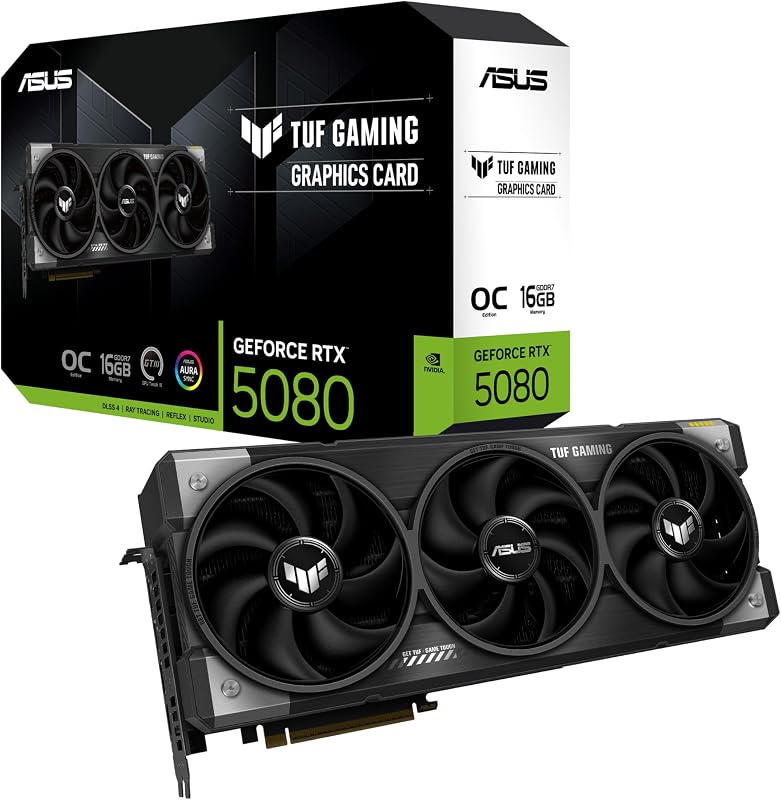
The PCIe 5.0 ASUS TUF Gaming RTX 5080 is an enthusiast-class graphics card engineered with a massive 3.6-slot cooling profile, military-grade components, protective PCB coating, and Axial-tech fans. Equipped with 16GB of GDDR7 memory and HDMI/DP 2.1 outputs, it is designed for builders who have spacious computer cases and require heavy-duty thermal solutions for enthusiast workloads.
ASRock Radeon RX 9070 Challenger

The ASRock Radeon RX 9070 Challenger is an RDNA 4 graphics card equipped with 16GB of GDDR6 memory across a wide 256-bit bus, a 2520 MHz boost clock, and a triple-fan cooling system. Featuring 0dB silent operation and an onboard LED indicator, it is a great choice for builders who prioritize triple-fan cooling dissipation and broad memory bus widths over compact dual-slot form factors.
Final Verdict
The PNY RTX 5060 Ti 16GB delivers a balanced, pragmatic hardware package for modern desktop PC builders. By combining 16GB of high-speed GDDR7 memory with NVIDIA’s Blackwell architecture, this graphics card resolves the frame buffer constraints that frequently trouble modern 1440p gaming setups. Its out-of-the-box 2692 MHz boost frequency, DLSS 4.5 capabilities, and robust neural compute hardware ensure that users receive fluid visual output across both fast-paced action games and demanding digital content creation tools.
Equally valuable is the card’s thoughtful physical design. Measuring just 9.65 inches long and occupying only two expansion slots, it easily fits into compact and SFF-ready cases that cannot accommodate three-fan monsters. With a modest 600W system power requirement and a single standard 8-pin power input, the card serves as a frictionless upgrade for existing PC builds. For users looking to secure substantial memory headroom and dependable 1440p performance without replacing their case or power supply, this PNY model stands out as a sensible, well-engineered choice.
FAQ
Does the PNY RTX 5060 Ti 16GB require a 12VHPWR power cable?
No, the PNY RTX 5060 Ti 16GB uses a single traditional 8-pin PCIe power connector. You do not need to purchase or install a 16-pin 12VHPWR or 12V-2×6 adapter cable to power this card.
Can this graphics card fit inside small form factor cases?
Yes, the card measures 9.65 inches in length, 4.72 inches in width, and occupies exactly two expansion slots. It carries an SFF-Ready classification, making it compatible with many compact mini-ITX and micro-ATX computer enclosures.
What display outputs are available on the PNY RTX 5060 Ti 16GB?
The card includes DisplayPort and HDMI ports conforming to HDMI and DP 2.1 standards. It supports digital display resolutions up to 7680 x 4320, allowing support for high-refresh monitors and 8K displays.
What system power supply wattage is recommended for this graphics card?
According to the manufacturer specifications, the PNY RTX 5060 Ti 16GB requires a 600W system power supply, making it compatible with a wide range of standard mid-tier desktop power supplies.
How does the VelocityX software assist with performance tuning?
VelocityX is PNY’s management software that allows you to monitor real-time core temperatures, fan speeds, and clock frequencies. You can also adjust core and memory clocks, build custom fan speed curves, and save up to five distinct hardware profiles.


