As Amazon Associates, we earn from qualifying purchases. This means we may receive a small commission at no extra cost to you if you click through and make a purchase.
The ASUS Dual RTX 5060 Ti 16GB packages the cutting-edge NVIDIA Blackwell graphics architecture into a focused, dual-fan footprint designed to maximize desktop case compatibility without compromising processing power. Featuring 16 GB of fast GDDR7 memory, PCIe 5.0 bus support, and an advanced cooling array with dual ball bearings, this graphics card targets gamers and creators who require heavy-duty rendering capability inside standard desktop chassis. In short, our comprehensive asus dual rtx 5060 ti 16gb review reveals that this card stands as an exceptionally balanced graphics solution, giving builders ample memory capacity and high thermal efficiency without demanding full-tower physical clearances.
This particular graphics card directly suits PC enthusiasts assembling an asus rtx 5060 ti 16gb compact build who want dependable thermal headroom and substantial frame buffer allocation for modern asset-heavy games and AI workflows. It serves desktop owners upgrading older systems who prioritize lower noise levels and clean airflow over flamboyant aesthetic lighting. Conversely, builders planning extreme liquid-cooled overclocks or those looking for massive three-fan radiator bodies designed specifically for spacious full-tower enclosures may want to reconsider. Shoppers looking into larger multi-fan configurations might instead investigate how full-sized options such as the rtx 5060 asus tuf compare before committing to a final build plan.


ASUS Dual RTX 5060 Ti 16GB at a Glance

| Feature | Specification |
|---|---|
| Graphics Processor | NVIDIA GeForce RTX 5060 Ti |
| Architecture | NVIDIA Blackwell |
| Video Memory | 16 GB GDDR7 |
| GPU Clock Speeds | 2632 MHz (OC Mode) / 2602 MHz (Default Mode) |
| Memory Clock Speed | 2602 MHz |
| AI Compute Power | 767 AI TOPS |
| Card Dimensions | 9.0 inches Length x 4.7 inches Width (2.5-Slot Profile) |
| Bus Interface | PCI-Express 5.0 (x16) |
| Display Outputs | 3x DisplayPort 2.1b, 1x HDMI 2.1b |
| Box Contents | DUAL-RTX5060TI-16G Graphics Card, Speedsetup Manual, Thank You Card |
Dimensions, Form Factor, and Small Chassis Fit
Physical footprint remains one of the most critical factors for modern system builders, and the official asus rtx 5060 ti 16gb specs reflect a conscious design choice toward compact versatility. Measuring exactly 9.0 inches in length and 4.7 inches in width, this card avoids the unwieldy lengths seen on modern flagship hardware. Builders trying to fit modern components into microATX cases or compact mid-towers will appreciate how readily this dual-fan assembly drops into mainboards without blocking front-mounted radiators or interfering with drive cages.
While the card keeps its horizontal length under control, ASUS opted for a 2.5-slot profile to provide sufficient internal heatsink surface area. This extra half-slot depth expands the aluminum fin density beneath the fan shroud, which directly assists heat dissipation. However, builders using mini-ITX enclosures that enforce strict two-slot maximum clearance must measure carefully before purchasing. When evaluating compact internal room, reviewing specialized mid-tier architectures such as the 5060 ti 16 helps illuminate whether a 2.5-slot physical enclosure matches your motherboard and case layouts.
The structural rigidity of this 2.5-slot card provides another distinct advantage for smaller builds. Because the overall assembly weighs substantially less than massive three-fan graphics cards, it minimizes mechanical strain on the motherboard PCIe slot. The card connects across a standard PCIe 5.0 x16 physical slot, anchoring firmly to the rear chassis brackets. For users assembling a portable gaming rig or LAN party desktop, the reduced horizontal leverage prevents sagging and helps ensure reliable long-term hardware integrity.
Thermal Engineering and Dual Axial-Tech Fans
Cooling performance in a smaller enclosure dictates how consistently a graphics processor maintains its boost frequencies under sustained workloads. The asus dual rtx 5060 ti cooling configuration relies on two proprietary Axial-tech fans engineered to channel airflow effectively through the fin stack. These fans feature a smaller central hub, which accommodates longer fan blades, bounded by an outer barrier ring designed to concentrate downward static air pressure toward hot spots across the GPU die and electrical components.
Underneath the fans, a dense heat pipe network channels thermal energy away from the Blackwell graphics core into aluminum cooling fins. The listing details highlight dual ball fan bearings, which provide significant mechanical durability over conventional sleeve bearing designs. ASUS notes that these dual ball assemblies can last up to twice as long, mitigating the risk of fan rattle, lubrication dry-out, or premature mechanical failure in systems that run extensive gaming sessions daily.
The open-flow shroud design encourages rapid heat transfer when fresh air is drawn into the desktop case. In smaller chassis environments where ambient airflow is strictly limited, directional static pressure is essential to force heated air away from the card and toward the system exhaust vents. The combination of structural barrier rings and elongated fan blades ensures that static resistance from the dense internal fin array does not choke airflow, keeping operating temperatures stable under load.
Acoustic Profiles, Dual BIOS, and 0dB Operation
Acoustic performance represents a major priority for desk-bound systems, and the rtx 5060 ti 16gb dual bios switch provides physical control over hardware operational profiles. Builders can toggle between Quiet and Performance BIOS settings via a physical switch on the edge of the card. In Performance mode, the fan curves prioritize lower running temperatures by ramping up aggressively under compute loads. In Quiet mode, the firmware relaxes the fan curves slightly, allowing moderate temperature margins in exchange for substantially quieter fan operation.
Complementing the hardware switch is integrated 0dB technology, which allows the graphics card to operate in complete acoustic silence during non-demanding tasks. When the user is web browsing, streaming media, or handling light productivity workloads, the cooling fans power down completely until thermal loads rise. This design keeps the asus rtx 5060 ti 16gb noise level virtually non-existent during desktop idle periods while cutting down on passive dust accumulation inside the fin stack.
When the card enters heavier compute states, the transition from zero RPM to active cooling remains smooth. The dual ball bearings and optimized blade geometry prevent sudden mechanical whines during spin-up. Gamers seeking an unobtrusive desktop presence will find that running the card in its Quiet profile keeps acoustics comfortably subdued, even when the graphics core boosts up toward its 2632 MHz OC mode ceiling during extended multiplayer sessions.
Memory Architecture and GDDR7 Headroom
Modern games increasingly require expansive frame buffer allocations, making the presence of 16 GB of modern memory a significant technical highlight. The asus rtx 5060 ti 16gb gddr7 architecture delivers substantial memory bandwidth improvements over previous GDDR6 configurations, operating at a memory clock speed of 2602 MHz. High-speed GDDR7 memory allows rapid texture streaming, ensuring that demanding open-world titles do not stutter when pulling high-resolution mipmaps from system storage into active video memory.
Having 16 GB of dedicated VRAM prevents memory bottlenecks that frequently compromise graphics cards limited to 8 GB or 12 GB. During intensive asus rtx 5060 ti 16gb gaming at high resolutions, detailed asset packs, ultra-high mesh settings, and ray-traced reflections quickly fill video memory. Those comparing historical 16-gigabyte iterations through guides like the rtx 5060 ti 16g will observe that having this memory capacity backed by GDDR7 bandwidth creates a stable, stutter-free gaming environment across complex modern game engines.
Beyond traditional rasterization, this expansive memory space directly benefits creators and local machine learning practitioners. With 16 GB of video memory available, users can load larger neural network models, execute extensive texture baking operations, and edit high-bitrate video timelines without encountering out-of-memory errors. The fast GDDR7 bus prevents communication choke points, letting the Blackwell processor operate at peak efficiency throughout long rendering pipelines.
NVIDIA Blackwell Architecture, DLSS 4, and Video Connectivity
At the center of this graphics card is the NVIDIA Blackwell graphics architecture, which introduces refined streaming multiprocessors and enhanced tensor hardware. Rated at 767 AI TOPS of computing capability, the card offers tremendous processing density for AI-accelerated tasks. This compute capability powers asus rtx 5060 ti 16gb dlss 4, enabling advanced frame generation, image upscaling, and neural reconstruction technologies that dramatically elevate rendering frame rates without degrading fine scene details.
Connectivity options on this card represent a forward-looking leap for display enthusiasts. The rear bracket houses three DisplayPort 2.1b connections alongside a single HDMI 2.1b port. These high-bandwidth video outputs provide native support for ultra-high-refresh monitors and multi-display setups, achieving a maximum digital resolution of 7680×4320 pixels. Modern DisplayPort 2.1b bandwidth allows uncompressed signal transmission to next-generation gaming displays without the chromatic subsampling compromises required by older video standards.
The inclusion of a PCIe 5.0 interface ensures maximum bus bandwidth when paired with contemporary motherboards and processors. Operating at a default clock of 2602 MHz with an available software-driven 2632 MHz OC mode, the graphics processor makes full use of its high-speed bus to stream complex geometry and shader code. Whether driving high-refresh competitive displays or feeding high-resolution output panels, the underlying Blackwell architecture provides reliable performance across a broad spectrum of visual tasks.
ASUS Dual RTX 5060 Ti 16GB Pros and Cons
Pros
- 16 GB fast GDDR7 memory
- Dual BIOS quiet and performance modes
- Compact 9-inch card length
- Durable dual ball bearing fans
- Modern DisplayPort 2.1b connectivity
- Zero-RPM silent idle operation
Cons
- 5-slot profile restricts ultra-slim cases
- Dual fans limit extreme manual overclocking
- No included physical support bracket
Check ASUS Dual RTX 5060 Ti 16GB on Amazon
Who Should Buy the ASUS Dual RTX 5060 Ti 16GB
Buy It If
- You are building in a microATX or space-conscious chassis that requires a shorter 9.0-inch card length.
- You require a full 16 GB of next-generation GDDR7 memory to handle large texture packs, ray tracing, or AI applications.
- You value quiet desktop operation and want the versatility of physical Quiet and Performance Dual BIOS profiles.
- You own high-refresh or ultra-high-resolution monitors requiring DisplayPort 2.1b and HDMI 2.1b video outputs.
Skip It If
- Your mini-ITX enclosure strictly accommodates two-slot graphics cards and cannot clear this model’s 2.5-slot depth.
- You prefer large triple-fan cooling solutions designed specifically for heavy manual voltage overclocking in full-tower cases.
- Your computing needs are confined to basic office tasks or casual legacy games that do not utilize dedicated ray tracing or DLSS 4.
ASUS Dual RTX 5060 Ti 16GB Alternatives Worth a Look
If you are exploring the wider graphics market to see how other modern models compare in size, thermal hardware, and output features, several compelling alternative options exist in the same generation.
GIGABYTE Radeon RX 9070 XT
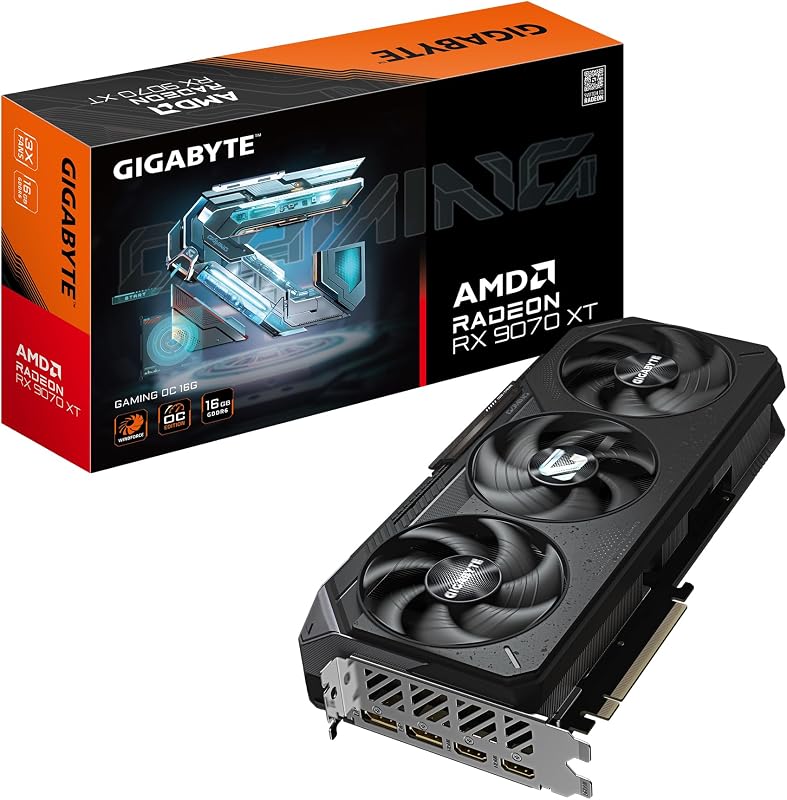
The GIGABYTE Radeon RX 9070 XT features 16GB of GDDR6 memory and PCIe 5.0 interface support, built around an alternative graphics architecture. Desktop builders who prefer AMD’s ecosystem and want a dedicated Gaming OC cooling layout might select this unit over the ASUS Dual if their workflows favor high raw compute throughput over NVIDIA-specific Blackwell features.
ASRock Radeon RX 9070 Challenger

The ASRock Radeon RX 9070 Challenger offers a 2520MHz boost clock, 16GB GDDR6 on a 256-bit bus, and an integrated triple-fan cooling solution complete with 0dB silent modes and an LED indicator. Builders with larger cases who prefer the extended physical footprint of a three-fan heatsink over a compact 9-inch dual-fan design will appreciate what this RDNA 4 model provides.
ASUSPCIe 5.0

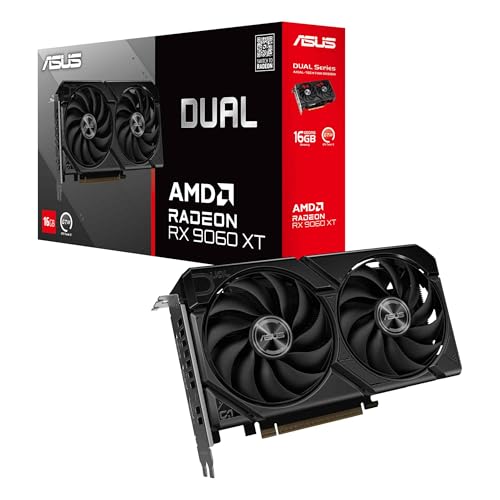
The ASUSPCIe 5.0 Dual Radeon RX 9060 XT incorporates a very similar 2.5-slot thermal architecture, utilizing Axial-tech fans, 0dB technology, HDMI 2.1b, and DisplayPort 2.1a video outputs paired with 16GB of GDDR6 memory. Shoppers who enjoy the physical form factor and dual ball bearing durability of the ASUS Dual series but prefer an AMD-based configuration will find this a direct alternative.
Final Verdict
Evaluating whether the card meets modern expectations leads to a clear conclusion: is asus rtx 5060 ti 16gb worth it for modern mid-tier builders? The answer is a definitive yes for users who value space-efficient engineering. ASUS has struck a smart balance by pairing NVIDIA’s Blackwell architecture and 767 AI TOPS with a spacious 16 GB GDDR7 memory configuration, avoiding the memory bottlenecks that have hampered earlier mid-range graphics tiers. The inclusion of modern display connections like DisplayPort 2.1b further solidifies its standing as a well-rounded, future-ready graphics card.
Between its robust Axial-tech fan construction, durable dual ball bearings, and convenient Dual BIOS switch, the ASUS Dual RTX 5060 Ti 16GB provides the acoustic and thermal control that desktop builders demand. While its 2.5-slot thickness requires careful chassis measurement in ultra-compact setups, its compact 9-inch length ensures broad compatibility across the majority of modern enclosures. For anyone seeking reliable high-resolution gaming and responsive AI capability in a manageable form factor, this graphics card stands out as a dependable choice.
FAQ
What are the exact physical dimensions of this graphics card?
The card measures 9.0 inches in length and 4.7 inches in width. It features a 2.5-slot profile, meaning it requires slightly more vertical clearance than a standard two-slot expansion card inside your computer case.
How does the Dual BIOS switch work on the card?
The card includes a physical switch on its edge allowing you to toggle between Quiet and Performance firmware modes. Performance mode uses an aggressive fan curve for lower operating temperatures, while Quiet mode reduces fan RPM for quieter desktop gaming.
What display outputs does the card provide?
The card comes equipped with three DisplayPort 2.1b connections and one HDMI 2.1b port. These high-bandwidth ports support resolutions up to 7680×4320 pixels for high-refresh and multi-monitor desktop environments.
Does the card completely turn off its fans when idling?
Yes, the integrated 0dB technology stops the Axial-tech fans completely during light desktop operations, media playback, and low-temperature states, allowing the system to run in complete acoustic silence.
What items come included inside the retail packaging?
According to the product specifications, the package contains the DUAL-RTX5060TI-16G graphics card, an ASUS Speedsetup manual, and a Thank You card. Additional accessories like specialized support brackets are not listed as included.