As Amazon Associates, we earn from qualifying purchases. This means we may receive a small commission at no extra cost to you if you click through and make a purchase.
The Parrot AR.Drone 2.0 is an intermediate-tier quadcopter built around a high-density foam chassis and dedicated radio frequency control hardware, designed to deliver responsive recreational flight alongside integrated CMOS aerial imaging. Featuring an enclosed protective hull and a distinct snow-themed camouflage pattern, this Elite Edition model represents an influential era of consumer drone development where mechanical impact absorption took precedence over automated flight computers. For collectors and hands-on radio control hobbyists looking for a tactile, nostalgic indoor flying platform, it serves as an entertaining mechanical aircraft, though anyone expecting modern satellite stabilization or professional cinematic camera performance will find its feature set firmly anchored in the past.
This quadcopter best suits adult flyers and intermediate radio control enthusiasts who want a physical bumper ring for indoor practice and enjoy the direct responsiveness of conventional RF remote piloting. Conversely, casual hobbyists wanting automated hovering, push-button ease, or safe handling for younger family members should explore friendly alternatives such as q9s drones for kids or modern sub-250-gram camera platforms that manage drift automatically. Understanding how this aircraft fits into a modern hangar requires examining its flight mechanics, imaging hardware, structural composition, and the inherent trade-offs of its legacy design.



Parrot AR.Drone 2.0 at a Glance

| Attribute | Specification |
|---|---|
| Brand | Parrot Inc. |
| Model Designation | AR.Drone 2.0 (AR Drorone 2) |
| Hull Material | Foam |
| Color and Edition | Snow (Elite Edition) |
| Video Capture Resolution | 1080p |
| Video Output Resolution | 720p |
| Optical Sensor Technology | CMOS |
| Supported Media Formats | MP4 (Video), JPEG (Photo) |
| Wireless Technology | RF (Radio Frequency) |
| Control Method | Dedicated Remote Control |
| Recommended User Level | Intermediate |
| Age Range | Adult |
| Included Components | Remote Control |
Flight Controls and Handling Dynamics
Piloting the Parrot AR.Drone 2.0 provides an authentic, manual multirotor experience governed by RF wireless communication rather than the multi-constellation satellite positioning common in today’s aerial market. Because the manufacturer specifies this aircraft for an intermediate skill level and an adult user base, pilots are expected to possess baseline spatial awareness and active stick management skills. The drone relies on its included RF remote control to translate directional inputs into motor throttle adjustments, demanding continuous micro-corrections from the operator to maintain a steady position in ambient air currents.
Unlike modern camera craft that utilize optical flow sensors and downward sonar to lock into place like a tripod in the sky, an intermediate RF platform drifts naturally when external forces act upon it. Indoor flight requires steady throttle control to avoid ascending into ceilings or sliding into walls, making the flight envelope far more interactive than contemporary automated drones. Operators who enjoy developing genuine stick discipline will find the manual flight characteristics rewarding, as smooth transitions and consistent altitudes reflect actual pilot coordination rather than algorithmic assistance.
While modern drone technology has introduced innovative control systems such as the single-handed dji motion controller 3, the Parrot AR.Drone flight controls adhere to traditional dual-axis inputs on its hardware remote. This conventional interface ensures that commands for pitch, roll, yaw, and throttle remain distinct and immediate. However, because it lacks modern obstacle avoidance sensors or autonomous fail-safe braking, pilots must maintain strict visual line of sight and avoid erratic control inputs when navigating confined spaces.
Camera and Video Quality Assessment
The imaging capabilities of the Parrot AR.Drone 2.0 center on an integrated CMOS optical sensor engineered to record aerial footage directly in MP4 format while capturing still frames as JPEG images. According to the manufacturer specifications, the camera system provides 1080p video capture resolution, allowing users to record high-definition files during their flights. However, the listing indicates that the live video output resolution is capped at 720p, meaning that real-time monitoring transmits at standard high definition while full 1080p rendering is preserved for post-flight playback.
Evaluating the Parrot AR.Drone camera quality requires understanding the physical constraints of its optical assembly. The CMOS sensor is embedded directly into the quadcopter body without the benefit of a motorized mechanical gimbal. Because the camera is rigidly mounted to the airframe, any tilt, banking maneuver, or vibration generated by the four electric motors translates directly into the recorded frame. While this produces a raw, cockpit-style first-person perspective that hobbyists often enjoy for sport flying, it cannot produce the perfectly level horizons associated with stabilized photography platforms.
Lighting conditions also play a critical role in CMOS sensor performance on this class of drone. In bright outdoor environments or evenly illuminated indoor spaces, the camera captures clear JPEG snapshots and legible MP4 video files suitable for casual hobby archiving. In low-light rooms or harsh high-contrast conditions, fixed-aperture CMOS sensors of this generation naturally introduce digital grain and motion blur. For casual aerial documentation and recreational tracking, the 1080p capture resolution offers usable fidelity, but prospective buyers should not confuse it with modern stabilized video platforms.
Protective Foam Construction and Indoor Hull Design
One of the most recognizable engineering choices found on the Parrot AR.Drone 2.0 Elite Edition is its full-coverage foam indoor hull. The Snow edition features a distinctive camouflage pattern applied directly over the lightweight foam structure, combining aesthetic flair with functional impact absorption. Rather than using brittle molded plastics that fracture upon impact, the expanded foam perimeter forms a continuous ring around the propellers, creating an integrated bumper zone that deflects gentle collisions during indoor maneuvers.
This foam ring serves two critical safety roles for indoor hobbyists. First, it isolates high-speed spinning propeller blades from drywall, curtains, and furniture, drastically reducing the likelihood of cosmetic property damage during close-quarters piloting. Second, the structural elasticity of the foam absorbs kinetic energy when the aircraft brushes against an obstacle, often allowing the quadcopter to bounce off a surface and maintain stable flight instead of immediately tumbling to the carpet. For pilots learning to navigate hallways, basements, or living rooms, this protective barrier provides valuable peace of mind.
However, the expanded surface area of the indoor hull presents distinct operational trade-offs when operating outdoors. While the foam material keeps the overall airframe lightweight, the broad profile of the perimeter ring acts like a sail when exposed to outdoor breezes. The product listing does not specify an official wind resistance rating, and even modest crosswinds can push the foam-ringed body off course. Pilots looking to fly outdoors must select calm days or accept that external gusts will significantly challenge the intermediate manual flight controls.
Battery Life and Operating Range Expectations
When assessing the flight endurance and operational radius of the Parrot AR.Drone 2.0, potential buyers must rely on realistic hobby expectations, as the manufacturer listing does not specify the battery milliamp-hour capacity, estimated flight time per charge, or maximum operational control range in feet or meters. In the realm of multirotor flight, unassisted quadcopters carrying an integrated CMOS camera and an expanded foam hull experience substantial aerodynamic drag, which places consistent power demands on the motor assembly.
Intermediate adult flyers should anticipate standard recreational flight sessions typical of non-commercial quadcopters, where flight windows require mindful power management. Without the automated smart battery return features found on newer camera platforms like those detailed in a comprehensive dji mavic mini review, the Parrot AR.Drone 2.0 requires the pilot to actively track flight duration and land the craft manually before internal voltage drops below operational thresholds.
The RF wireless technology provides responsive local control within line-of-sight parameters, which aligns with its primary role as an indoor and near-field outdoor flyer. Because high-frequency RF control signals are subject to physical attenuation from structural walls, concrete barriers, and metal framing, operating the drone across multiple rooms in a home can degrade connection stability. Maintaining direct visual line of sight and operating within open indoor rooms ensures the RF remote maintains uninterrupted authority over the aircraft.
Setup and Intermediate Pilot Requirements
Getting the Parrot AR.Drone 2.0 into the air involves standard radio-frequency linking between the aircraft and the included remote control. The listing confirms that a dedicated remote control is supplied in the box, providing an out-of-the-box flight solution that does not rely exclusively on mobile device touchscreens. Setting up the quadcopter requires ensuring that the foam hull is securely seated over the central mechanics and that the propellers are completely unobstructed prior to powering on the system.
Because Parrot Inc. classifies the skill level as intermediate, initial setup requires a measured approach from adult users. The absence of automated takeoff sequences, ground-facing landing sensors, and obstacle detection grids means the pilot must execute every phase of flight manually. Operators must establish an open perimeter free of fragile decor, pets, and low-hanging light fixtures before initiating motor spin-up to prevent unintended collisions during the initial hover phase.
Routine maintenance is also an inherent part of operating a multirotor with a foam airframe. While the foam material withstands routine bumping against flat surfaces, repeated heavy strikes against sharp edges can nick or compress the structure over time. Intermediate pilots should inspect the propeller tracking and foam integrity after each flight session, ensuring that the motor shafts spin freely and that the CMOS camera lens remains clear of airborne dust and pet hair that commonly accumulate in home environments.
Parrot AR.Drone 2.0 Pros and Cons
Pros
- Protective foam indoor hull prevents propeller contact
- Onboard 1080p MP4 high-definition video capture
- Dedicated RF remote control included in box
- Integrated CMOS optical sensor captures JPEG photos
- Distinctive Snow Elite Edition styling
Cons
- Listing omits battery capacity and flight duration
- Video output resolution capped at 720p
- Intermediate skill required due to manual handling
Check Parrot AR.Drone 2.0 on Amazon
Who Should Buy the Parrot AR.Drone 2.0
Deciding whether to add this legacy quadcopter to your personal collection comes down to your appreciation for manual flight mechanics versus modern electronic automation.
Buy It If
- You want a lightweight foam indoor hull that cushions bumps against walls and shields propeller blades during indoor flights.
- You are an adult or intermediate hobbyist who appreciates traditional RF remote control flight without relying on satellite computers.
- You are a drone enthusiast or collector seeking an iconic piece of recreational multirotor history featuring the Snow Elite Edition pattern.
- You want high-definition 1080p MP4 onboard recording with 720p output monitoring for casual, non-stabilized aerial perspectives.
Skip It If
- You need professional-grade, gimbal-stabilized 4K video footage with a perfectly level horizon for commercial content creation.
- You want beginner-friendly autonomous features such as push-button takeoff, automated hover locking, or GPS-based return-to-home.
- You are shopping for young children who require ultra-simplified controls and fully enclosed toy-grade micro frames.
Parrot AR.Drone 2.0 Alternatives Worth a Look
If the intermediate manual controls and legacy feature set of the Parrot AR.Drone 2.0 do not align with your flying goals, several modern alternatives offer updated flight software, advanced camera stabilization, and enhanced flight duration.
2K HD FPV Drone

The 2K HD FPV Drone is an adult-oriented camera aircraft designed with accessible flight assistance, including altitude hold, one-key takeoff and landing, three selectable speed modes, and headless mode. It features a foldable, portable chassis and ships with two batteries to extend operational time. Shoppers who find the intermediate rating of the Parrot quadcopter daunting will appreciate this alternative for its beginner-friendly automation and collapsible design.
3-Axis Gimbal

The 3-Axis Gimbal quadcopter represents a major technological leap toward modern aerial photography, featuring a 4K UHD camera stabilized by a true 3-axis mechanical gimbal. Weighing under 249 grams, it provides intelligent flight features including a 31-minute flight time, 10-kilometer video transmission, wind resistance, and automated return. Aerial videographers seeking rock-steady 4K footage over vast distances should pick this model over the fixed-camera foam construction of the AR.Drone.
DJI Mini 4K Camera Drone
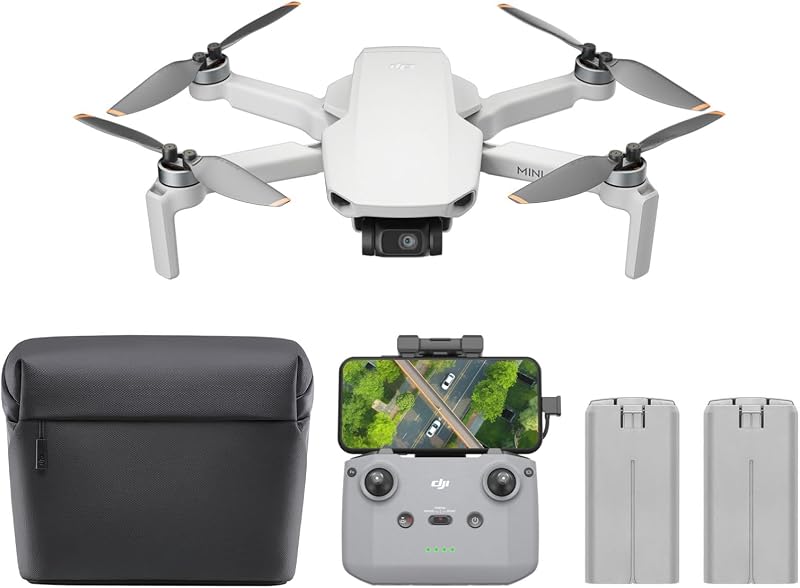
The DJI Mini 4K Camera Drone combo delivers an advanced cinematography setup with a 4K UHD stabilized camera, 3-axis mechanical gimbal, and automated QuickShots flight paths. Weighing under 249 grams, this package includes two batteries capable of delivering up to 62 minutes of total flight time alongside 10-kilometer video transmission and auto return. Content creators who want seamless automated shots and extended battery reserves should choose this comprehensive camera kit over older manual platforms.
Final Verdict
The Parrot AR.Drone 2.0 remains an iconic chapter in the evolution of consumer multirotors, distinguished by its durable foam indoor hull, custom Snow finish, and direct RF remote control interface. By providing onboard 1080p MP4 recording alongside 720p output resolution, it fulfills basic aerial imaging needs while prioritizing physical durability in confined indoor settings. For intermediate adult pilots and drone collectors who value manual stick handling and mechanical impact absorption over automated computerized assists, it offers a distinctly nostalgic and engaging piloting experience.
However, when evaluated against modern aerial standards, its fixed CMOS optical sensor, absence of mechanical stabilization, and lack of specified battery metrics or autonomous safety protocols make it an impractical choice for serious aerial photography. If your objective is capturing stabilized high-resolution video or enjoying effortless, drift-free outdoor flight, modern sub-250-gram alternatives with multi-axis gimbals and GPS integration are far better suited to your needs. Choose the Parrot AR.Drone 2.0 if you specifically appreciate its unique foam architecture and hands-on legacy flight characteristics.
FAQ
Does the Parrot AR.Drone 2.0 come with an indoor protective hull?
Yes, the listing specifies that this Elite Edition Snow model includes the foam indoor hull, which wraps completely around the propeller arcs to protect internal home furnishings and the rotor blades from incidental contact.
What video recording resolution does the Parrot AR.Drone 2.0 support?
The aircraft features an optical CMOS sensor capable of capturing video at 1080p resolution in MP4 format, while still photography is supported in JPEG format. Live video output resolution during operation is specified at 720p.
Is the Parrot AR.Drone 2.0 suitable for beginner pilots or children?
The manufacturer listing designates the skill level as intermediate and specifies the age range description as adult. Because it relies on manual RF remote control without modern automated hover assists or collision sensors, beginners and young children may struggle to control it safely.
What control technology does the Parrot AR.Drone 2.0 use?
The quadcopter communicates via RF wireless communication technology and includes a dedicated remote control in the package for manual piloting.
What is the battery life and operating range of the Parrot AR.Drone 2.0?
The product listing does not specify the battery capacity in milliamp-hours, the estimated flight time per charge, or the maximum operating control distance. Pilots should anticipate standard recreational flight times typical of lightweight unassisted multirotors and fly within direct visual line of sight.