
As Amazon Associates, we earn from qualifying purchases. This means we may receive a small commission at no extra cost to you if you click through and make a purchase.
The NVIDIA RTX 4000 SFF Ada is a dedicated workstation graphics card engineered to deliver high-end visual computing inside compact PC cases. Built on NVIDIA Ada Lovelace architecture with a dual-slot, low-profile physical design, this professional board addresses the needs of engineers, designers, and researchers who require reliable rendering performance and memory capacity in cramped enclosures. The bottom-line verdict is that this model delivers unmatched workstation efficiency and memory density for small-form-factor systems without compromising software stability or processing power.
This graphics processor suits CAD technicians, architectural visualizers, and data science professionals working in tight desktop towers or modular office workstations. If your daily projects demand heavy 3D modeling, real-time viewport ray tracing, or advanced FP8 machine learning execution, this card delivers steady, dependable output. However, operators building spacious full-tower towers who prefer standard video ports or those requiring massive multi-accelerator rack infrastructure like the nvidia rtx pro 6000 blackwell server platform should investigate larger form factor alternatives instead.


NVIDIA RTX 4000 SFF Ada at a Glance

| Attribute | Detail |
|---|---|
| Graphics Coprocessor | NVIDIA RTX 4000 |
| Architecture | NVIDIA Ada Lovelace Architecture |
| Graphics Memory | 20 GB GDDR6 |
| Interface Bus | PCI-Express x16 |
| Form Factor | Dual Slot Low Profile |
| Video Output Interface | Mini DisplayPort |
| Maximum Display Resolution | 7680×4320 pixels |
| Included Accessories | Quick start guide, support guide, mini DP to DP adapter, ATX bracket |
| Distributor Model Number | 900-5G192-2571-000 (VD8465) |
Ada Lovelace Architecture and Core Specifications
Understanding the value of the graphics board begins with its silicon layout. Transitioning past entry-level professional options such as the nvidia rtx a400 line, this model brings full Ada Lovelace architecture enhancements to compact workspaces. A close examination of the nvidia rtx 4000 specs reveals that single-precision floating-point calculation speeds are twice as fast as previous generations. This massive FP32 throughput bump directly accelerates complex simulation routines, digital geometry generation, and mathematical workloads across professional suites.
In addition to standard floating-point operations, the core silicon introduces specialized enhancements for modern artificial intelligence workflows. The card achieves more than twice the previous generation AI performance improvement by supporting fast FP8 precision data formats. Furthermore, the architecture accelerates the simultaneous execution of mixed flotation decimal and whole numbers, allowing complex shading passes and background data calculations to run alongside one another without computational bottlenecks or stalls.
The card also brings verified manufacturing quality under its official Japanese distributor designation VD8465 and part number 900-5G192-2571-000. Unlike standard gaming parts that prioritize short-burst peak clock frequencies, this workstation board prioritizes deterministic calculation accuracy, enterprise software compatibility, and continuous thermal stability across lengthy engineering calculations and unattended rendering exports.
Workstation Performance in 3D Rendering and Simulation
Creative agencies and production studios require hardware that shortens turnaround cycles without overheating in office desks. When evaluating true nvidia rtx 4000 workstation performance, the card provides up to 2X the throughput compared to previous generations in rendering pipelines. This throughput advancement drastically cuts export times when compiling video content, calculating motion graphics, and baking lighting maps inside demanding digital visual effects environments.
Deploying the nvidia rtx 4000 for 3d rendering offers a clear advantage for spatial planning and design validation. Architectural design assessments and virtual prototypes of product design require smooth viewport navigation under complex ray-traced lighting models. Because the Ada Lovelace core handles real-time ray tracing calculations effortlessly, architects and industrial designers can evaluate material properties and structural reflections without waiting for offline previews.
While massive studio render farms might rely on full-scale rack accelerators like the rtx 6000 blackwell for extreme studio computing, individual practitioners working on localized machines gain immense agility from this card. The board sustains heavy computational throughput inside small enclosures, enabling smooth viewport interaction and reliable final-frame generation on dedicated creator workstations.
CAD Precision and 20 GB GDDR6 Memory Capacity
For computer-aided design and mechanical prototyping, raw calculation throughput must be paired with massive memory buffers. The nvidia rtx 4000 cad performance provides fluid responsiveness when navigating large parametric assemblies, mechanical digital twins, and detailed structural schematics. Whether users are rotating dense assemblies in engineering suites or running cross-section interference tests, the card eliminates visual lag and maintains pinpoint accuracy.
A standout technical attribute of this model is its capacious nvidia rtx 4000 20gb frame buffer. Professional software workflows suffer dramatic slowdowns when scene datasets exceed onboard VRAM, triggering system RAM pagination. With 20 GB of dedicated GDDR6 memory, this board easily manages vast datasets, complex BIM models, and dense point-cloud laser surveys that would choke lesser graphics cards.
This extensive memory capacity is equally critical for machine learning developers and data scientists. Coupled with hardware-level FP8 mathematical execution, the 20 GB pool allows practitioners to fine-tune generative models, process multi-layered neural networks, and analyze large statistical tables locally. The generous memory ensures uninterrupted workflow execution across multi-tasking data pipelines without memory allocation errors.
Form Factor, Display Connectivity, and Power Efficiency
Physical casing constraints often prevent standard graphics cards from fitting into enterprise client machines. As an rtx 4000 low profile dual-slot board, this device installs cleanly into compact business desktops and slim form-factor workstations. NVIDIA packages both a standard low-profile bracket and a swappable full-height ATX bracket with the board, ensuring straightforward mounting across either miniature chassis or traditional desktop enclosures.
When comparing an rtx 4000 sff vs desktop gpu, rear port selection represents a practical difference. To maintain a dual-slot low-profile form factor, this graphics board uses Mini DisplayPort connections rather than standard full-sized ports. NVIDIA accounts for this by bundling a mini DP to DP adapter directly in the retail package. The card drives high-end multi-display setups seamlessly, supporting an impressive maximum digital resolution of 7680×4320 pixels for pristine 8K output on supported monitors.
From an electrical perspective, evaluating nvidia rtx 4000 power consumption reveals an architecture engineered for compact thermal envelopes. The listing does not specify the exact total graphics power in watts, but the card’s trim dual-slot low-profile form factor is designed to integrate into power-limited desktop chassis without requiring specialized power supplies. In contrast, full-sized consumer options like the msi nvidia geforce rtx 5070 ti require extensive clearance, multi-slot brackets, and hefty supplemental power connectors that compact business PCs cannot accommodate.
NVIDIA RTX 4000 SFF Ada Pros and Cons
Pros
- Spacious 20 GB GDDR6 memory buffer
- Compact dual-slot low-profile form factor
- Twice the FP32 compute speed of previous generation
- FP8 precision support for artificial intelligence
- Includes ATX bracket and mini DP adapter
Cons
- Relies on Mini DisplayPort outputs requiring adapters
- The listing does not specify exact TDP wattage
- Dual-slot low-profile cooler limits peak overclocking
Check NVIDIA RTX 4000 SFF Ada on Amazon
Who Should Buy the NVIDIA RTX 4000 SFF Ada
Buy It If
- You work in a compact or slim small-form-factor desktop computer that cannot physically house standard full-height graphics cards.
- Your primary workloads involve complex 3D rendering, CAD drafting, or architectural simulations that demand a dedicated 20 GB GDDR6 memory pool.
- You need accelerated AI capabilities with FP8 precision data handling and double the FP32 throughput of previous generation boards.
- You want to power ultra-high-resolution monitors up to 7680×4320 pixels using professional Mini DisplayPort outputs.
Skip It If
- You have a full-tower PC case and prefer direct full-sized DisplayPort or HDMI connections without utilizing mini DP adapters.
- Your computing tasks revolve solely around general web browsing, office administration, or light document work where professional GPU acceleration is unnecessary.
- You are building an enthusiast gaming rig where standard consumer cards provide better alignment with consumer display connectivity.
NVIDIA RTX 4000 SFF Ada Alternatives Worth a Look
If your hardware requirements call for standard display outputs, gaming optimization, or larger chassis installations, several capable graphics alternatives merit your attention.
GIGABYTE Radeon RX 9070 XT
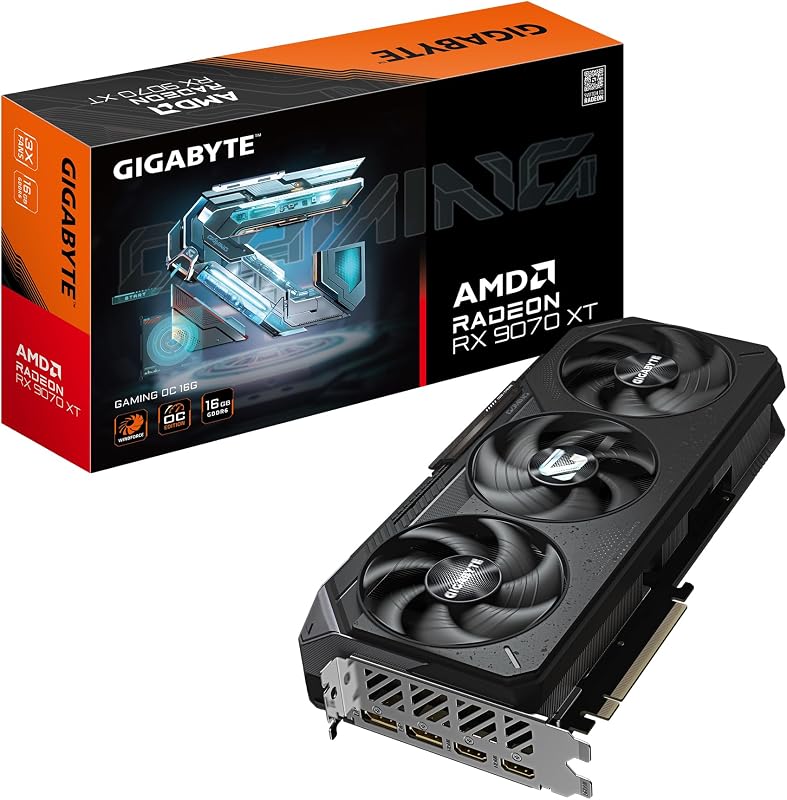
The GIGABYTE Radeon RX 9070 XT is a gaming-oriented graphics card featuring 16 GB of GDDR6 memory and PCIe 5.0 motherboard connectivity. It is a suitable pick for gamers and content enthusiasts working in standard desktop cases who do not need workstation-certified drivers or a low-profile form factor.
PCIe 5.0
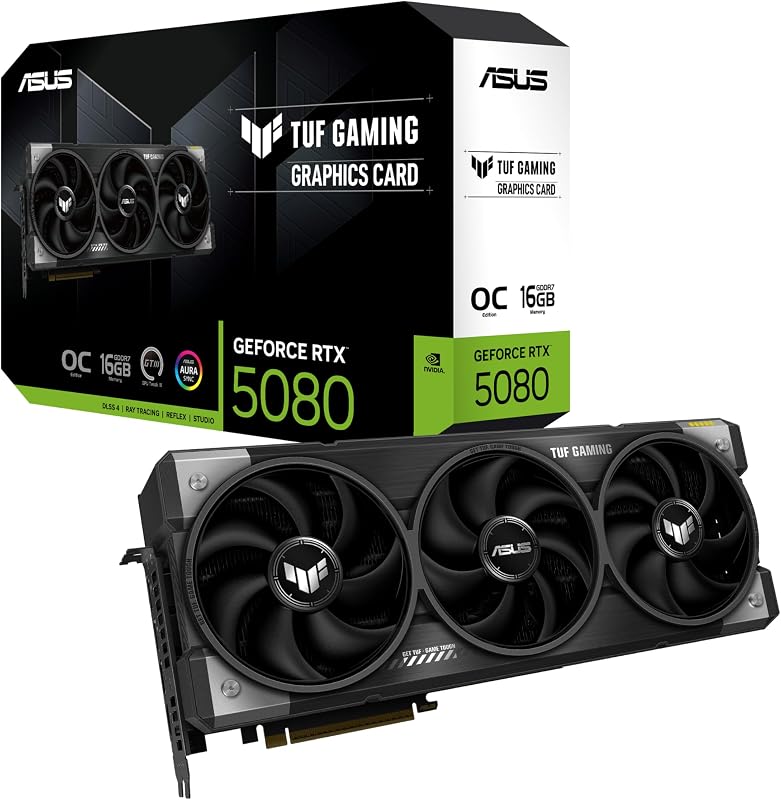
Representing the ASUS TUF Gaming GeForce RTX 5080 series, the PCIe 5.0 card delivers 16 GB of high-speed GDDR7 memory, an expansive 3.6-slot cooling profile, Axial-tech fans, and HDMI/DP 2.1 video interfaces. Builders who have massive desktop towers, robust power supplies, and room for triple-fan thermal assemblies should evaluate this card over compact workstation hardware.
ASRock Radeon RX 9070 Challenger

The ASRock Radeon RX 9070 Challenger features 16 GB of GDDR6 memory on a 256-bit bus, PCIe 5.0 compatibility, a 2520MHz boost clock, and a triple-fan cooling array with 0dB silent mode operation. This card fits buyers looking for full-height desktop graphics performance, active fan-stop modes, and consumer video outputs in a standard PC case.
Final Verdict
Weighing whether is nvidia rtx 4000 worth it depends directly on your system constraints and professional application demands. For years, deploying graphics hardware in small-form-factor desktops required accepting major performance cutbacks or settling for restrictive memory buffers. This board shatters that compromise by delivering 20 GB of GDDR6 memory, 2X the throughput of previous generations, and modern Ada Lovelace FP8 acceleration inside a dual-slot, low-profile card.
If you are an engineer, visual artist, or digital designer who requires rock-solid stability and substantial graphics memory in a compact desktop enclosure, this board is a standout performer. It delivers professional-grade computational precision and broad display resolution support in a package that fits virtually any modern desktop workspace.
FAQ
What display output ports are on the NVIDIA RTX 4000 SFF Ada?
The card features Mini DisplayPort connections on its backplate to fit within a low-profile bracket. To help connect standard workstation monitors, a mini DP to DP adapter is included inside the package.
How much memory is installed on the graphics card?
The graphics board includes 20 GB of GDDR6 memory. This large video memory allocation provides the headroom needed for processing large CAD models, multi-layered 3D scenes, and dense data science datasets.
What accessories come in the retail package?
The retail box contains the graphics board, a quick start guide, a support guide, an interchangeable full-height ATX bracket, and a mini DP to DP adapter for display connectivity.
What is the maximum display resolution supported by this card?
The board supports digital display resolutions up to 7680×4320 pixels, allowing users to drive 8K monitors or multiple high-resolution professional displays with crisp fidelity.
What is the exact power consumption of the graphics board?
The listing does not specify the exact power consumption in watts or total graphics power rating. However, the card is specifically designed with a low-profile dual-slot footprint for efficient deployment in compact desktop systems.


