As Amazon Associates, we earn from qualifying purchases. This means we may receive a small commission at no extra cost to you if you click through and make a purchase.
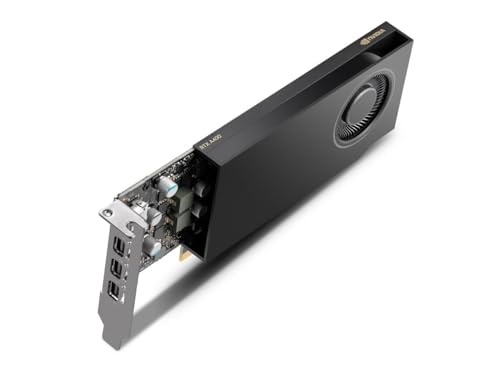
The Nvidia RTX A400, produced by PNY under model part VCNRTXA400-SB, is an entry-level professional desktop graphics card built around the Nvidia Ampere architecture. Configured with 768 CUDA cores, a dedicated 4GB GDDR6 memory layout, and a remarkably low 50W power draw, this single-slot graphics board is engineered specifically to provide reliable computing power and multi-screen visual output inside space-constrained office and business workstations. In short, it is an ultra-compact, energy-efficient workstation graphics card designed to drive multiple ultra-high-resolution displays and basic design workflows without straining your system power supply.
This compact graphics card is an outstanding fit for corporate offices, financial analysts, educational institutions, and draftspersons who require quad-monitor setups and responsive 2D or basic 3D modeling within small form factor enclosures. Because it operates cleanly within a modest power envelope, it upgrades standard business desktop towers without demanding chassis overhauls or auxiliary power cables. However, professionals handling heavy three-dimensional rendering, large-scale engineering simulations, or complex visual effects will quickly exhaust its resources and should consider higher-tier alternatives like the nvidia rtx 4000 for greater memory buffers and compute density.


Nvidia RTX A400 at a Glance

| Specification | Detail |
|---|---|
| Graphics Coprocessor | NVIDIA RTX A400 |
| GPU Series | NVIDIA Quadro |
| Architecture | Nvidia Ampere |
| CUDA Cores | 768 Cores |
| GPU Clock Speed | 1762 MHz |
| Memory Capacity | 4 GB |
| Memory Type | GDDR6 |
| Memory Clock Speed | 381 MHz |
| Form Factor | Single slot, low profile |
| Interface | PCI Express 4.0 (x4 interface) |
| Display Outputs | 4x Mini DisplayPort 1.4a |
| Maximum Display Resolution | 5120 x 2880 pixels (4x 5K @ 60 Hz) |
| Power Consumption | 50W |
| Cooling System | 1 Fan (Active) |
Compact Form Factor and Chassis Compatibility
When examining the physical construction of modern workstation graphics cards, the Nvidia RTX A400 stands out for its streamlined single-slot profile. The nvidia rtx a400 low profile architecture is specifically optimized for deployment inside compact desktop chassis, slim business enclosures, and space-limited workstations where standard dual-slot cards simply cannot fit. Measuring just a single bracket in width, it slips cleanly into cramped PCIe expansion sections without obstructing neighboring motherboard slots or internal case airflow pathways, making it an accessible drop-in upgrade for standard enterprise towers.
Thermal regulation is maintained through a compact heatsink paired with a single active cooling fan. Because the board operates beneath a rigid 50W power envelope, this single fan provides steady thermal management without generating intrusive noise in quiet office or developer environments. While massive enterprise accelerators like the rtx 6000 blackwell require specialized high-airflow server chassis and extensive power delivery systems, this board is built to integrate seamlessly into ordinary desktop towers across business, education, and development settings without requiring complex modifications.
From an installation perspective, the card connects via a PCI Express 4.0 interface configured electrically at x4 bandwidth. A critical advantage of this modest architecture is that all required operational power is supplied directly through the motherboard PCIe slot. The absence of supplemental 6-pin or 8-pin power connectors makes the card compatible with proprietary, low-wattage OEM desktop power supplies, allowing administrators to modernize visual setups across entire desktop fleets with minimal hardware friction.
Multi-Display Productivity and High-Resolution Capabilities
Display connectivity is one of the most prominent highlights of the card, featuring four discrete Mini DisplayPort 1.4a ports arrayed across the single-slot backplate. In an rtx a400 multi display setup, the card can drive up to four independent screens at resolutions reaching 5120 x 2880 pixels at 60 Hz. This capability delivers exceptional workspace flexibility for professionals who track multiple data sources, trade financial markets, manage complex codebases, or supervise security and communication feeds across a panoramic array of high-resolution monitors.
To integrate an rtx a400 mini displayport arrangement into standard office environments, users should plan their cabling carefully. Because the rear bracket utilizes Mini DisplayPort connections to preserve its single-slot low-profile dimensions, connecting standard desktop monitors typically requires Mini DisplayPort-to-DisplayPort or Mini DisplayPort-to-HDMI cables and adapters. Once connected, the hardware delivers stable, uncompressed digital video signals across all connected panels, eliminating the stutter and tearing often encountered when relying on integrated motherboard video ports.
The dedicated display engines powered by the Ampere architecture ensure fluid video production timelines, crisp vector presentation, and clear typography across expansive multi-monitor arrays. Editors can preview video timelines on dedicated screens while keeping project assets, communication channels, and documentation open on secondary displays without dropping frames. For productivity-focused desktop users who value screen space above all else, this quad-output capability serves as a compelling reason to install a dedicated display adapter.
Professional Workflow and Entry-Level CAD Performance
Deploying the nvidia rtx a400 for cad tasks offers a dependable baseline for drafting professionals, engineers, and architecture students. Powered by 768 CUDA cores operating at a GPU clock speed of 1762 MHz, the card delivers dedicated acceleration for geometry calculation, viewport panning, and 2D drafting within commercial computer-aided design software. Drafting technical schematics, reviewing architectural plans, and working with simple mechanical components proceed with responsive clarity that significantly outperforms standard integrated CPU graphics.
Memory capacity is a crucial factor when evaluating everyday workflows. With an rtx a400 4gb gddr6 configuration, the card provides high-speed data transfer across a 381 MHz memory clock to support light 3D rendering and video production tasks. However, 4GB of video memory establishes clear functional limits. While basic 3D modeling and light assemblies load smoothly, massive multi-part industrial assemblies, heavy photorealistic ray tracing, and deep learning datasets will quickly saturate this memory pool. Organizations running heavy rendering clusters or deep learning compute workloads require enterprise data center deployments like an nvidia rtx pro 6000 blackwell server to manage intensive processing pipelines.
For standard day-to-day business operations, the dedicated memory pool ensures stable multitasking across demanding office applications. Users can alternate between photo editing, vector illustration, spreadsheet calculation, and basic 3D model inspection without triggering system memory paging or visual interface hesitation. When treated as an entry-level nvidia rtx a400 workstation solution, the hardware reliably executes moderate creative tasks while ensuring overall system responsiveness remains smooth and dependable.
Power Efficiency and System Reliability
Power consumption is where the engineering of this graphics card delivers significant practical benefits. With official rtx a400 power consumption rated at just 50W, the card draws minimal electricity while maintaining reliable operational output. This low wattage threshold ensures the card operates cleanly inside pre-built desktop computers equipped with standard power supplies rated between 180W and 300W, which commonly lack the overhead needed for high-wattage graphics cards.
Thermal stability is similarly well managed by the 50W power envelope. The single onboard cooling fan maintains safe operating temperatures across extended workdays without spinning at disruptive noise levels. In enterprise or educational lab environments where multiple systems operate within close physical proximity, low acoustic output and minimal ambient heat dissipation are essential for maintaining a comfortable working climate. High-wattage graphics cards such as the msi nvidia geforce rtx 5070 ti require dual-slot cooling and heavy power feeds, making them unsuited for quiet, space-constrained corporate settings where the A400 excels.
The combination of modest thermal output and direct motherboard power delivery contributes to long-term hardware reliability. By reducing heat buildup within small form factor enclosures, the card protects surrounding components such as storage drives, memory modules, and processors from unnecessary thermal stress. For corporate fleet deployments requiring dependable continuous operation, this low-impact design provides a balanced approach to visual expansion.
Nvidia RTX A400 Pros and Cons
Pros
- Single-slot low-profile design fits compact PCs
- Low 50W power draw needs no external cables
- Drives four 5K displays at 60Hz simultaneously
- Modern Ampere architecture with 768 CUDA cores
- Energy-efficient and quiet single-fan thermal design
Cons
- Limited to 4GB GDDR6 memory for complex workloads
- Requires Mini DisplayPort adapters for standard cables
- PCI Express x4 interface restricts high-throughput tasks
Check Nvidia RTX A400 on Amazon
Who Should Buy the Nvidia RTX A400
Selecting the right workstation graphics card requires matching hardware strengths to your everyday computing requirements. Review these practical scenarios to decide if this compact card matches your office needs.
Buy It If
- You need to drive up to four 5K displays simultaneously from a single-slot, low-profile desktop expansion card.
- Your desktop computer uses a compact chassis with a low-wattage power supply that lacks auxiliary PCIe power cables.
- Your workflow focuses primarily on 2D CAD drafting, light 3D modeling, financial tracking, and general enterprise productivity.
- You want a quiet, power-efficient GPU from the Nvidia Ampere lineup that draws only 50W under operational load.
Skip It If
- Your daily work involves complex 3D rendering, large-scale mechanical engineering assemblies, or extensive video editing requiring more than 4GB of VRAM.
- You require standard full-size HDMI or standard DisplayPort connectors without using Mini DisplayPort adapter cables.
- Your primary objective is modern high-frame-rate PC gaming, which exceeds the capabilities of an entry-level 768 CUDA core workstation card.
Nvidia RTX A400 Alternatives Worth a Look
If your computing tasks demand higher rendering bandwidth, larger onboard memory buffers, or full-sized desktop expansion capabilities, several alternative graphics cards offer different hardware profiles worth considering.
GIGABYTE Radeon RX 9070 XT
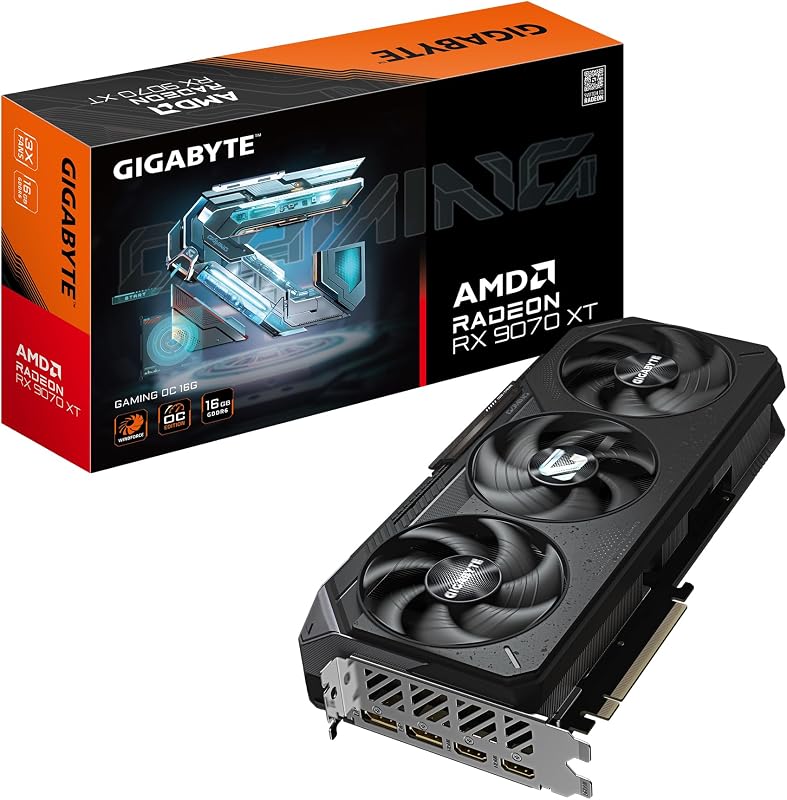
The GIGABYTE Radeon RX 9070 XT is a full-sized gaming graphics card featuring 16GB of GDDR6 memory, PCIe 5.0 bus connectivity, and an overclocked cooling array. Built for high-demand graphical workloads, it provides four times the video memory capacity of the A400, making it an excellent alternative for users operating standard mid-tower enclosures who require substantial memory for heavy content creation and modern gaming.
PCIe 5.0 ASUS TUF Gaming GeForce RTX 5080
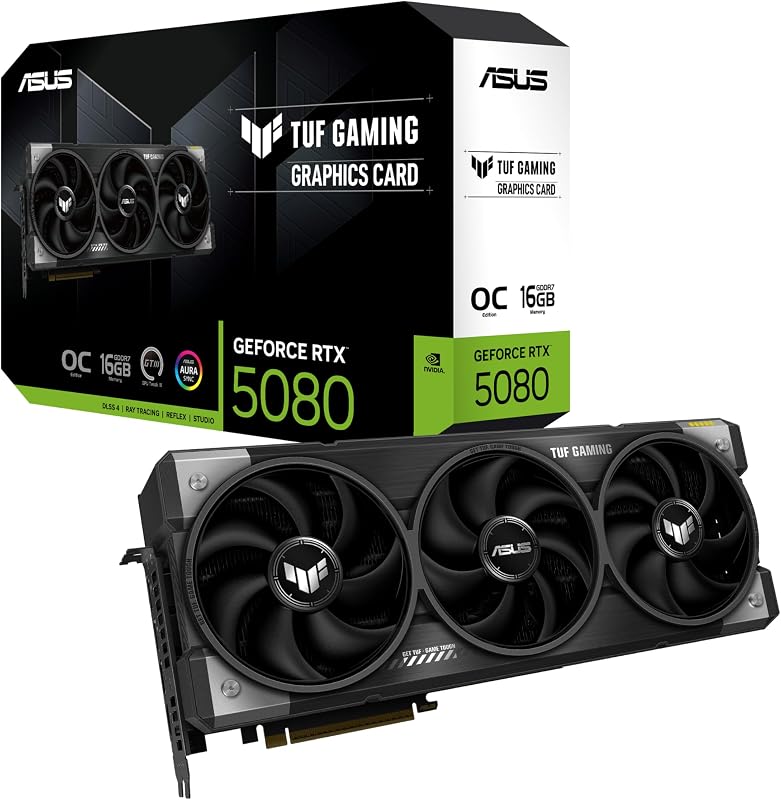
The PCIe 5.0 ASUS TUF Gaming GeForce RTX 5080 is an enthusiast-tier desktop card engineered with 16GB of high-speed GDDR7 memory, HDMI and DisplayPort 2.1 outputs, and a massive 3.6-slot cooling configuration utilizing Axial-tech fans. Built with military-grade components and protective PCB coating, it caters to users who need elite compute and rendering performance and possess the large chassis space and high-wattage power supply required to support it.
ASRock Radeon RX 9070 Challenger

The ASRock Radeon RX 9070 Challenger is built on AMD RDNA 4 architecture, featuring a 2520MHz boost clock, 16GB of 256-bit GDDR6 memory, a PCIe 5.0 interface, triple cooling fans, and 0dB silent cooling technology. This card is well suited for creative professionals and gamers who want an expansive 16GB memory buffer in a standard desktop case while benefiting from quiet operation during moderate workloads.
Final Verdict
Reviewing the complete nvidia rtx a400 specs confirms that this graphics card fulfills a precise and valuable role in the professional desktop market. By combining the power efficiency of the Ampere architecture with 768 CUDA cores, 4GB of GDDR6 memory, and quad Mini DisplayPort outputs, it solves the challenge of adding multi-display productivity to space-restricted office PCs. Drawing just 50W directly through its PCIe slot, it bypasses the need for power supply upgrades, making it an accessible solution for enterprise deployments.
Ultimately, deciding whether the nvidia rtx a400 is worth it depends on your specific daily tasks. If your work revolves around financial dashboards, multi-screen data analysis, office productivity, and entry-level CAD drafting in a compact computer case, this card delivers exceptional utility and rock-solid reliability. However, if your daily responsibilities center on heavy 3D rendering, complex animation, or enthusiast-level gaming, investing in a full-sized graphics card with a larger memory buffer will better serve your computing requirements.
FAQ
Does the Nvidia RTX A400 require an external power connector?
No, the card operates within a 50W power envelope and draws all required electrical power directly through the motherboard PCIe slot, eliminating the need for 6-pin or 8-pin auxiliary power cables.
How many monitors can the Nvidia RTX A400 drive at once?
The card features four Mini DisplayPort 1.4a outputs and can independently drive up to four 5K displays at resolutions up to 5120 x 2880 pixels at a 60 Hz refresh rate.
Is the Nvidia RTX A400 suitable for 3D CAD modeling?
The card handles 2D drafting, architectural plan reviews, and entry-level 3D modeling smoothly, but its 4GB GDDR6 memory capacity will encounter performance limitations when handling massive assemblies or complex photorealistic rendering.
What types of cables or adapters are needed for monitor connections?
Because the graphics card features Mini DisplayPort 1.4a outputs, connecting standard monitors requires Mini DisplayPort-to-DisplayPort or Mini DisplayPort-to-HDMI cables or adapters.
Will the Nvidia RTX A400 fit into small form factor desktop cases?
Yes, the card is built as a single-slot, low-profile graphics card, making it compatible with compact office computers and slim desktop cases that cannot accept full-sized graphics hardware.