
As Amazon Associates, we earn from qualifying purchases. This means we may receive a small commission at no extra cost to you if you click through and make a purchase.
The Sony a7CR brings commercial-grade resolution to an ultra-portable body, pairing an enormous 61MP full-frame sensor with a rangefinder-style footprint built for mobility. Serving as the high-density counterpart in Sony’s compact lineup, this camera delivers an uncompromising verdict: it produces breathtaking image clarity, extensive cropping headroom, and elite autofocus tracking in an everyday chassis, making it one of the most capable travel and landscape tools currently engineered. While squeezing studio-level resolving power into an ultra-compact chassis introduces minor compromises in viewfinder size and continuous burst rates, the overall execution provides unmatched image quality per ounce.
This camera suits photographers who demand peak dynamic range and unmatched fine detail without hauling a heavy bag, making it a masterclass for backcountry landscapes, environmental portraiture, and documentary work. Conversely, users who primarily photograph high-speed field sports, run extensive multi-camera video productions, or require dual memory card slots for instant client backups should look toward conventional full-size alternatives like the sony a7iv camera.
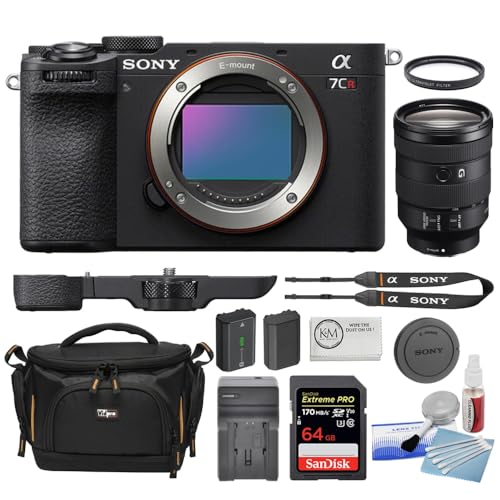


Sony a7CR at a Glance

| Feature | Specification |
|---|---|
| Image Sensor | 61MP Full-Frame Exmor R BSI Sensor |
| Image Processor | BIONZ XR Image Processor |
| In-Body Stabilization | 7 Stops of In-Body Image Stabilization |
| Autofocus System | 693-Point Phase Detection with 79% Coverage |
| Continuous Burst Rate | Up to 8 fps |
| ISO Sensitivity | ISO 50 to 102400 |
| Video Recording | 10-Bit Full-Frame 4K60p Video |
| Color Profiles | S-Log3, S-Gamut3, S-Cinetone, User LUTs |
| High-Resolution Shooting | 240.8MP Pixel Shift Multi Shooting |
| Viewfinder and Display | 2.36m-Dot OLED EVF and 3-inch 1.03m-Dot Vari-Angle Touchscreen |
61MP Sensor Resolution and Image Quality
At the very center of the camera is the remarkable sony a7cr 61mp sensor, utilizing a back-illuminated Exmor R architecture that captures staggering amounts of textural nuance. Having 61 megapixels on tap means you can capture wide environmental compositions while retaining the freedom to crop aggressively in post-production without sacrificing resolution. For fine-art landscapes, detailed architectural geometry, and high-fashion portrait work, this sensor resolves microscopic textures that lower-resolution sensors simply blend together. When shooting static scenes mounted on a sturdy tripod, the built-in 240.8MP Pixel Shift Multi Shooting mode takes detail capture even further by shifting the sensor across successive frames to eliminate interpolation artifacts.
Examining the core sony a7cr specs reveals an expansive sensitivity span ranging from ISO 50 up to 102400, giving creators ample flexibility when moving between midday sun and dim evening ambiance. The back-illuminated layout maximizes light-gathering efficiency across its dense pixel grid, preserving dynamic range across high-contrast vistas where bright skies meet deeply shadowed foregrounds. When paired with sharp prime glass such as the sony fe 85mm f/1.8, the files exhibit razor-sharp subject isolation and smooth tonal roll-off that easily hold up to expansive gallery-sized printing.
Nevertheless, a 61-megapixel sensor places strict demands on your photographic discipline. Because individual photosites are exceptionally small, slight motion blur or minor focusing errors become instantly visible when inspecting images at one hundred percent magnification. Photographers transitioning from 24-megapixel or 33-megapixel sensors must adopt disciplined shutter speed habits to ensure that the sensor’s resolving capability translates into truly tack-sharp results.
Autofocus Tracking and BIONZ XR Processing
Handling the massive data flow generated by this high-resolution sensor requires substantial computational horsepower, which is supplied directly by the BIONZ XR image processor. The sony a7cr autofocus tracking system leverages 693 phase-detection autofocus points that cover approximately 79 percent of the image frame. This dense grid allows the camera to acquire and cling to active subjects across almost the entire frame, minimizing focus hunting even when subjects move erratically toward the periphery.
Continuous shooting tops out at up to 8 fps, providing sufficient burst performance for capturing fleeting moments during street walks, candid portrait sessions, or documentary assignments. While 8 frames per second may not match the blistering speeds of dedicated action flagships, the sophisticated tracking algorithms compensate by ensuring each captured frame remains accurately locked onto the intended focal plane. Touchscreen controls make selecting focus points intuitive, enabling quick rack-focusing and tracking adjustments on the fly directly through the rear monitor.
The processing architecture also manages file throughput efficiently, letting users move between rapid raw shooting and deep menu navigation without frustrating interface stutter. The BIONZ XR engine processes complex color information with exceptional speed, allowing real-time scene analysis that continuously refines focus accuracy and white balance calculations across shifting lighting conditions.
In-Body Image Stabilization for Handheld Shooting
High-resolution photography has historically been tethered to tripods, but the sony a7cr image stabilization system breaks that tradition by providing up to 7 stops of five-axis in-body compensation. When working with ultra-dense sensors, the slightest hand tremor can soften microscopic details, rendering high-megapixel advantages moot. The internal sensor-shift mechanism counteracts angular shake, pitch, and roll, allowing photographers to handhold shots at noticeably slower shutter speeds than previously possible on bodies of this size.
This stability transforms the sony a7cr for travel photography, enabling sharp twilight cityscapes, handheld waterfall captures, and low-light street scenes without requiring a cumbersome three-legged support. When exploring remote trails with lightweight wide-angle zooms like the tamron 17-28mm f2.8 sony e mount, travelers can shoot confidently from dawn to dusk while keeping pack weight to an absolute minimum. Handheld mobility encourages more spontaneous compositions, low-angle perspectives, and rapid adjustments that bulky setups typically discourage.
The stabilization system integrates seamlessly with optically stabilized lenses as well, including the bundled Sony FE 24-105mm f/4 G OSS lens. By synchronizing body-based correction with lens-based optical stabilization, the combination neutralizes both broad shifts and minute tremors across short and telephoto focal lengths alike, providing exceptional operational versatility straight from the palm of your hand.
4K Video Capabilities and Pro Color Profiles
Beyond its obvious prowess as a stills powerhouse, the camera functions as an exceptionally capable video rig thanks to advanced sony a7cr 4k video implementation. The camera supports 10-bit full-frame 4K60p video capture, granting cinematographers the temporal fluidity required for smooth slow-motion playback alongside pristine 4:2:2 color subsampling. Having 10-bit internal recording prevents unsightly color banding across gradients such as open skies and sunset horizons, establishing a robust foundation for serious color grading workflows.
For demanding videographers, the inclusion of S-Log3 and S-Gamut3 ensures maximum dynamic range capture, matching standard cinema workflows across professional production sets. If you prefer to minimize grading time in post-production, the S-Cinetone picture profile delivers pleasing skin tones, natural mid-tones, and gentle highlight roll-off straight out of camera. Additionally, the camera supports User LUTs, allowing operators to upload custom look-up tables directly to the camera so they can preview their finished creative aesthetic on the monitor while filming.
The fully articulating 3-inch 1.03m-dot vari-angle LCD touchscreen aids solo video creators and vloggers significantly. Its side-opening design allows the screen to face forward without conflicting with top-mounted microphones or accessories, ensuring clean framing from any angle. Combined with wireless connectivity and USB interface capabilities, offloading files or configuring mobile previewing remains straightforward whether working in a home studio or editing on the road.
Body Ergonomics, Viewfinder, and Handling Trade-Offs
Designing a sony a7cr compact full frame camera requires an intricate balance between physical footprint and physical handling. Squeezing a full-frame 61MP sensor into a flat-topped chassis creates an extraordinarily portable machine, but larger telephoto lenses can occasionally feel front-heavy. Sony directly resolves this physical imbalance by including the Sony GP-X2 Grip Extension in the box. Screwing into the baseplate, this extension gives your pinky finger a dedicated resting area, dramatically enhancing hand fatigue resistance during extended shooting sessions without noticeably expanding overall pack volume.
Shoppers frequently evaluate the sony a7cr vs a7c ii when deciding which compact full-frame body fits their everyday toolkit. While the sibling a7C II focuses on a standard 33MP sensor geared toward general hybrid speed, the a7CR is explicitly engineered for uncompromising image resolution and cropping freedom. Discussions surrounding next-generation hardware iterations like a potential sony a7cr ii or a future flagship sony a7 5 often debate whether compact bodies should retain rangefinder ergonomics, but for photographers who value minimal footprint above all else, the a7CR hits a sweet spot that bulkier conventional bodies cannot replicate.
Every compact design inevitably demands trade-offs, and here it centers around the electronic viewfinder. The a7CR incorporates a 2.36m-dot OLED EVF with modest magnification positioned in the left corner rather than a towering central optical hump. While entirely functional for bright daylight framing, photographers accustomed to large, central 5.76m-dot viewfinders will find the visual experience noticeably tighter. Additionally, the inclusion of a single card slot means professional shooters must establish regular daily backup protocols rather than relying on redundant in-camera dual-card recording.
Sony a7CR Pros and Cons
Pros
- Massive 61MP full-frame Exmor R BSI sensor
- Effective 7-stop in-body image stabilization
- Advanced 693-point phase-detection autofocus system
- Versatile 10-bit 4K60p video with S-Log3
- Includes GP-X2 grip extension for improved handling
Cons
- Continuous shooting capped at 8 fps
- Modest 2.36m-dot electronic viewfinder resolution
- Single memory card workflow limitation
Who Should Buy the Sony a7CR
Navigating the trade-offs of an ultra-high-resolution travel camera helps determine whether this specific model matches your creative workflow or presents unnecessary limitations.
Buy It If
- You want massive 61-megapixel cropping versatility in a lightweight, travel-ready body that fits easily inside everyday bags.
- Your work focuses heavily on landscape, travel, architectural, or environmental portrait photography where fine detail is paramount.
- You require 7 stops of internal stabilization to shoot handheld low-light scenes without dragging along heavy tripods.
- You shoot 10-bit 4K video and rely on professional profiles like S-Log3, S-Cinetone, or custom User LUTs for consistent grading.
Skip It If
- You shoot fast-paced stadium sports or birding action where burst rates exceeding 8 fps are essential for capturing peak motion.
- Your commercial assignments strictly require simultaneous dual-card recording for immediate redundancy during paid shoots.
- You demand an oversized, high-magnification center-mounted electronic viewfinder for prolonged eye-level framing.
Sony a7CR Alternatives Worth a Look
If you are exploring the mirrorless camera landscape, several other options provide distinct balances between sensor resolution, video specifications, and bundled gear depending on your practical budget and operational goals.
24.1 Megapixel CMOS

The 24.1 Megapixel CMOS kit features the Canon EOS R100 mirrorless camera with an RF-S 18-45mm lens, offering 4K video capture alongside integrated Wi-Fi and Bluetooth connectivity. This package is tailored specifically for beginner photographers and social media creators seeking an approachable entry into interchangeable lens photography without the operational complexity or heavy storage demands of a commercial 61MP sensor.
Canon EOS R6 Mark II

For creators seeking a traditional full-frame hybrid workhorse, the Canon EOS R6 Mark II bundled with an RF 24-105mm f/4-7.1 IS STM lens delivers a 24.2-megapixel CMOS sensor engineered for balanced photo and video performance. While it offers less than half the pure pixel count of the 61MP sensor, its traditional body styling, deep ergonomic grip, and rapid shooting speeds appeal to event photographers and hybrid content creators who prioritize low-light speed over massive cropping headroom.
For Photography & Video

The For Photography & Video double-lens bundle centers around the Canon EOS R50 mirrorless camera, combining a 24.2MP APS-C sensor with Dual Pixel CMOS AF, 4K video recording, an 18-45mm lens, a 55-210mm zoom, a 64GB memory card, and a carrying bag. This comprehensive kit caters to enthusiasts and travel vloggers who desire extensive zoom range and turnkey accessories straight out of the box in a lightweight, entry-friendly APS-C package.
Final Verdict
The Sony a7CR successfully achieves a challenging engineering feat: transplanting an enormous, studio-grade 61MP full-frame sensor into a chassis compact enough to accompany you on casual day trips. By supporting this sensor with BIONZ XR processing, 7 stops of in-body image stabilization, and class-leading 693-point phase-detection autofocus tracking, Sony ensures that the camera’s high resolution delivers real-world utility rather than theoretical perfection. The bundled Sony FE 24-105mm f/4 G OSS lens and GP-X2 grip extension further transform the camera into a versatile, turn-key kit that handles diverse photographic genres right out of the box.
Ultimately, determining whether is sony a7cr worth it comes down to what you prioritize in your visual craft. If your creative passions center on capturing intricate textures, expansive outdoor landscapes, and architectural majesty without suffering from heavy camera bag fatigue, its resolution-to-weight ratio is unmatched. While sports photographers and dual-card purists must look elsewhere, creators who value pristine visual fidelity will find the Sony a7CR to be a uniquely empowering photographic companion.
FAQ
What makes the 61MP sensor on the Sony a7CR special for cropping?
The 61-megapixel full-frame Exmor R BSI sensor captures an immense volume of image data, allowing photographers to crop heavily into their frames during editing while still retaining higher resolution than standard 24MP cameras produce at full frame. It also features a 240.8MP Pixel Shift Multi Shooting mode for static subjects.
How effective is the image stabilization system on the Sony a7CR?
The camera features 7 stops of in-body image stabilization operating across five axes. This compensation neutralizes subtle hand movements and camera shake, which is vital because ultra-high-resolution sensors magnify tiny vibrations that would otherwise blur fine details when shooting handheld.
Does the Sony a7CR handle professional video capture?
Yes, the camera records 10-bit full-frame 4K60p video and includes professional color gamuts such as S-Log3, S-Gamut3, and S-Cinetone. It also supports custom User LUTs, allowing creators to monitor or apply specific creative color grades directly in the field.
What accessories come bundled with this Sony a7CR package?
The kit includes the Sony a7CR body in black, a Sony FE 24-105mm f/4 G OSS lens, the Sony GP-X2 Grip Extension, an NP-FZ100 rechargeable battery, battery charger, 64GB memory card, 77mm UV filter, camera strap, body cap, camera case, microfiber cleaning cloth, and a 5-piece cleaning kit.
Can the Sony a7CR be used effectively for fast-action sports?
While the camera features rapid 693-point phase-detection autofocus tracking and BIONZ XR processing, its maximum continuous burst rate is capped at up to 8 fps. For casual action and street scenes this is sufficient, but specialized sports photographers generally prefer cameras built for higher burst frame rates.


