
As Amazon Associates, we earn from qualifying purchases. This means we may receive a small commission at no extra cost to you if you click through and make a purchase.
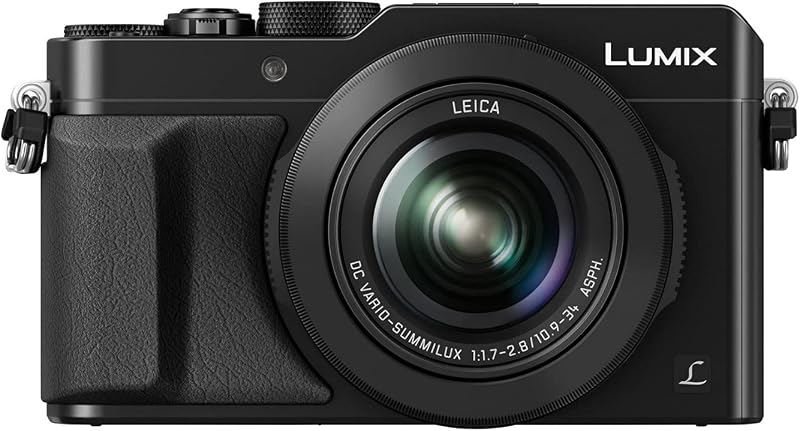
The Panasonic Lumix LX100 is an enthusiast-focused compact camera that pairs a multi-aspect Micro Four Thirds sensor with a fast Leica zoom lens and traditional manual exposure dials. Instead of relying on automated menus, this camera prioritizes direct mechanical handling and optical performance in a body small enough to slip into a coat pocket. The one-line verdict is that the Lumix LX100 remains a uniquely satisfying stills and video camera for photographers who want tactile creative control and genuine low-light capability without hauling interchangeable lenses.
This camera suits street shooters, travel enthusiasts, and everyday hobbyists who value hands-on dial controls, bright aperture values, and responsive framing through a built-in electronic viewfinder. Those who need extreme telephoto reach for wildlife, modern continuous autofocus tracking for erratic sports, or high-resolution files for heavy cropping will want to look toward different camera categories.




Panasonic Lumix LX100 at a Glance
| Attribute | Detail |
|---|---|
| Sensor Type | Multi-aspect Micro Four Thirds CMOS |
| Effective Resolution | 12.8 Megapixels |
| Lens | Leica DC Vario-Summilux 24-75mm equivalent (3.1x optical zoom) |
| Aperture Range | f/1.7 wide to f/2.8 telephoto |
| Image Stabilization | Power O.I.S. (Optical Image Stabilizer) |
| Viewfinder | Eye-level electronic viewfinder (2,764k-dot resolution) |
| Rear Screen | 3.0-inch LCD display |
| Video Recording | 4K Ultra HD at 30p |
| Shutter Speed Range | 60 seconds to 1/16,000 second |
| File Formats | JPEG (DCF/EXIF v2.3), Raw (RW2) |
Sensor Size and Image Clarity
At the center of this camera’s performance is its imaging hardware. The panasonic lx100 micro four thirds sensor represents a massive step up in surface area compared to ordinary point-and-shoot cameras. Panasonic employs a multi-aspect design where the sensor crops slightly into the active image area depending on whether you shoot in 4:3, 3:2, or 16:9 aspect ratios. Because of this cropping approach, the camera delivers an effective still resolution of 12.8 megapixels rather than the full nominal pixel count of the underlying silicon. While 12.8 megapixels may sound modest on a modern spec sheet, the physical surface area of each individual pixel remains substantially larger than what you find in conventional pocket cameras, yielding cleaner files and wider dynamic range.
The practical result of this larger sensor is noticeable in panasonic lx100 low light performance. When shooting indoors or after twilight, the CMOS chip captures ample light without immediately introducing muddy noise patterns. Photographers can capture clean imagery in both standard JPEG formats and uncompressed Raw (RW2) files, which preserve shadow detail and highlight headroom for post-processing. While modern pocket cameras like the panasonic lumix lx10 utilize a smaller 1-inch sensor to achieve higher pixel counts, the LX100 relies on the physical light gathering of its larger Micro Four Thirds chip to deliver pleasing tonal transitions and true optical depth.
For fine art, documentary photography, and family gatherings, the 12.8-megapixel output provides plenty of resolution for standard display screens, social sharing, and moderate print sizes. However, users who frequently crop deep into their frames to reframe distant subjects will encounter the resolution limit sooner than they would on cameras offering 20 megapixels or higher. It is a system built around getting the composition right in the frame rather than relying on heavy digital cropping later.
Leica Lens Quality and Image Stabilization
A camera sensor is only as good as the glass in front of it, and the integrated panasonic lx100 leica lens is arguably the standout feature of this hardware package. Branded as a Leica DC Vario-Summilux, this 3.1x optical zoom covers an effective 24mm wide-angle perspective through a 75mm portrait focal length. What sets this optic apart from standard compact zooms is its rapid aperture speed: it opens to a bright f/1.7 at 24mm and only drops to f/2.8 at the 75mm end. Maintaining an f/2.8 aperture at full telephoto on a sensor this large is an impressive optical feat for a pocketable enclosure.
This wide aperture allows shooters to isolate their subjects against softly blurred backgrounds, producing genuine shallow depth of field that phone cameras can only imitate through digital edge blurring. When framing portraits at 75mm and f/2.8, the transition from tack-sharp eyelashes to soft background bokeh is smooth and natural. The bright f/1.7 maximum aperture also keeps camera shutter speeds faster in dim environments, allowing you to freeze natural indoor action without immediately pushing sensitivity to extremes.
To assist with handheld framing, the lens features Panasonic Power O.I.S. (Optical Image Stabilizer). This mechanism actively compensates for hand tremor, which proves critical when shooting at slower shutter speeds in fading light or when holding the camera steady at the 75mm telephoto reach. Photographers seeking massive telephoto zoom ranges might examine options like the panasonic lumix zs100, but the LX100 makes a conscious design trade-off: it sacrifices excessive zoom reach in exchange for superior optical brightness and edge-to-edge sharpness across its focal range.
Manual Controls and Shooting Ergonomics
The external layout of this camera distinguishes it from almost every standard point-and-shoot on the market. The panasonic lumix lx100 manual controls eliminate reliance on menu hunting by placing the primary photographic parameters directly onto dedicated physical hardware. Around the lens barrel sits a dedicated mechanical aperture ring, clicking smoothly between f/1.7 and f/16, alongside an aspect-ratio switch on top of the barrel. On the top plate, you find a dedicated shutter speed dial, an exposure compensation dial offering quick adjustments, and a customizable control ring.
This dial-based configuration mirrors classic rangefinders. Setting both the aperture ring and shutter dial to their respective “A” markings puts the camera into full Program auto mode. Moving the aperture ring while leaving the shutter dial on “A” activates Aperture Priority, whereas turning the shutter dial activates Shutter Priority. Setting both manually activates complete Manual exposure control. This intuitive interface makes changing exposure settings instantaneous, enabling photographers to react swiftly to changing lighting conditions without taking their eye off the scene.
Framing is handled through either the rear display or the integrated electronic viewfinder (EVF). The built-in EVF packs an impressive 2,764k-dot resolution with eye-level detection, allowing you to compose images comfortably under intense midday sunlight where rear screens tend to wash out. The rear screen measures 3.0 inches with a standard 4:3 aspect ratio. It is worth noting that the listing does not specify tilting or touchscreen capabilities for this screen, so framing at extreme high or low angles requires viewing the fixed rear panel or the viewfinder directly.
Video Features and Everyday Travel Practicality
Beyond still photography, panasonic lx100 4k video recording brings high-definition video capture to an enthusiast travel tool. The camera captures 4K Ultra HD footage at 30p, yielding crisp detail, rich color rendition, and natural contrast. The combination of the Micro Four Thirds sensor and the fast Leica lens gives 4K footage a cinematic quality with genuine optical blur that smaller-sensor camcorders cannot reproduce. The Power O.I.S. stabilization operates during video recording, helping smooth out handheld pans and casual walking footage.
The camera also incorporates Panasonic 4K Photo mode. This feature leverages the 30-frame-per-second video stream, allowing shooters to extract an individual 8-megapixel still frame from a recorded 4K burst. For capturing fleeting expressions, unpredictable pets, or sudden splashes of water, 4K Photo acts as a safety net ensuring you never miss the exact peak of the action. Shutter speeds can climb as high as 1/16,000 second via the electronic shutter mechanism, making it possible to shoot wide open at f/1.7 even under blistering summer sun without overexposing your shots.
As an overall package, the panasonic lx100 for travel photography strikes a balance between portability and photographic muscle. While it does not match the pocket-flat profile of basic subcompacts, it remains remarkably compact considering the sensor and lens assembly inside. Compared to bulky bridge cameras like the panasonic fz1000 ii, the LX100 slips easily into a shoulder bag, daypack, or jacket pocket, making it an unobtrusive companion for city exploration, museum visits, and weekend road trips.
Panasonic Lumix LX100 Pros and Cons
Pros
- Bright f/1.7-2.8 Leica zoom lens
- Large Micro Four Thirds sensor
- Dedicated mechanical manual dials
- Built-in 2,764k-dot electronic viewfinder
- Optical Power O.I.S. image stabilization
- Ultra HD 4K video recording
Cons
- Resolution capped at 12.8 megapixels
- Limited 3.1x optical zoom reach
- Listing specifies fixed non-tilting screen
Check Panasonic Lumix LX100 on Amazon
Who Should Buy the Panasonic Lumix LX100
Deciding whether this compact camera belongs in your gear bag comes down to how much you prioritize manual operation and optical quality over automated simplicity and extreme zoom reach.
Buy It If
- You want direct, physical dial controls for aperture, shutter speed, and exposure compensation without digging through menus.
- You prioritize low-light shooting and real optical background blur made possible by the fast f/1.7-2.8 Leica zoom lens.
- You prefer composing through a high-resolution eye-level electronic viewfinder rather than relying exclusively on a rear screen.
- You want a compact, sturdy metal camera capable of capturing 4K video and Raw still files on daily travels.
Skip It If
- You need a long telephoto reach for wildlife, distant sports, or bird photography beyond the 75mm optical limit.
- You require high-megapixel counts above 12.8 MP for massive gallery prints or aggressive image cropping.
- You demand a fully articulating or tilting selfie screen for specialized video framing, as this listing specifies a fixed 3-inch display.
Panasonic Lumix LX100 Alternatives Worth a Look
If the specific focal range or feature set of the Lumix LX100 does not align with your photographic routine, several alternative compact devices serve different user priorities.
1080p Full HD Video

The 1080p Full HD Video listing highlights the Kodak Pixpro FZ55, a 16-megapixel compact digital camera featuring a 28mm wide-angle lens, 5x optical zoom, and a 2.7-inch LCD. It records video in 1080p Full HD and operates as a lightweight, straightforward point-and-shoot powered by a rechargeable lithium-ion battery.
Shoppers should pick this Kodak model over the Lumix LX100 if they want an ultra-simple, pocket-friendly point-and-shoot camera for casual snapshots that avoids manual exposure dials and complex settings entirely.
iT20 S TTL Mini Flash

The iT20 S TTL Mini Flash package is built around the Sony ZV-1 II digital camera bundle, which includes an external mini flash, a 64GB memory card, extra batteries, a dedicated charger, and cleaning accessories. This camera is engineered primarily as a modern content-creation and vlogging device.
Creators should consider this bundle over the LX100 if their primary focus is contemporary video production, vlogging setups, and receiving an all-in-one accessory starter kit right out of the box.
Compact camera with anti-shake

The Compact camera with anti-shake listing represents the Camkory digital camera, an entry-level FHD 1080p point-and-shoot camera featuring 16x zoom, two included batteries, a charger, and a 32GB memory card. Presented in pink, it is designed specifically as an accessible starter camera for children, parties, and casual gift-giving.
Parents and gift shoppers looking for an uncomplicated starter device for younger family members should select this Camkory model rather than an advanced enthusiast tool like the Lumix LX100.
Final Verdict
A comprehensive panasonic lumix lx100 review reveals a camera that stands apart from standard consumer compacts. By integrating a large Micro Four Thirds sensor behind a fast f/1.7-2.8 Leica zoom, Panasonic managed to solve the common trade-off between pocketable dimensions and authentic low-light capability. The satisfying mechanical resistance of the aperture ring and shutter dials makes everyday shooting an engaging, deliberate experience rather than a passive exercise in tapping glass screens.
When asking is panasonic lumix lx100 worth it, the answer depends entirely on what you shoot. While its 12.8-megapixel ceiling and 3.1x zoom reach mean it cannot replace a dedicated wildlife telephoto rig, it remains one of the most capable, beautifully engineered walkaround cameras available for enthusiast travel and street photography. If you appreciate tactile controls, sharp Leica optics, and 4K shooting in a compact form factor, the Lumix LX100 remains an exceptional creative tool.
FAQ
Does the Panasonic Lumix LX100 shoot in RAW format?
Yes, the Lumix LX100 supports both JPEG (DCF/EXIF v2.3) and uncompressed Raw recording in the Panasonic RW2 file format. Shooting in Raw allows photographers to capture the maximum dynamic range from the Micro Four Thirds sensor, providing ample latitude to adjust exposure, highlights, shadows, and white balance in editing software.
Can you change lenses on the Panasonic Lumix LX100?
No, the Lumix LX100 is a fixed-lens compact camera. It features a permanently attached Leica DC Vario-Summilux 24-75mm equivalent zoom lens. While you cannot mount external interchangeable lenses, the built-in optic covers the most widely used wide-angle to portrait focal lengths with a fast f/1.7-2.8 aperture range.
Does the Panasonic Lumix LX100 have image stabilization?
Yes, the camera is equipped with Panasonic Power O.I.S. (Optical Image Stabilizer). This optical system counteracts hand movement and vibration, which helps you achieve sharp handheld photographs at slower shutter speeds and stabilizes video footage during casual handheld shooting.
What is 4K Photo mode on the Panasonic Lumix LX100?
The 4K Photo mode utilizes the camera’s 4K video recording capability at 30 frames per second to help capture high-speed action. Once recorded, the camera allows you to scroll through the footage frame by frame and save any individual frame as an 8-megapixel still image.
Does the Panasonic Lumix LX100 have an articulated or tilting screen?
The camera listing specifies a fixed 3-inch LCD rear screen. The listing does not specify any tilting, articulation, or touchscreen capabilities, meaning all viewing must be done directly from the rear display or through the built-in 2,764k-dot eye-level electronic viewfinder.


