
As Amazon Associates, we earn from qualifying purchases. This means we may receive a small commission at no extra cost to you if you click through and make a purchase.
The Intel Core Ultra 7 265F is a modern desktop processor engineered for builders who want multi-threaded compute capability paired with a dedicated graphics card. Operating on a 65-watt processor base power design, this chip packs 20 physical cores divided between performance and efficiency designs to handle modern digital workloads without demanding oversized power delivery systems. For system builders assembling a balanced daily rig, our thorough Intel Core Ultra 7 265F review reveals a component focused strictly on core computational throughput, cutting away unnecessary integrated display silicon to prioritize core density and thermal restraint.
This chip ideally suits gamers, content creators, and daily multitaskers who already plan to install a dedicated GPU and want the architectural perks of the LGA 1851 platform. Because it carries the traditional “F” designation, anyone building a compact office rig without an add-in card or troubleshooting a display without external hardware will need to search elsewhere. Evaluating whether an Intel Core Ultra 7 265F build fits your desk comes down to understanding your motherboard choices, thermal headroom, and real-world multitasking needs.



Intel Core Ultra 7 265F at a Glance

| Feature | Specification |
|---|---|
| Total Physical Cores | 20 (8 Performance Cores + 12 Efficient Cores) |
| Total Concurrent Threads | 20 Threads |
| Maximum Boost Frequency | Up to 5.3 GHz |
| Processor Speed | 4.6 GHz |
| Combined Cache | 36 MB Cache (30 MB Installed Cache Memory) |
| Processor Base Power | 65 Watts |
| Processor Socket | LGA 1851 |
| Chipset Compatibility | Intel 800 Series Chipset |
| Interface & Memory Support | PCIe 5.0, PCIe 4.0, DDR5, Intel Optane Memory |
| Integrated Graphics | None (Discrete Graphics Required) |
Hybrid Architecture and Core Configuration
The foundation of this processor centers on a specialized hybrid design that blends two distinct microarchitectures into a single piece of silicon. Looking closely at the Intel Core Ultra 7 265F specs, the layout offers 20 physical cores composed of 8 Performance cores (P-cores) and 12 Efficient cores (E-cores). Unlike older desktop chip conventions where every performance core offered two threads, this platform runs 20 concurrent threads across its 20 physical cores. This balance ensures that intense, single-task loads occupy the high-speed P-cores while background processes and multi-threaded rendering queues shift smoothly toward the cluster of 12 E-cores.
Managing this architecture requires a competent scheduler, making Windows platform integration crucial for properly handling thread assignment. Users exploring modern desktop architectures in the intel core ultra series 2 family will appreciate how the hardware optimizes operational tasks behind the scenes. Demanding calculation tasks receive immediate priority on the 8 Performance cores, which achieve clock speeds scaling up to 5.3 GHz using Turbo Boost Max Technology 3.0. Meanwhile, background compression, browser tabs, and asset exports utilize the dense bank of E-cores without degrading foreground responsiveness.
Cache architecture also plays an essential role in stabilizing this massive pool of execution units. The listing specifies a 36 MB secondary cache alongside a 30 MB installed cache memory capacity, offering plenty of fast storage near the execution units. This large cache pool reduces system latency when shuffling datasets back and forth between system RAM and compute logic. For power users seeking multi-threaded capacity without stepping into extreme tier enterprise products, the 20-core configuration strikes a practical middle ground.
Gaming Performance and Graphics Demands
When assessing Intel Core Ultra 7 265F gaming capabilities, the single most critical specification to keep in mind is the “F” suffix. The processor lacks an integrated graphics engine, meaning the motherboard video outputs remain inactive under all conditions. Builders assembling a system around this chip must pair it with a discrete graphics card to boot and display an image. By omitting on-die graphics, Intel leaves the full thermal envelope and silicon area available for compute tasks, but builders lose the backup utility of basic onboard video troubleshooting.
Once paired with a capable discrete graphics card, the gaming profile of the 265F holds firm ground. Modern 3D engines benefit greatly from the single-core burst capability that reaches up to 5.3 GHz, allowing high-refresh gaming in esports titles as well as smooth physics calculations in complex open-world titles. Having 8 dedicated high-speed cores gives games uninterrupted access to low-latency performance, while telemetry, voice chat clients, and system recording tools run quietly in the background on the remaining 12 E-cores.
Platform bandwidth further reinforces gaming longevity through full PCIe 5.0 and PCIe 4.0 support. Gamers running high-end graphics setups—such as those seen in premium prebuilt rigs like the yeyian mirage s gaming pc desktop – intel core ultra 9 285k 5.7ghz,rtx 5080 16gb gddr7, 32gb ddr5 60—rely on modern lanes to handle massive texture streaming without bottlenecks. Combined with native high-speed DDR5 system memory compatibility, this processor ensures that data pipelines between modern storage drives, high-tier GPUs, and the CPU execution engines remain wide open.
Power Consumption and Thermal Requirements
Managing electrical draw and heat output has become a decisive factor in modern PC building, making the Intel Core Ultra 7 265F power consumption profile a notable highlight. Engineered with a modest 65-watt processor base power rating, this processor delivers significant multi-threaded muscle without instantly exhausting standard air coolers. Rather than drawing hundreds of watts continuously under moderate workloads, the baseline design allows builders to house this chip inside compact cases where thermal airflow might be limited.
A curious detail in the official product listing concerns cooler inclusion: the bullet points note “No thermal solution included,” while the product description text mentions that an “Intel Laminar RM2 included in the box.” Because packaging configurations can occasionally shift across distributions, builders should plan their build carefully. If an Intel Laminar RM2 cooler is present, it will suffice for standard daily use and office tasks at baseline power limits. However, sustained computing or long creative sessions will benefit considerably from an aftermarket cooling solution.
Even though the processor features a 65W base rating, sustained turbo clocks up to 5.3 GHz require thermal headroom to remain stable. When the chip engages Turbo Boost Max Technology 3.0 across multiple performance cores, power delivery briefly scales up to sustain peak speeds. Selecting a dependable mid-tower chassis with unobstructed mesh airflow ensures the 20 cores run cool, preventing thermal throttling from curtailing clock speeds during long rendering passes or intense gaming marathons.
Platform Integration and Motherboard Compatibility
Upgrading to this processor requires careful attention to platform standards. The chip relies strictly on the Intel Core Ultra 7 265F LGA 1851 socket, meaning it is physically and electrically incompatible with older LGA 1700 mainboards. Builders cannot simply drop this CPU into an existing 600 or 700 series motherboard. Instead, Intel Core Ultra 7 265F motherboard compatibility requires an Intel 800 series chipset-based motherboard to post and operate.
Moving to the 800 series platform brings notable benefits for storage and peripheral expansion. The chipset architecture natively integrates PCIe 5.0 connectivity alongside standard PCIe 4.0 paths, facilitating ultra-fast solid-state drive read and write speeds. Furthermore, the memory controller leaves older memory behind to exclusively support modern DDR5 modules, yielding significantly higher bandwidth for heavy datasets compared to past DDR4 generations. The listing also notes Intel Optane Memory support, catering to specialized cache drives.
When selecting a matching motherboard, everyday builders do not necessarily need expensive flagship platforms. Because the 265F features a locked multiplier and an efficient 65W base power draw, mainstream 800-series boards provide all the voltage regulation and lane support required for optimal performance. Those who prefer a more mainstream step in the hierarchy might also compare boards suitable for alternatives like the core ultra 5 245k, ensuring that motherboard pricing aligns reasonably with overall component goals.
Real-World Productivity and Benchmark Workloads
Beyond entertainment, this processor serves as a capable workhorse for creative productivity. Evaluating an Intel Core Ultra 7 265F benchmark scenario requires looking at how synthetic and practical applications utilize 20 threads. In rendering software, video export pipelines, and bulk file compression suites, the 12 efficiency cores provide immense aggregate throughput. Even without simultaneous multithreading on individual P-cores, the sheer physical core count delivers steady execution across massive batch queues.
Single-threaded burst responsiveness is equally strong. With base processor speeds starting at 4.6 GHz and ramping up to 5.3 GHz under Turbo Boost Max Technology 3.0, tasks like CAD viewport manipulation, audio track processing, and code compilation execute briskly. The hybrid architecture ensures that operating system maintenance tasks do not interrupt latency-critical audio buffers or compile jobs, delivering a smooth desktop experience under heavy multi-application loads.
Ultimately, productivity users asking if the Intel Core Ultra 7 265F is worth it will find their answer in its balance of core count and energy efficiency. It gives content creators the broad thread support needed to tackle intensive exports during the day while maintaining low idle and base power draw during regular office tasks. For workstations that need to stay quiet, reliable, and energy-conscious over long operational cycles, this 20-core balance proves highly practical.
Intel Core Ultra 7 265F Pros and Cons
Pros
- 20 physical cores across hybrid architecture
- Modest 65-watt processor base power
- Clock speeds up to 5.3 GHz
- Native PCIe 5.0 and DDR5 support
- Generous 36 MB cache buffer
Cons
- No integrated graphics included
- Conflicting listing details regarding cooler
- Requires new Intel 800 series motherboard
Check Intel Core Ultra 7 265F on Amazon
Who Should Buy the Intel Core Ultra 7 265F
Buy It If
- You already own or plan to purchase a dedicated discrete graphics card for your setup.
- You want 20 physical cores to balance gaming performance with heavy background multi-tasking.
- You are building on a modern Intel 800 series motherboard with DDR5 and PCIe 5.0 support.
- You prefer a 65W base power design that runs efficiently without needing extreme cooling loops.
Skip It If
- You need integrated graphics for a display-out connection without an external graphics card.
- You are hoping to upgrade an older LGA 1700 motherboard without buying a new 800 series board.
- You want an unlocked processor designed specifically for manual multiplier overclocking.
Intel Core Ultra 7 265F Alternatives Worth a Look
Shoppers browsing desktop hardware often encounter competing processors as well as completely unrelated search results that appear on marketplace feeds. Here is how competing options and common listing matches compare to the main product.
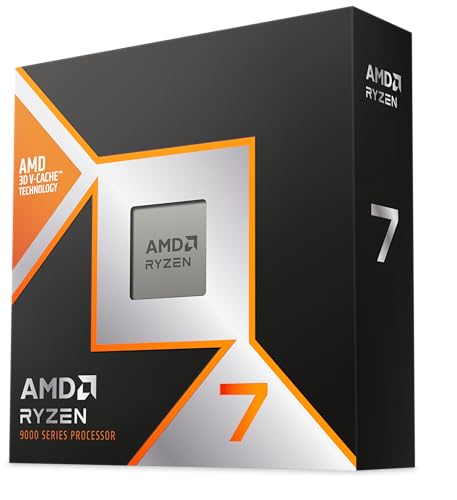
AMD RYZEN 7 9800X3D 8-Core

For PC builders contemplating an Intel Core Ultra 7 265F vs 9800X3D choice, the AMD RYZEN 7 9800X3D 8-Core represents a different design philosophy. Featuring an 8-core, 16-thread desktop processor architecture, this alternative targets competitive gamers who prioritize specialized high-speed gaming cache over high physical core counts. Builders seeking maximum thread counts for mixed productivity might prefer Intel’s 20-core setup, whereas pure gaming enthusiasts often lean toward AMD’s 8-core design.
Simple Stack & Press Design

Oddly appearing in retail hardware searches, the Simple Stack & Press Design is not computer silicon at all. This product is a 350-watt Hamilton Beach 3-cup electric vegetable chopper and mini food processor equipped with stainless steel blades for dicing, mincing, and pureeing. It suits kitchen meal prep rather than desktop computing, serving as a reminder to double-check retail categories when browsing computer hardware.
2-Speed Electric Food Chopper

Similarly showing up in search queries, the 2-Speed Electric Food Chopper is a 450W Ganiza meat grinder and vegetable chopper featuring 8-cup glass and stainless steel bowls alongside two sets of blades. Anyone looking to prepare fruits, nuts, or meats will find utility here, but PC enthusiasts assembling a high-speed workstation must filter past it to focus on desktop hardware components.
Final Verdict
The Intel Core Ultra 7 265F stands out as an efficient, highly focused desktop processor tailored for builders who take a pragmatic approach to PC assembly. By combining 8 Performance cores and 12 Efficient cores into a single 20-core, 20-thread structure running at a 65-watt base power rating, it gives users substantial processing power without demanding exotic cooling solutions or oversized power supplies. The modern LGA 1851 platform ensures access to modern technologies, including PCIe 5.0 transfer speeds and fast DDR5 memory.
While the total absence of integrated graphics requires a dedicated graphics card from day one, builders who already own a GPU will appreciate the focused design. For users migrating to the Intel 800 series ecosystem who desire a quiet, cool-running workhorse capable of handling demanding daily multitasking and high-refresh gaming, this processor proves to be a well-measured component that justifies its place in a modern desktop build.
FAQ
Does the Intel Core Ultra 7 265F have integrated graphics?
No, the processor does not include integrated processor graphics. The listing states clearly that discrete graphics are required, meaning your system will need a dedicated graphics card installed in a PCIe slot to output video to a monitor.
What socket does the Intel Core Ultra 7 265F use?
The processor uses the LGA 1851 socket. It is specifically compatible with Intel 800 series chipset-based motherboards and cannot be installed on older LGA 1700 motherboards.
Does the package include a CPU cooler?
The listing contains mixed information on cooling: one bullet point indicates that no thermal solution is included, while the text description notes that an Intel Laminar RM2 cooler is included in the box. Checking with your specific vendor before purchase is recommended, though an aftermarket cooler is often preferred for optimal thermal performance.
What kind of memory does this processor support?
The processor supports high-bandwidth DDR5 system memory alongside Intel Optane Memory support. It does not support older DDR4 memory modules on the LGA 1851 platform.
What are the core and thread counts of this CPU?
The processor features a total of 20 physical cores (divided into 8 Performance cores and 12 Efficient cores) and handles 20 concurrent threads, boosting up to 5.3 GHz with Turbo Boost Max Technology 3.0.


