
As Amazon Associates, we earn from qualifying purchases. This means we may receive a small commission at no extra cost to you if you click through and make a purchase.
The FERIETELF B16 enters the compact quadcopter market as an accessible outdoor flyer built specifically for hobbyists who want satellite-guided navigation without the burden of aviation registration. Weighing under 249 grams, this brushless motor foldable drone combines GPS positioning, downward optical flow assistance, and a motorized 4K camera into a travel-friendly package complete with a business carrying case. In short, our b16 gps drone review finds that it serves as an undemanding, reassuring entry point for casual pilots who prioritize automated safety features over cinematic studio-grade imagery.
This quadcopter is best suited for beginners, families, and casual weekend pilots who want a stable outdoor platform for practicing flight basics, capturing backyard family moments, and taking aerial photos without studying complex regulatory manuals. Because it sits strictly below the 250-gram threshold, recreational operators can launch without completing pilot certification or paying registration fees. Conversely, professional videographers, commercial content creators, and pilots seeking mechanical three-axis gimbal stabilization or multi-mile signal ranges should bypass this model and explore advanced platforms such as the dji mavic mini or commercial-grade camera drones.


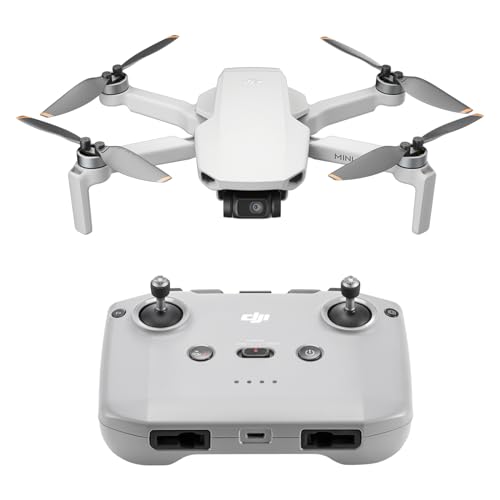

FERIETELF B16 at a Glance

| Feature | Specification |
|---|---|
| Takeoff Weight | Under 249 g (exempt from recreational registration) |
| Video Resolution | 4K (MP4 format) |
| Still Photo Resolution | 8 MP effective sensor resolution |
| Camera Field of View | 120-degree wide-angle lens |
| Camera Tilt Control | 90-degree motorized adjustment |
| Positioning System | Dual GPS and optical flow positioning |
| Motor Type | Brushless motor |
| Flight Duration | 20 to 25 minutes per battery (40 to 50 minutes total) |
| Connectivity | 5GHz Wi-Fi and dedicated remote control |
| Included Accessories | Two lithium-ion batteries and business carrying bag |
Flight Stability and Dual Positioning System
For any pilot stepping up to an outdoor quadcopter, flight stability is the single most critical factor in preventing unexpected crashes. The FERIETELF B16 relies on an integrated dual positioning system combining satellite GPS with downward optical flow technology. When flying outdoors in open areas, the onboard GPS module locks onto satellite signals to calculate exact geographic coordinates. This satellite lock anchors the aircraft in three-dimensional space, preventing it from drifting in light crosswinds when you release the control sticks. At lower altitudes or in environments where satellite reception is partially obstructed, the downward optical flow sensor tracks visual surface patterns beneath the airframe to preserve a steady hover.
Driving this flight stability is a set of efficient brushless motors. Compared to older brushed motors commonly found in budget toy quadcopters, a brushless motor foldable drone offers significant practical advantages in efficiency and durability. Brushless motors generate less friction, produce less heat, and deliver substantially higher rotational torque. This extra thrust allows the lightweight airframe to maintain a disciplined position against gentle atmospheric breezes while extending the working lifespan of the propulsion system. Because brushless motors lack mechanical carbon brushes that wear down over time, the aircraft delivers consistent power output across dozens of flights without requiring motor maintenance.
The GPS hardware also powers vital safety mechanisms designed to protect your investment during flight. The FERIETELF B16 includes an automated fail-safe return-to-home protocol that triggers when conditions become unpredictable. If the drone loses Wi-Fi connection with the transmitter, flies beyond the maximum operating range, or detects that its lithium-ion battery has dropped to critical levels, it automatically activates return navigation and flies back to its original takeoff point. Beginners can also manually trigger this return flight at any moment using a dedicated one-key button on the remote control. This automated safety net provides genuine reassurance for a gps drone for beginners, helping new pilots build confidence in open airspace.
Camera Quality and Video Transmission
Evaluating the ferietelf b16 camera quality requires understanding the physical hardware listed in the manufacturer specifications. The aircraft is equipped with a 4K camera that records video in MP4 format and still photos with an 8 MP effective sensor resolution. The optical assembly features a 120-degree wide-angle lens, which captures an expansive panoramic field of view well-suited for sweeping landscape shots and wide aerial group photos. In bright, open daylight conditions, the sensor produces clear, colorful recreational footage that looks appealing when reviewed on smartphone screens or shared directly with friends and family on social media.
One notable mechanical feature on this drone is the 90-degree motorized camera tilt adjustment. Rather than forcing pilots to manually set a fixed camera angle on the ground before takeoff, the FERIETELF B16 allows pilots to tilt the lens remotely during flight. You can angle the lens straight forward to capture the horizon while cruising forward, or tilt it down to look straight at the ground for dramatic bird’s-eye perspectives. However, the listing does not specify a multi-axis mechanical gimbal. While the motorized tilt provides flexible viewing angles, airframe tilts during flight maneuvers or wind buffeting will show up in the video frame, making smooth, gradual stick inputs essential when recording clips.
Live video streaming is handled via 5GHz Wi-Fi transmission, sending a real-time first-person view directly to your mounted smartphone screen. The 5GHz wireless band offers faster data throughput and lower latency than older 2.4GHz video feeds, keeping the live screen feed responsive during normal flight maneuvers. While 5GHz Wi-Fi performs admirably across open recreational fields and parks, Wi-Fi signals naturally suffer attenuation if flown behind dense foliage, brick structures, or through areas with intense urban wireless congestion. Pilots seeking long-distance cinematic capabilities over several kilometers should examine dedicated platforms such as the specta mini 4k drone, which are engineered for expanded transmission envelopes.
Battery Life and Real-World Flight Times
Battery endurance directly dictates how practical and enjoyable an afternoon of flying can be. In the product specifications, the b16 drone flight time is rated at 20 to 25 minutes per battery under ideal conditions. To ensure pilots get substantial airtime without mid-session delays, the manufacturer includes a b16 drone dual battery setup inside the box, effectively doubling your operational window to 40 to 50 minutes of cumulative flight time. These modular lithium-ion batteries slide securely into the drone’s rear bay, featuring quick-release latches that make field swaps fast and uncomplicated.
In actual outdoor conditions, real-world flight time varies depending on flight style, wind conditions, and how actively you operate the motorized camera. Constant full-throttle forward cruising, aggressive maneuvering, resisting moderate breezes, and keeping the 5GHz Wi-Fi video stream active draw more current from the lithium-ion cells. Under normal mixed recreational use, pilots can realistically anticipate approximately 18 to 22 minutes of sustained flight per battery before the low-battery warning alerts you to initiate a landing. Having the second battery ready in your carrying case ensures that when the first pack depletes, you can simply power down, swap cells, and resume flying without packing up your gear.
Proper battery care is essential for preserving the lifespan of these lithium-ion packs. Pilots should allow depleted batteries to cool down to ambient temperature before plugging them into a charger, as charging hot chemical cells accelerates internal degradation. Additionally, storing the packs with a partial charge rather than leaving them completely depleted or fully charged for weeks at a time helps preserve maximum capacity over long periods of seasonal storage. Taking simple care of the dual battery package ensures consistent power output and flight stability throughout many seasons of casual flying.
Controls, App Integration, and Beginner Setup
The ferietelf b16 setup process is designed to be straightforward enough that first-time owners can progress from unboxing to their maiden flight in just a few minutes. Getting started involves unfolding the four motor arms until they lock into place, inserting a charged lithium-ion battery, and powering on the quadcopter on a flat, level surface. Pilots then power on the handheld remote controller, link their mobile phone to the drone’s 5GHz Wi-Fi network, and launch the companion mobile app. Before launching outdoors, executing a brief horizontal and vertical compass calibration ensures the GPS module correctly maps its home coordinates and heading.
Operating the aircraft in the air is simplified through several beginner-friendly flight assistance modes. A dedicated one-key takeoff and landing button commands the quadcopter to launch automatically and hover steadily about five feet off the ground, eliminating the nerve-wracking throttle balance required on manual hobby craft. If you lose visual orientation while flying at a distance, engaging headless mode aligns the aircraft’s movement relative to the pilot’s directional stick inputs rather than the front nose of the airframe. In the event of an unexpected obstacle or sudden disorientation, an emergency stop feature allows you to immediately cut motor power to prevent a runaway collision.
Pilots can choose how they prefer to command the aircraft based on personal comfort. The included handheld remote controller features dual analog control sticks for precise manual input, while the smartphone app offers touchscreen virtual sticks, telemetry readouts, and alternative command interfaces. These alternative modes include gravity control, which lets you steer the aircraft by tilting your phone, and basic voice control commands. For those comparing different starter quadcopters, exploring comprehensive guides like the lanus falconeye pro 4k drones review provides helpful context on how modern budget flight apps compare across the industry.
Portability, Build, and Regulation Advantages
A primary selling point highlighted in the ferietelf b16 specs is its ultralight takeoff weight of less than 249 grams. In many aviation jurisdictions, including the United States, unmanned aircraft weighing under 250 grams are exempt from mandatory recreational FAA registration and remote pilot certification. This sub-250g classification means that adult hobbyists and beginners can purchase the quadcopter, unbox it, and fly outdoors for fun without registering the serial number or paying administrative fees. It removes regulatory friction and lets new flyers focus purely on enjoying the hobby safely within general airspace guidelines.
Portability is further enhanced by the quadcopter’s folding structural design and included accessories. When folded, the motor arms collapse snugly against the grey chassis, reducing the aircraft to a compact footprint small enough to slip into a large jacket pocket. The package includes a custom-fitted business carrying bag that neatly accommodates the folded drone, the handheld remote controller, spare batteries, charging accessories, and cables. This self-contained carrying case makes it effortless to pack the drone into a backpack, tuck it under a car seat, or bring it along on road trips and hiking outings.
While an ultralight sub-250g airframe offers immense legal and travel advantages, flyers must understand the mechanical trade-offs inherent to lightweight construction. Without significant mass to anchor it, any 4k drone under 250g is naturally more susceptible to sudden gusts of wind than larger, heavier commercial quadcopters. Although the brushless motors and GPS hold maintain position admirably in light breezes, flying in blustery conditions will cause the aircraft to work its motors harder and drift more readily. Choosing calm, clear mornings or sheltered open parks ensures the smoothest flying experience and best photo results.
FERIETELF B16 Pros and Cons
Pros
- Sub-249g weight requires no pilot registration
- Dual GPS and optical flow flight stabilization
- Brushless motors for durable outdoor propulsion
- Includes two batteries for extended flight time
- Motorized 90-degree adjustable 4K camera lens
- Foldable design with included business carrying case
Cons
- No mechanical multi-axis gimbal stabilization
- Still photo resolution limited to 8 MP
- 5GHz Wi-Fi video range sensitive to interference
Who Should Buy the FERIETELF B16
Buy It If
- You want a recreational GPS drone that weighs under 249 grams to avoid FAA registration and pilot certificate requirements.
- You are a beginner seeking the reassurance of GPS satellite position holding and automated fail-safe return-to-home navigation.
- You value extra flight sessions right out of the box and want a dual battery package providing up to 40 to 50 minutes of combined airtime.
- You prioritize compact travel and want a foldable quadcopter that comes complete with a dedicated carrying case.
Skip It If
- You need professional-grade cinematic aerial footage stabilized by a motorized mechanical 3-axis gimbal.
- You regularly fly in windy open environments where ultralight airframes struggle against heavy gusts.
- You plan to fly long-distance exploration routes far beyond standard 5GHz Wi-Fi transmission boundaries.
FERIETELF B16 Alternatives Worth a Look
While the FERIETELF B16 offers a well-rounded mix of GPS navigation and folding convenience, shoppers often weigh it against other models in the entry-level and sub-250g categories that emphasize different features.
2K HD FPV Drone

The 2K HD FPV Drone is a beginner-oriented quadcopter featuring altitude hold, one-key takeoff and landing, three selectable speed modes, headless mode, and two included batteries. Unlike the B16, this model does not include GPS satellite navigation, making it a simpler, purely optical-based craft aimed at casual indoor and calm outdoor play.
Shoppers looking for a basic recreational gift for teens or first-time flyers who do not require outdoor GPS coordinates or 4K capture will find this option an accessible starting point for mastering manual flight stick controls.
3-Axis Gimbal

The 3-Axis Gimbal drone is an advanced sub-249g quadcopter that emphasizes professional aerial stabilization with its motorized 3-axis mechanical gimbal, 4K UHD camera, and robust wind resistance. It also features a 10km video transmission system, auto return fail-safes, and up to 31 minutes of flight time on an intelligent flight battery.
Content creators and demanding hobbyists who want ultra-smooth, cinema-grade video completely free of airframe vibration should choose this gimbal-stabilized platform over the B16’s motorized tilt setup.
DJI Mini 4K Camera Drone
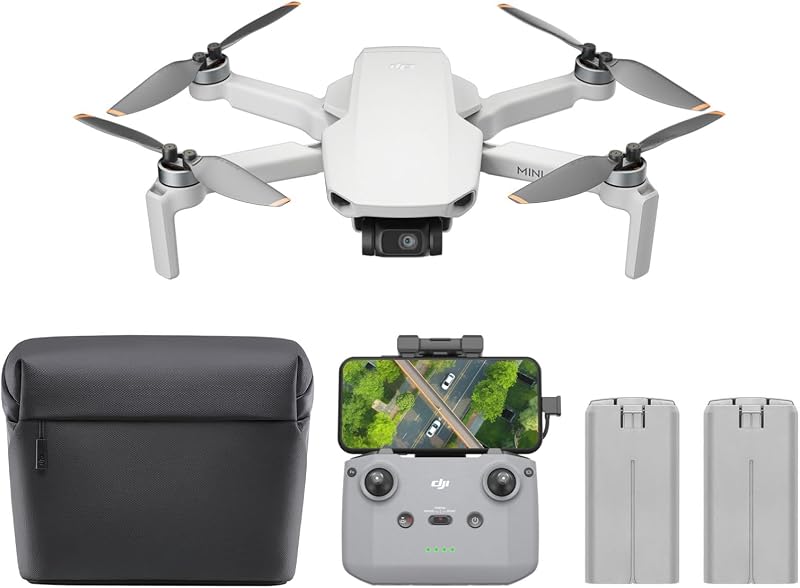
The DJI Mini 4K Camera Drone comes in a multi-battery combo that provides up to 62 minutes of maximum flight time alongside a 4K UHD camera stabilized by a 3-axis mechanical gimbal. This sub-249g model offers pre-programmed QuickShots automated flight paths, auto return, and a 10km video transmission link.
Flyers who want seamless automated cinematic flight modes, longer single-battery runtimes, and a mature ecosystem for creative videography will benefit from stepping up to this combo package.
Final Verdict
The FERIETELF B16 carves out a practical niche for casual flyers who want modern outdoor drone features without administrative headaches or steep learning curves. By pairing brushless motor propulsion with a dual positioning system that combines GPS satellites and optical flow sensors, the aircraft delivers stable hovering and dependable return-to-home security. The inclusion of two lithium-ion batteries and a business carrying case means beginners can immediately enjoy nearly an hour of total flight time across a weekend afternoon.
When considering whether the FERIETELF B16 is worth it, buyers simply need to align their expectations with its hardware specifications. While the 4K MP4 camera and 8 MP sensor capture vibrant family photos and wide scenic vistas, the absence of a mechanical multi-axis gimbal means it is not intended for commercial film production. For recreational hobbyists, travelers, and families seeking an easy-to-fly, registration-free GPS drone for everyday outdoor recreation, the FERIETELF B16 stands as a thoroughly sensible and enjoyable package.
FAQ
Does the FERIETELF B16 require FAA registration for recreational use?
No, the FERIETELF B16 weighs under 249 grams, which places it below the 250-gram threshold established by aviation authorities such as the FAA for mandatory recreational drone registration and pilot certification.
How does the GPS auto-return system work on the FERIETELF B16?
The quadcopter records its takeoff coordinates using onboard GPS satellite data. If the drone loses connection with the remote, exceeds the control range, or reaches low battery levels, it automatically activates return navigation to fly back to its starting point. You can also trigger this return manually with one key on the controller.
What is the total flight time with both batteries?
Each lithium-ion battery provides between 20 and 25 minutes of flight time. Because the package includes two modular batteries, pilots get a combined total flight duration of 40 to 50 minutes before needing to recharge.
Does the FERIETELF B16 have a motorized mechanical gimbal?
The drone features a 90-degree motorized tilt adjustment that allows you to change the camera angle remotely from the controller. However, the listing does not specify a multi-axis mechanical stabilization gimbal, meaning video smoothness depends on flying in calm conditions with gentle stick inputs.
Can the FERIETELF B16 be flown using just the remote controller?
Yes, you can operate the drone using the physical remote controller alone for basic flight maneuvers. However, connecting your smartphone via 5GHz Wi-Fi to the companion mobile app is necessary if you want to view real-time FPV camera video, capture photos and MP4 videos, or use smart modes like gravity control.


