
As Amazon Associates, we earn from qualifying purchases. This means we may receive a small commission at no extra cost to you if you click through and make a purchase.
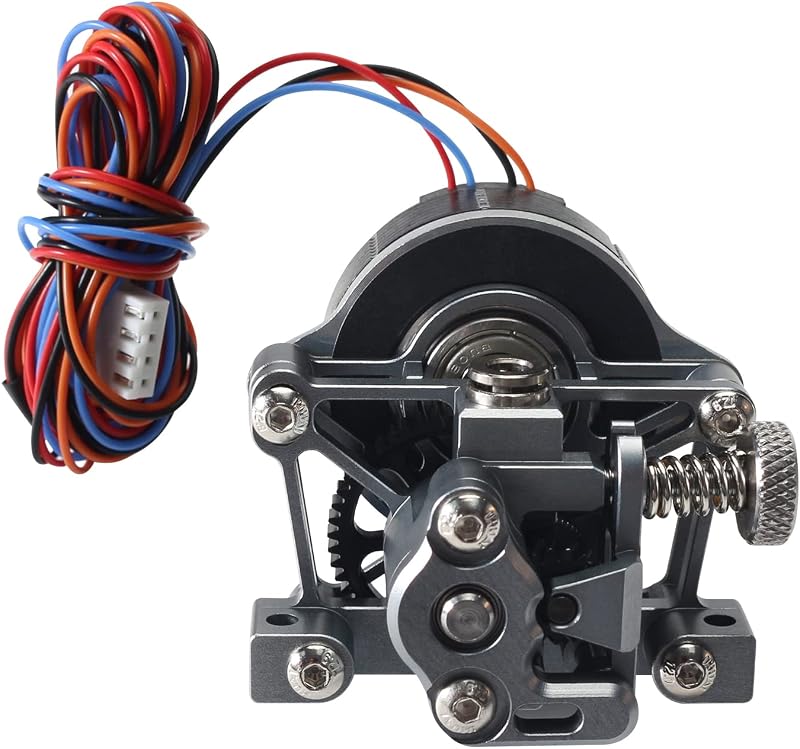
The FYSETC Sherpa Mini is an ultra-compact direct-drive extruder kit engineered around a CNC-machined aviation aluminum body and a high-efficiency 36mm Moons pancake stepper motor. Designed to resolve the persistent filament lag of Bowden setups without imposing the heavy mass penalties of traditional direct-drive assemblies, this unit combines high gear reduction with dual hardened steel drive components to achieve exacting control over 1.75mm filament. For makers seeking sharper corners, clean retractions, and reliable extrusion without overburdening their printer gantry, this lightweight mechanical package offers an exceptionally rigid and durable toolhead upgrade.
This high-precision extruder suits Voron builders, coreXY modders, and experienced tinkerers upgrading Creality Ender or CR-10 series machines who want better extrusion control for technical and flexible filaments. However, it is not a drop-in repair part for beginners looking for an instant fix without manual tuning. Because the unit requires users to fabricate or 3D print their own carriage mounting brackets, recalculate extruder pulse values, and dial down stepper driver operating current, casual hobbyists who prefer plug-and-play hardware should consider simpler factory-style replacements instead.


FYSETC Sherpa Mini at a Glance
| Feature | Specification |
|---|---|
| Manufacturer | fuyuansheng (FYSETC Official) |
| Chassis Material | CNC Machined Aviation Aluminum (Hollow Shell) |
| Color Finish | Space Gray |
| Stepper Motor | NEMA 14 Moons 36mm Pancake Motor (8-Tooth Gear) |
| Internal Gearing | CNC POM Reduction Gear with Helical Hardened Steel Drive Gears |
| Gear Surface Treatment | Nano-Coated Wear-Resistant Finish |
| Filament Compatibility | 1.75mm (Flexible, PLA, ABS, PETG, Composites) |
| Recommended Motor Current | Approximately 0.8A (1.0A Maximum Peak) |
| Reference E-Steps | Approximately 870 Steps/mm (Ender-3 Baseline) |
| Tubing Interface | Integrated Press-Fit Metal Joint for PTFE Tubing |
| Package Dimensions & Weight | 5 x 3.35 x 2.24 inches; 7 ounces |
Extrusion Performance and Gear Train Mechanics
The primary appeal of the FYSETC Sherpa Mini lies in its mechanical drive system, which balances miniature dimensions with formidable gripping power. Central to the sherpa mini extruder specs is a dual-stage gear train featuring a CNC-machined POM reduction gear paired with an 8-tooth drive pinion on the motor shaft. This reduction architecture converts the rapid rotation of the pancake motor into substantial pushing torque. By stepping down the drive speed, the extruder generates ample mechanical advantage, preventing skipped steps during high-flow printing or when pushing stiff composite filaments through tight nozzle orifices.
Filament engagement is managed by precision-cut helical drive gears manufactured from hardened steel and treated with an exterior nano-coating. Unlike conventional straight-cut gears that can introduce microscopic pulsation into the filament track, helical teeth engage progressively, producing a remarkably steady feed rate and exceptional wear resistance. The nano-coating protects the teeth against premature abrasion, which is particularly vital when running abrasive glow-in-the-dark, carbon-fiber, or glass-filled filaments that quickly ruin standard brass or untreated steel feed rollers.
Filament path tolerances are tightly constrained to support standard 1.75mm materials without buckling. The assembly incorporates an adjustable idler arm governed by an external tension knob. If filament encounters resistance entering the feed tract, the listing notes that users should cut the tip of the filament at an angle with flush cutters and loosen the arm knob slightly to ensure uninterrupted feeding. Rather than relying on fragile plastic collet clips that often work loose under rapid retraction cycles, the housing features an integrated metal joint that locks the guide tubing securely in place with a single press.
Motor Characteristics and Thermal Management
Powering this assembly is the fysetc sherpa mini moons motor, a dedicated 36mm round pancake stepper engineered to provide high power density within a minimal spatial footprint. Sized to the NEMA 14 form factor with an integrated 8-tooth gear, the Moons motor delivers reliable rotational torque while generating far less radiant heat than generic budget pancake steppers. Its compact barrel fits neatly against the aluminum bracket, preventing the extruder from encroaching heavily on the vertical build volume of custom print carriages.
Managing the electrical configuration is critical to keeping operating temperatures within safe thresholds. According to the manufacturer guidelines, the absolute maximum driving current for the motor is 1.0A, but the strongly recommended sherpa mini motor current is roughly 0.8A. Running the stepper around 0.8A supplies ample driving torque to push filament without causing the motor housing to saturate thermally. Overdriving the stepper beyond this threshold risks conducting excess heat through the drive shaft into the filament gears, which can soften low-temperature filaments like PLA before they ever enter the hotend heatbreak.
The structural chassis acts as an intentional heatsink to aid in thermal dissipation. Machined from aviation-grade aluminum and finished in space gray, the hollowed-out metal shell draws ambient air through open relief cuts while conducting heat away from the motor faceplate. Compared to 3D-printed plastic extruder bodies that trap internal heat and flex under continuous tension, the rigid metal frame maintains precise gear mesh and bearing alignment across long, heated chamber cycles, making it well-suited for high-temperature printing environments.
Lightweight Direct Drive and Inertia Control
Transitioning from a distant Bowden feeder to a direct-drive toolhead fundamentally improves extrusion responsiveness, and evaluating the sherpa mini vs bowden trade-off reveals clear operational advantages. In a Bowden setup, the long stretch of PTFE tubing introduces pneumatic springiness, requiring retraction distances of four to seven millimeters to mitigate nozzle oozing. In contrast, this lightweight direct drive extruder shortens the physical distance between the drive gears and the melt zone to a mere fraction of that span. Retraction distances can routinely drop below one millimeter, virtually eliminating stringing on intricate models and allowing reliable feeding of soft, flexible materials like TPU.
The traditional drawback of converting to direct drive has always been the penalty of moving mass. Bulky full-sized stepper motors and heavy cast-metal assemblies add substantial weight to the printhead, causing ringing, ghosting, and layer shifts whenever the machine attempts fast acceleration. FYSETC mitigates this challenge through aggressive hollow-frame engineering. By milling out non-structural metal from the aviation aluminum housing and pairing it with a 36mm pancake motor, the total package weight is kept down to just 7 ounces. This minimal mass profile ensures that the toolhead retains agile motion dynamics on high-speed gantries.
Minimizing gantry inertia is essential for makers pairing modern motion systems with high-throughput host processors. When coordinating rapid acceleration on tuned machines, builders often rely on compact bench setups or repurposed workshop computing hubs like the hp elitedesk 800 g3 to handle Klipper input shaping algorithms. By starting with an intrinsically light physical extruder, the input shaping algorithms have significantly fewer mechanical resonance spikes to cancel out, yielding crisper surface finishes at speeds that would cause heavy toolheads to ripple.
Printer Compatibility and Mounting Options
The physical versatility of the FYSETC Sherpa Mini makes it a favorite across several 3D printing communities, most notably within the custom open-source ecosystem. The extruder is extensively utilized as a sherpa mini voron solution, mounting seamlessly onto popular toolheads like the Afterburner and Stealthburner variants found on the VORON 2.4 platform. Its compact footprint also integrates cleanly into compact builds like the Gasherbrum K3, where toolhead clearance is constrained by tight frame enclosures.
Beyond specialized CoreXY builds, the assembly is widely implemented as a sherpa mini extruder for ender 3 and CR-10 conversions. The listing specifically lists compatibility with the CR-10, CR-10S, CR-10 4S, CR-10 5S, CR-10 Mini, CR-20, Ender-2, Ender-3, Ender-3 Pro, Ender-3 V2, and Prusa i3 MK3 and MK3S+ platforms. Because the extruder utilizes a standard 1.75mm filament inlet equipped with an adaptable metal tubing joint, it functions effectively regardless of whether the incoming filament path is fed directly from an overhead spool or guided via a reverse Bowden tube from an external drybox.
Shoppers must recognize, however, that universal printer support is contingent on carriage mounting brackets. The extruder does not include pre-fabricated adapter plates for specific printer gantries. Instead, it is designed to bolt directly to user-sourced or community-designed printed brackets. The manufacturer notes that it fits almost any FDM 3D printer provided the operator can design or download an appropriate mounting bracket for their specific carriage plate and hotend configuration.
Configuration, Calibration, and Setup Demands
Executing a successful fysetc sherpa mini setup requires thoughtful attention to electrical and firmware parameters. Because the gear ratio and drive gear diameter differ drastically from stock single-gear feeders, flashing or reconfiguring printer firmware is mandatory. For a standard Ender-3 baseline running Marlin firmware, the listing notes an initial E-axis step value of approximately 870 steps per millimeter. Failing to adjust this value prior to running the machine will cause severe under-extrusion, as the stock firmware assumes a standard direct 1:1 gear drive rather than a high-ratio reduction gear train.
In addition to adjusting the sherpa mini e steps, users must calibrate their stepper driver pulse configuration and reference voltage. For Marlin installations utilizing the 36mm 8-tooth motor, the extruder pulse settings must be updated in the configuration files to match the motor’s step angle and gear ratio. Stepper driver current must likewise be audited at the mainboard level. Whether adjusting physical VREF potentiometers or setting run currents via software-defined UART in Klipper or Marlin, trimming the driver output to roughly 0.8A ensures smooth operation without overheating the motor coil windings.
Mechanical installation is straightforward once the mounting bracket is prepared. Filament loading begins by inserting the PTFE guide tube directly into the integrated metal joint, which grips the tube securely without auxiliary plastic clips. Users should verify that the tension arm knob applies firm, even pressure against the filament strand without flattening softer materials. While completing this methodical bench assembly, hobbyists who enjoy tinkering to background music often rely on compact workshop equipment like the ak35 bluetooth 5.0 stereo amplifier to maintain an enjoyable workspace atmosphere during firmware compiling and mechanical calibration.
FYSETC Sherpa Mini Pros and Cons
Pros
- CNC machined aviation aluminum hollow shell
- Moons 36mm pancake motor with 8-tooth gear
- Hardened steel nano-coated helical gears
- High reduction gear ratio for strong torque
- Lightweight build minimizes printhead inertia
Cons
- Requires custom mounting bracket for most printers
- Demands manual firmware calibration and current tuning
- Filament tip cutting required for smooth feeding
Check FYSETC Sherpa Mini on Amazon
Who Should Buy the FYSETC Sherpa Mini
The FYSETC Sherpa Mini delivers substantial mechanical refinement, but its open-ended installation process means it serves specific maker needs rather than general repair cases.
Buy It If
- You are building or upgrading a Voron 2.4, Gasherbrum K3, or custom CoreXY printer that requires a lightweight, high-torque direct-drive toolhead.
- You want to eliminate filament stringing and print flexible TPU on an Ender-3 or CR-10 without adding massive inertia to the moving carriage.
- You frequently work with abrasive, carbon-fiber, or high-temperature filaments that demand wear-resistant nano-coated hardened steel gears.
- You are confident in printing custom mounting brackets, altering firmware configuration files, and tuning stepper driver motor currents.
Skip It If
- You need a direct drop-in replacement that bolts straight onto factory gantry plates without printing adapters or designing brackets.
- You are uncomfortable editing firmware lines, adjusting steps per millimeter, or measuring stepper motor driver voltages.
- You prefer an enclosed, fully integrated toolhead ecosystem that includes fans, hotend, and auto-bed leveling sensors in one pre-wired box.
FYSETC Sherpa Mini Alternatives Worth a Look
If you are exploring different approaches to extruder upgrades or need a simpler bolt-on solution for your machine, several alternatives cater to distinct printing setups.
Creality Official Ender 3 Extruder
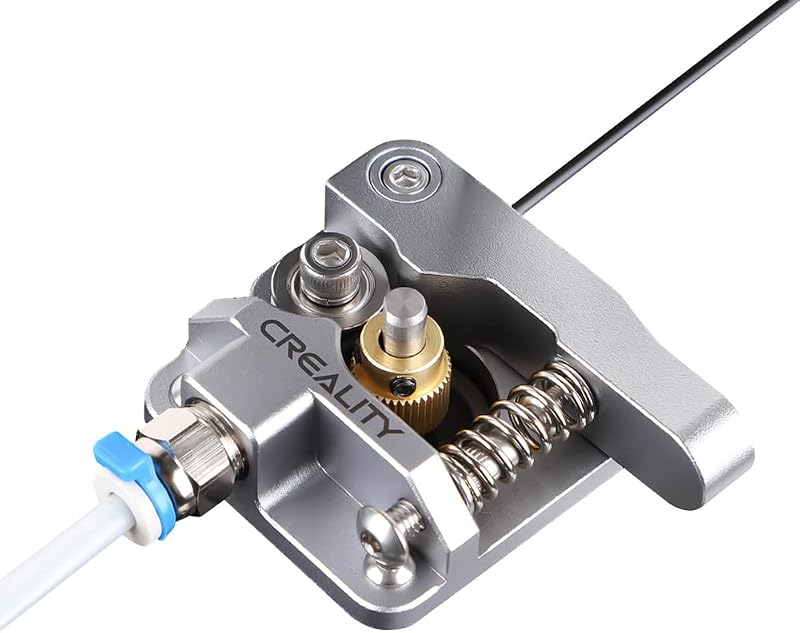
The Creality Official Ender 3 Extruder is an all-metal aluminum drive feeder upgrade designed for Ender-3 Pro, 3S, 3 V2, 3 Max, and CR-10/10S machines. Unlike the Sherpa Mini, this unit retains the traditional Bowden configuration and mounts directly to the printer frame using the factory stepper motor. It is the best choice for users who want to replace cracked plastic stock extruder arms without modifying firmware or changing toolhead weight.
for Creality Ender 3 Pro

The for Creality Ender 3 Pro aluminum MK8 Bowden extruder features a 40-teeth drive gear engineered for Creality Ender-3, Ender 5, and CR-10 series printers. This upgrade focuses strictly on replacing standard plastic feeder parts with durable anodized aluminum while keeping stock mechanical geometry intact. Budget-minded hobbyists seeking an inexpensive, non-invasive fix for slipping filament will find this drop-in replacement far simpler than converting to direct drive.
ELEGOO 3D Printer Extruder

The ELEGOO 3D Printer Extruder is a fully assembled dual-gear direct drive extruder tailored specifically for Neptune 3 Pro, Neptune 3 Plus, and Neptune 3 Max printers. While the Sherpa Mini requires custom mounting fabrication, this ELEGOO OEM accessory is built specifically for Neptune series carriages, offering plug-and-play direct drive convenience for owners within that specific hardware family.
Final Verdict
When asking whether the upgrade is worth it, the answer depends entirely on your willingness to handle setup details. For experienced makers building custom machines or converting standard Cartesian bedslingers into high-precision tools, the FYSETC Sherpa Mini delivers exceptional mechanical quality. The combination of an aviation aluminum hollow frame, POM reduction gearing, nano-coated hardened steel helical gears, and a genuine Moons 36mm pancake motor yields a package with outstanding power-to-weight balance that noticeably sharpens print quality.
However, extracting that performance requires taking ownership of the installation. You must print your own carriage mounts, tune your stepper driver current down to roughly 0.8A to prevent thermal saturation, and calibrate your firmware to an E-step baseline around 870. If you enjoy the process of fine-tuning your 3D printer hardware for maximum performance, this lightweight direct-drive extruder is one of the most mechanically robust and rewarding modifications available.
FAQ
What E-steps value should I use for the FYSETC Sherpa Mini?
The baseline E-axis step value recommended for an Ender-3 setup running Marlin is approximately 870 steps per millimeter. Because microstepping settings and mechanical tolerances can vary slightly between mainboards, you should always perform a standard extrusion measurement calibration after inputting the baseline value to ensure your machine dispenses exactly 100mm of filament when requested.
What is the recommended motor current for the Moons 36 pancake motor?
The manufacturer specifies a maximum driving current limit of 1.0A, but strongly advises operating the stepper at approximately 0.8A. Running the motor around 0.8A provides substantial extrusion torque while keeping operational temperatures low, preventing excess heat from conducting down the motor shaft and softening filament inside the gear housing.
Does the FYSETC Sherpa Mini include a mounting bracket for my printer?
No, the kit contains only the extruder assembly, Moons pancake motor, and internal hardware. It does not include carriage-specific mounting brackets. Users must 3D print or source an appropriate mounting bracket tailored to their specific printer model, hotend assembly, and carriage plate.
How do you load filament into the extruder smoothly?
To ensure smooth loading through the constrained 1.75mm filament path, trim the tip of your filament at a sharp 45-degree angle using flush cutters before insertion. If the filament catches against the internal drive gears, loosen the external arm tension knob slightly, push the filament past the drive zone, and then retighten the knob to the desired grip tension.
Can this extruder be used in a Bowden configuration?
Yes. While primarily intended as a lightweight direct-drive toolhead component, the integrated metal joint accommodates PTFE guide tubing securely, allowing the assembly to function as a high-torque, frame-mounted Bowden feeder if your specific printer architecture demands it.


