As Amazon Associates, we earn from qualifying purchases. This means we may receive a small commission at no extra cost to you if you click through and make a purchase.
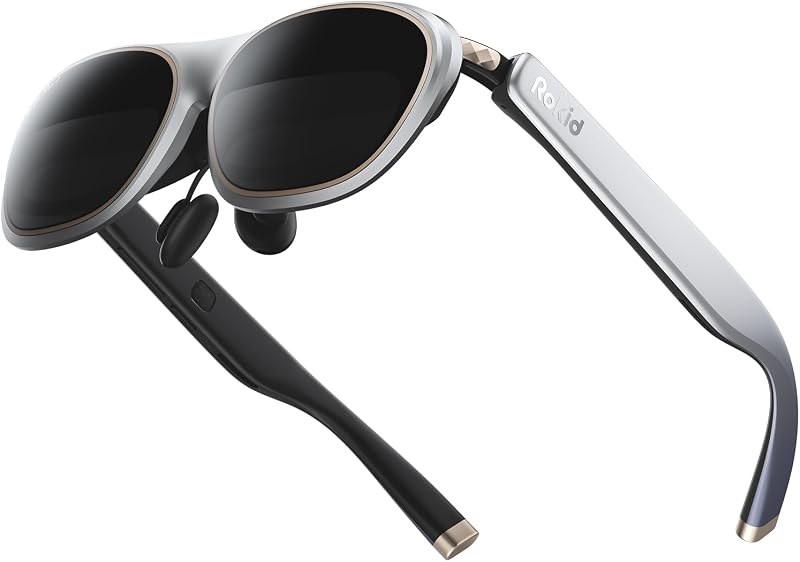
The Rokid Max 2 is a dedicated wearable display engineered to project a private, theatre-sized monitor directly before your eyes without the bulk of a traditional virtual reality headset. Equipped with high-contrast Micro-OLED panels, a high-speed refresh rate, and direct USB-C connectivity, it offers a compelling plug-and-play solution for anyone seeking expansive screen real estate on the go. For commuters, mobile professionals, and gamers tired of peering down at handheld displays, it serves as an agile second screen that slips cleanly into a travel bag.
This wearable display suits frequent travelers, portable console owners, and remote workers who want private viewing while retaining spatial awareness of their physical surroundings. If you require standalone VR tracking with six degrees of freedom, an onboard operating system, or a self-powered headset free of cords, this display-focused device will not meet those specialized needs. Those exploring the broader wearable space can also read our coverage on rokid ar spatial technologies to understand how dedicated wearable monitors compare to full spatial computing environments.



Rokid Max 2 at a Glance
| Feature | Specification |
|---|---|
| Display Technology | Micro-OLED |
| Virtual Screen Size | 215 inches (perceived at 6 meters) |
| Field of View | 50 degrees |
| Peak Brightness | 600 nits (adjustable) |
| Refresh Rate | 120Hz |
| Weight | 75 grams |
| Diopter Adjustment | Up to 600 diopters of myopia |
| Frame Compatibility | Fits face widths up to 16 cm |
| Connectivity | USB Type-C (DisplayPort over USB-C) |
| Digital Rights Management | HDCP supported |
Display Performance and Visual Immersion
At the heart of the viewing experience is the rokid max micro oled display system, which simulates an expansive 215-inch screen perceived at a virtual distance of six meters. Micro-OLED technology provides individual pixel illumination, resulting in deep black levels and intense contrast that standard LCD panels cannot replicate. Text rendered on documents and terminal windows remains legible across the central canvas, while movie scenes retain shadow detail without the backlighting glow common to conventional travel monitors.
Visual coverage is guided by the 50-degree rokid max field of view, delivering a balanced perspective that immerses your central vision while keeping your peripheral surroundings accessible. The display outputs an adjustable brightness level of up to 600 nits, allowing users to fine-tune luminance depending on whether they are in a dimly lit airplane cabin or a brightly lit office. At this level of brightness, colors remain vivid without washing out, creating an engaging visual backdrop for prolonged media sessions.
Fluid motion is guaranteed by the panel’s 120Hz refresh rate. Fast camera pans in high-definition video, UI navigation, and fast-paced gaming sequences render smoothly without visible ghosting or smearing. This swift refresh rate helps reduce visual fatigue during dynamic sequences, making the glasses feel as responsive as an esports desktop monitor rather than a laggy secondary mobile projection.
Gaming and Device Compatibility
Deploying the rokid max for gaming transforms portable consoles into pocket-sized cinema stations. Handheld systems naturally force players into poor ergonomic postures with bent necks, but tethering the glasses allows users to lean back comfortably while maintaining a massive direct line of sight. Handheld console players will appreciate how straightforward it is to run the rokid max for steam deck sessions, where the 120Hz panel handles high-frame-rate indie games and fast action titles smoothly through direct video output.
Everyday connection versatility is driven by rokid max screen mirroring over a single USB Type-C cable. The glasses accept native DisplayPort signals from mobile phones, tablets, and personal computers. For Apple users, modern rokid max iphone compatibility covers the iPhone 15 series and subsequent Type-C iOS models, alongside iPad models produced since 2020 and modern Mac computers. Android devices with desktop mode or video-out capabilities connect instantly, and Windows laptops recognize the glasses as an external secondary monitor without requiring proprietary software suites.
Entertainment streaming is reinforced by built-in High-bandwidth Digital Content Protection (HDCP) compliance. Many budget wearable screens stumble when attempting to stream copyrighted content, resulting in blank screens on streaming services. Because this hardware supports HDCP natively, users can stream subscription movies, broadcast television, and commercial series directly from their phones or laptops without encountering digital handshake lockouts. Gamers exploring dedicated wearable displays might also look into specialized alternatives like the asus rog xreal r1 ar gaming glasses to compare console performance across brands.
Ergonomics, Physical Fit, and Diopter Adjustments
Wearable displays live or die by facial comfort, and the 75-gram chassis of this model ensures minimal pressure across the bridge of the nose. The structural frame is wide enough to accommodate face widths up to 16 centimeters, avoiding the pinching sensation that narrower frames inflict on broader facial profiles. The included nose pad features an airy cushioning design engineered to relieve downward pressure and prevent the frames from sliding down sweaty skin during warm commute conditions.
A standout feature for spectacle wearers is the built-in rokid max diopter adjustment system located at the top of the frame. Individual dials allow users to independently calibrate myopia correction up to 600 degrees (0 to -6.00D) per eye. This eliminates the need to wear cumbersome contact lenses or fit bulky prescription frames beneath the glasses, bringing the virtual screen into crisp focus with a quick twist of the dials.
It is crucial to understand the limitations of the optical adjustment dials when evaluating the overall rokid max ar glasses specs. The mechanical dial system only corrects for nearsightedness; astigmatism, presbyopia, and hyperopia are not supported natively by the built-in dials. Users who experience astigmatism, farsightedness, or nearsightedness exceeding 600 degrees will need to acquire separate custom prescription lens inserts mounted onto dedicated frames, which are sold separately.
Power Architecture and Travel Usability
The hardware does not contain an internal battery or integrated charging circuits. Instead, power is drawn continuously through the host device via the included USB-C cable. This architectural choice keeps the frame featherweight at 75 grams, eliminating the thermal buildup, battery degradation, and charging chores common to standalone headsets. You never have to worry about finding an empty battery when pulling the glasses out for an unexpected delay at the airport terminal.
The trade-off of this tethered design is power consumption on your host hardware. When driving dual Micro-OLED displays at 600 nits and 120Hz, smartphones and handheld consoles will deplete their internal batteries faster than during normal handheld usage. Users planning marathon gaming or movie marathons on long-haul flights will benefit from USB-C splitters or hubs that support simultaneous power delivery and video pass-through. Pairing the device with portable audio gear, such as the noise-canceling cans discussed in our airpods pro max 2 analysis, creates a fully isolated multimedia capsule anywhere you sit.
Rokid Max 2 Pros and Cons
Pros
- Expansive 215-inch Micro-OLED virtual display
- Fluid 120Hz refresh rate for gaming
- Onboard myopia dials up to 600 diopters
- Ultralight 75g frame with cushioned nose pads
- Direct plug-and-play USB-C connectivity
- HDCP support for protected movie streaming
Cons
- No internal battery draws host device power
- Astigmatism and hyperopia require separate prescription inserts
- Requires USB-C DisplayPort support from host device
Who Should Buy the Rokid Max 2
Buy It If
- You want a massive 215-inch virtual screen for media and productivity that fits inside a jacket pocket.
- You regularly play on a Steam Deck, Windows handheld, or laptop and want a smooth 120Hz external screen.
- You have mild-to-moderate myopia (up to -6.00D) and want to use wearable glasses without wearing contacts.
- You prioritize an ultra-lightweight 75-gram design with comfortable, swappable nose pads.
Skip It If
- You want a standalone virtual reality headset with built-in battery power and 6DoF spatial tracking.
- You have severe astigmatism, hyperopia, or myopia beyond 600 degrees and do not want to purchase separate prescription inserts.
- Your primary phone or source device relies on older micro-USB or Lightning connections that lack DisplayPort over USB-C capability.
Rokid Max 2 Alternatives Worth a Look
If you are exploring the wearable display market, several competing models offer different balances of brightness, weight, and visual adjustments.
VITURE Pro 2 XR/AR Glasses
The 50°FOV with Sony Micro-OLED VITURE Pro 2 XR/AR Glasses offer a slightly smaller 146-inch virtual display but push peak brightness up to an impressive 1600 nits. Weighing 63 grams, it features UltraClarity 3.0 myopia adjustment down to -5.0D and supports 120Hz refresh rates across the Nintendo Switch, Switch 2, Steam Deck, iPhone 15, Android, and PC platforms. Shoppers who frequently use their glasses outdoors in direct sunlight will appreciate the extra luminance overhead of this alternative.

XREAL xbx a01+ AR Glasses
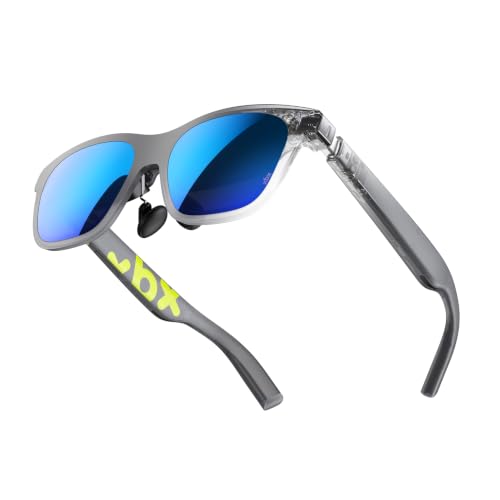
The 62g Ultralight XREAL xbx a01+ AR Glasses prioritize sheer weight reduction, clocking in at just 62 grams. Featuring a 147-inch big-screen display with 1600-nit HDR10 capabilities and USB-C DisplayPort support, it connects cleanly to iPhone, iPad, Android, Steam Deck, ROG Ally, and PC devices. Readers interested in this particular lightweight form factor can read our complete xbx a01 glasses review for detailed device insights.

VITURE Beast XR/AR Glasses
The with Sony Micro-OLED VITURE Beast XR/AR Glasses package provides a wider 58-degree field of view with a 174-inch 1200p canvas. It stands out with integrated 9-level electronic dimming, 3DoF positional tracking, HARMAN AudioEFX sound tuning, and 1250 nits of peak brightness at 120Hz. Users who want physical light blockage through electrochromic tinting and onboard spatial tracking capabilities may favor this alternative.

Final Verdict
Conducting this rokid max 2 review highlights how mature personal wearable displays have become. Rather than overcomplicating the experience with cumbersome spatial sensors or heavy onboard batteries, this device doubles down on display fidelity, lightweight comfort, and immediate plug-and-play simplicity. The 215-inch virtual canvas, vibrant Micro-OLED rendering, and 120Hz refresh rate make it an outstanding companion for commuters, mobile gamers, and remote workers who desire a private theater wherever they go.
When asking is rokid max worth it, the answer comes down to your primary use case and visual profile. If your smartphone, laptop, or handheld console supports DisplayPort over USB-C, and your corrective vision needs fall within the 0 to -6.00D myopia range, this 75-gram wearable display provides an unmatched portable viewing upgrade. While users with astigmatism must budget for custom inserts, the combination of airy nose pads, wide frame accommodation, and HDCP-ready streaming makes the device a dependable big-screen companion.
FAQ
Does the Rokid Max 2 have an internal battery?
No, the glasses do not have an internal battery or charging circuit. They receive power directly through the USB Type-C cable from the connected host device, which keeps the total weight down to just 75 grams.
How does the myopia dial adjustment work?
The glasses feature independent adjustment dials located on top of the frame that allow users to correct nearsightedness up to 600 diopters (0 to -6.00D). Astigmatism and presbyopia are not corrected by the dials; users with those visual conditions must purchase separate prescription lens inserts.
Can I use the Rokid Max 2 with an iPhone?
Yes, the glasses offer direct plug-and-play compatibility with the iPhone 15 series and newer iOS models equipped with USB Type-C ports. Older iPhones utilizing proprietary Lightning connectors require third-party adapters that the listing does not specify.
Can I stream movies from services like Netflix or Disney+?
Yes, the hardware includes HDCP (High-bandwidth Digital Content Protection) support. This ensures that video-out signals carrying copy-protected streaming content will play back smoothly without encountering blank video screens.
Will the glasses fit wide facial profiles?
Yes, the structural design accommodates face widths up to 16 centimeters. Additionally, swappable nose pads with an airy cushioning design are included in the package to help users achieve a comfortable and stable fit.