
As Amazon Associates, we earn from qualifying purchases. This means we may receive a small commission at no extra cost to you if you click through and make a purchase.
The ASRock Radeon RX 9070 XT Challenger represents AMD’s introduction of the RDNA 4 architecture into the enthusiast desktop graphics market, combining high clock frequencies with a generous memory pool. Featuring a boost clock of up to 2970 MHz, 16GB of GDDR6 video memory, and 64 compute units, this graphics card aims to deliver uncompromised high-resolution gaming for modern desktop systems. Our verdict is that this model is an exceptionally balanced option for serious PC builders who want smooth ultra-high-definition gaming and forward-looking display connectivity without paying for unnecessary decorative extras.
This graphics card directly suits PC gamers looking to run heavy modern titles at 4K resolution, content creators handling video rendering tasks, and builders moving to contemporary motherboards that support the newest expansion standards. Those who are running aging legacy setups, such as systems anchored by an older amd radeon rx 580 8gb, will find this generational shift massive in terms of both visual detail and fluid responsiveness. However, players who only need basic 1080p output for esports titles or those working inside severely constrained compact enclosures should look toward lower-tier or small-form-factor options instead.


ASRock Radeon RX 9070 XT Challenger at a Glance

| Hardware Feature | Manufacturer Specification |
|---|---|
| Graphics Processing Unit | AMD Radeon RX 9070 XT (Model RX9070XT CL 16G) |
| Architecture | AMD RDNA 4 (64 Compute Units) |
| Boost Clock Speed | Up to 2970 MHz |
| Video Memory Configuration | 16 GB GDDR6 (256-bit bus) |
| Hardware Accelerators | 3rd Gen Ray Tracing and 2nd Gen AI Accelerators |
| Interface Standard | PCI Express 5.0 (x16) |
| Cooling Solution | Triple Fan System with Striped Axial Fans and 0dB Silent Cooling |
| Display Outputs | 3 x DisplayPort 2.1a, 1 x HDMI 2.1b |
| Maximum Resolution | 7680 x 4320 pixels (8K) |
| In-Box Accessories | 1 x Graphics Card, 1 x Quick Installation Guide |
Next-Gen RDNA 4 Architecture and Computing Power
At the center of the hardware sits the modern rx 9070 xt rdna 4 design, which refines AMD’s computing foundation to handle contemporary rasterization and data-heavy visual calculations. The GPU package contains 64 dedicated compute units engineered to manage complex 3D environments, physics simulations, and advanced post-processing routines. Operating at a substantial boost clock speed of up to 2970 MHz, the processor pushes frame generation rapidly, providing the necessary horsepower for immersive gaming sessions.
When evaluating the official radeon 9070 xt specs, the inclusion of 2nd generation AI accelerators marks a noticeable operational evolution. These dedicated hardware blocks assist with machine learning computations, intelligent upscaling workloads, and frame generation tasks, allowing software pipelines to offload specialized algorithms from traditional shader cores. This balance guarantees that standard rendering threads remain clear for standard 3D asset generation, improving overall throughput across demanding modern software suites.
For PC builders assessing broader generational upgrades alongside new mobile computing developments like the amd ryzen ai 9 hx 470, having dedicated local AI compute on a discrete graphics card ensures seamless handling of productivity applications, generative models, and advanced visual editing programs. The hardware distribution between pure compute units and AI acceleration creates an adaptable balance suitable for both recreation and demanding desktop workflows.
High-Resolution Gaming and Ray Tracing Capabilities
Evaluating the radeon rx 9070 xt gaming performance reveals a dedicated focus on native fidelity and frame pacing. The card pairs its high boost clock with 16GB of GDDR6 memory communicating over a 256-bit bus interface. This wide memory bus provides sufficient throughput to sustain uncompressed texture streaming in modern titles, preventing stuttering during fast camera rotations or transitions between vast open-world sectors.
Deploying the radeon 9070 xt for 4k gaming is where the configuration truly shows its intent. At 3840×2160 pixels, memory capacity and raw computational throughput are pushed to their limits. The rx 9070 xt 16gb memory buffer prevents the memory bottlenecks that frequently trouble 8GB and 12GB graphics cards when loading ultra-high-definition texture packages. Whether managing sprawling open environments or fast-moving action sequences, the card provides the bandwidth needed to maintain consistent frame delivery.
Real-time lighting calculations represent another pillar of the architecture through updated radeon rx 9070 xt ray tracing accelerators. Built around AMD’s 3rd generation ray tracing architecture, these integrated silicon blocks compute light bounces, ambient occlusion, reflections, and accurate soft shadows with higher efficiency than previous architectures. As a result, users can activate realistic lighting models in supporting titles without experiencing crippling dips in frame rates.
Thermal Management and Acoustic Engineering
High compute throughput requires effective heat management, and the asrock radeon 9070 xt cooling solution is structured directly around sustained workloads. The card uses a three-fan cooling array equipped with proprietary Striped Axial Fan technology. These customized fan blades feature grooved surfaces that focus airflow downward into the aluminum heatsink fin stack, maximizing convective heat dissipation across the surface area of the card.
Acoustic performance is refined through the integrated 0dB silent cooling mode. Under light everyday tasks, such as browsing the web, typing documents, or streaming video, the fans remain completely stationary. This passive operation eliminates background fan noise during casual use and helps minimize dust collection inside the cooling fins over months of ownership. Once you launch a 3D game and thermal thresholds rise, the fans spin up smoothly to maintain controlled operating temperatures.
Structural rigidity and auxiliary cooling are supported by a sturdy metal backplate. While the primary heatsink handles the GPU core and power phases, the full-coverage backplate acts as an additional heat dissipation plane while protecting fragile circuit traces from accidental mechanical damage. It also adds necessary physical stiffness to prevent PCB bending, an essential benefit given the weight and length of triple-fan graphics hardware.
Modern Display Outputs and Connectivity Standards
Connectivity options on this graphics card reflect modern commercial monitor standards. The card features three DisplayPort 2.1a connectors alongside a single HDMI 2.1b port. DisplayPort 2.1a provides the vast transmission bandwidth required to push high-refresh-rate 4K monitors and ultra-wide screens without resorting to aggressive visual compression techniques, ensuring sharp color accuracy and responsive frame presentation.
The total display resolution reaches up to 7680 x 4320 pixels, giving multi-monitor enthusiasts and ultra-high-definition creators support for an 8K display canvas. For users connecting their PC to modern flat-panel displays or home entertainment setups, the HDMI 2.1b port provides broad compatibility with variable refresh rates and high-bandwidth audio-visual streams. This connectivity suite ensures your system will remain fully compatible with current and upcoming display monitors.
Underneath the exterior, the card interfaces with the system motherboard through a full PCI Express 5.0 x16 slot. Operating on the PCIe 5.0 protocol doubles theoretical interface bandwidth compared to PCIe 4.0 systems, allowing faster texture streaming directly from system memory when assets are loaded by the graphics engine. It also preserves full backward compatibility with older motherboards, ensuring flexible installation options.
Power Demands and Physical Installation Practicalities
Before installing the card into your personal computer, physical chassis room and power supply headroom demand realistic planning. The listing highlights an 800W power baseline, meaning builders should equip their systems with a robust, reliable power supply unit to handle power spikes during sudden rendering bursts. Ensuring adequate power delivery prevents unexpected shutdowns or instability during extended gaming sessions.
Because this card incorporates a triple-fan cooling array and a protective backplate, shoppers must measure internal case clearance carefully. Although the listing does not specify exact length and millimeter slot thickness, triple-fan cooling assemblies generally occupy substantial horizontal space and at least two to three expansion slots on the rear of your PC case. Ensuring that front-mounted radiator fans or hard drive cages do not obstruct the installation path is vital for a smooth building process.
Upgrading from older mainstream hardware, such as an amd radeon rx 6600 xt, will require checking both power supply cables and physical motherboard space. Unlike smaller dual-fan cards, a card of this class requires direct, dedicated power leads from your power supply unit rather than daisy-chained splitters. Taking the time to properly route cables and verify chassis clearance guarantees trouble-free operation.
ASRock Radeon RX 9070 XT Challenger Pros and Cons
Pros
- High boost clock speed up to 2970 MHz
- Generous 16GB GDDR6 memory on 256-bit bus
- Next-gen RDNA 4 with 64 compute units
- Triple-fan design with 0dB silent cooling
- Modern DisplayPort 2.1a and HDMI 2.1b ports
- PCIe 5.0 support for maximum bandwidth
Cons
- Substantial physical footprint requires a large chassis
- Demands a high-capacity 800W power supply baseline
Check ASRock Radeon RX 9070 XT Challenger on Amazon
Who Should Buy the ASRock Radeon RX 9070 XT Challenger
Buy It If
- You want reliable native 4K gaming performance with a generous 16GB GDDR6 memory buffer to prevent texture bottlenecks.
- You own or plan to purchase modern high-refresh monitors utilizing DisplayPort 2.1a or HDMI 2.1b connections.
- You value a quiet desktop environment during light computing tasks thanks to the 0dB silent fan feature.
- You are building on a modern motherboard with PCIe 5.0 support and have an adequate 800W power supply.
Skip It If
- You game exclusively on 1080p resolution displays where a high-end 4K-focused GPU is unnecessary.
- You use a compact Mini-ITX or small-form-factor case with restricted clearance for triple-fan cards.
- Your existing desktop power supply unit falls well below the recommended 800W baseline.
ASRock Radeon RX 9070 XT Challenger Alternatives Worth a Look
If the specific physical profile or technical focus of this card does not align perfectly with your planned PC build, several alternatives in the desktop market offer contrasting strengths.
ASUS SFF-Ready Prime NVIDIA GeForce

The ASUS SFF-Ready Prime NVIDIA GeForce RTX 5070 OC Edition features 12GB of GDDR7 memory and a 2.5-slot physical form factor. Shoppers building inside tighter computer cases where small-form-factor compliance is critical should look at this alternative over the Challenger, as it is purposefully designed for restricted internal enclosures while offering modern PCIe 5.0 and DP 2.1 support.
PCIe 5.0
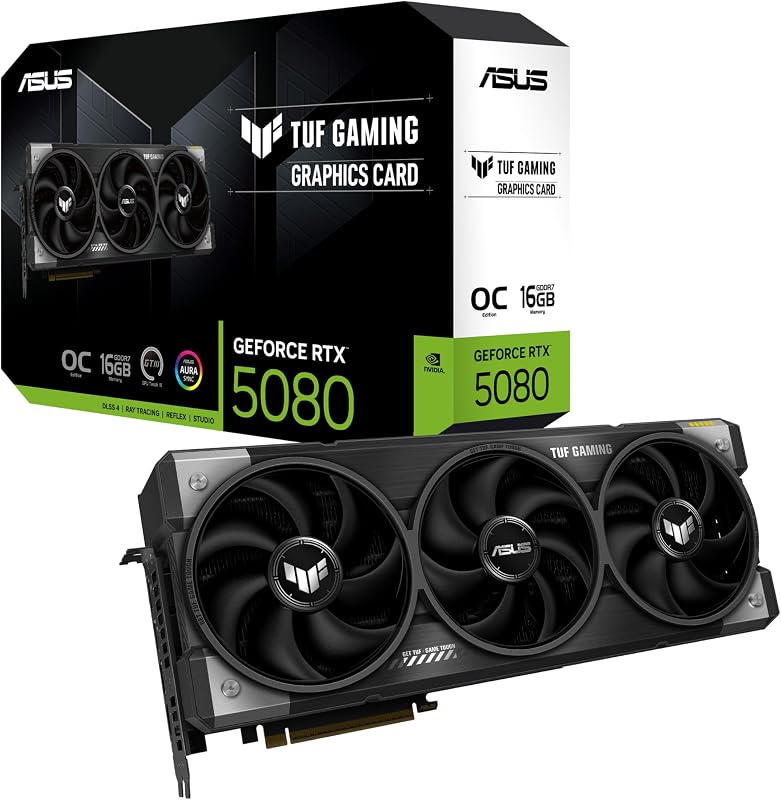
The PCIe 5.0 ASUS TUF Gaming GeForce RTX 5080 OC Edition features a heavy-duty 3.6-slot thermal profile, military-grade components, and 16GB of GDDR7 memory. Builders with massive PC cases who prioritize extreme cooling mass, protective PCB coatings, and alternative memory technology should consider this larger enthusiast option over the mainstream Challenger design.
GIGABYTE GeForce RTX 5080 Gaming

The GIGABYTE GeForce RTX 5080 Gaming OC provides 16GB of high-speed GDDR7 memory on a 256-bit bus combined with the WINDFORCE cooling system. Shoppers seeking an alternative brand ecosystem and a distinct thermal shroud layout for higher-tier 4K performance can look toward this card as a direct point of comparison.
Final Verdict
So, is radeon 9070 xt worth it for your desktop upgrade? For gamers targeting fluid high-refresh 4K gaming or heavy content creation, the card makes a compelling argument. By combining 64 compute units, a clock speed reaching 2970 MHz, and 16GB of GDDR6 memory, it provides ample headroom for modern visual titles. Add in contemporary DisplayPort 2.1a ports and PCIe 5.0 support, and you have a package thoroughly equipped for today’s high-bandwidth computing demands.
The practical engineering of the asrock rx 9070 xt challenger focuses on stability and thermal control rather than superfluous aesthetics. With its triple Striped Axial Fan system, zero-decibel idle profiles, and sturdy metal backplate, this graphics card runs cool and quiet under varying desktop demands. If your PC chassis has sufficient physical room and an 800W power supply, this model provides a dependable foundation for premium gaming.
FAQ
How much video memory does the ASRock Radeon RX 9070 XT Challenger have?
This graphics card comes equipped with 16GB of dedicated GDDR6 memory operating on a 256-bit bus, providing generous capacity for high-resolution 4K textures and detailed graphical assets in modern computer titles.
What display connection ports are available on the card?
The card features three DisplayPort 2.1a outputs and one HDMI 2.1b port, allowing you to connect modern high-refresh monitors and multi-display setups with resolutions up to 7680 x 4320 pixels.
Does the cooling system stay quiet when I am not playing games?
Yes, the card incorporates 0dB silent cooling technology, which stops the three fans entirely during low-temperature, non-intensive tasks such as web browsing, document writing, or video streaming.
What power supply capacity is recommended for this graphics card?
The product listing specifies an 800W power baseline, so pairing this graphics card with a high-quality 800W or greater power supply unit is recommended for system stability.
What accessories are included inside the retail packaging?
The retail box contains one ASRock Radeon RX 9070 XT Challenger graphics card and one quick installation guide to assist you during physical assembly.


