As Amazon Associates, we earn from qualifying purchases. This means we may receive a small commission at no extra cost to you if you click through and make a purchase.
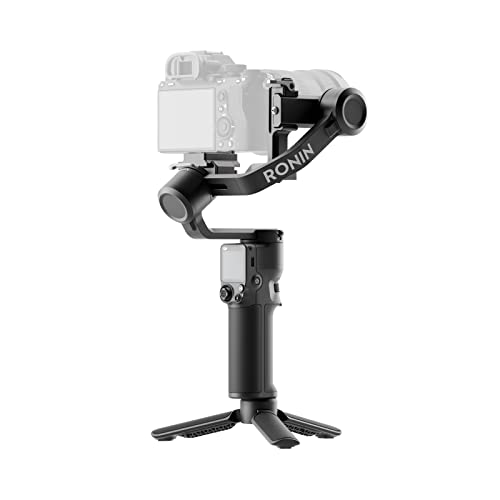
The DJI RS 3 Mini is an ultra-compact three-axis handheld gimbal stabilizer engineered specifically to bring professional motor stabilization to lightweight mirrorless camera configurations. For solo content creators, vloggers, and traveling videographers who need to eliminate hand tremors without hauling heavy production equipment, this stabilizer delivers reliable three-axis stability and smooth cinematic motion in an impressively small footprint.
This compact stabilizer best suits hybrid shooters who use mainstream mirrorless cameras like the Sony ZV-E10 and similar small-body cameras paired with standard primes or compact zoom lenses for travel, daily vlogging, and social media video creation. Videographers operating large cinema rigs, heavy front-heavy telephoto glass, or full-sized camera bodies with cages that exceed the two-kilogram weight limit will need to look toward larger industrial camera supports instead.


DJI RS 3 Mini at a Glance

| Attribute | Detail |
|---|---|
| Model Number | P20M |
| Stabilization Type | 3-Axis Image Stabilization (3rd-Gen RS Algorithm) |
| Tested Payload Capacity | 2 kg (4.4 lbs) |
| Portrait Mode Weight | 795 g (1.75 lbs) |
| Horizontal Mode Weight | 850 g (1.8 lbs) |
| Display Screen | 1.4-inch (3.56 cm) Full-Color Touchscreen |
| Shutter Control | Bluetooth Shutter Control |
| Vertical Shooting | Native Vertical Shooting via Vertical Arm |
| Compatible Brands | Canon, Sony, Nikon, Fujifilm |
| Companion Software | DJI Ronin App (DJI Official Website download for Android) |
Weight and Portability for Travel Videography
When conducting an rs 3 mini review, the physical footprint and overall carry weight stand out as defining characteristics. At just 795 grams (1.75 lbs) in portrait orientation and 850 grams (1.8 lbs) when configured with the horizontal arm, this unit undercuts the mass of traditional handheld stabilizers. Both specified weights include the quick-release plate while excluding the screw-on extended grip tripod base. For video creators moving through airports, crowded city streets, or hiking trails, minimizing grams translates directly into longer shooting sessions without the forearm fatigue common to heavier rigs.
Choosing the rs 3 mini for travel allows solo shooters to pack light without sacrificing mechanical stabilization. The compact stabilizer fits easily inside everyday camera backpacks alongside portable computing equipment such as the hp elitedesk 800 g3 when setting up a remote editing desk in a hotel room. Because the extended grip tripod unscrews cleanly from the base of the handle, the chassis packs nearly flat into standard padded dividers, leaving ample room for camera bodies, prime lenses, and spare batteries.
Despite its portable profile, the structural build remains robust. Finished in a matte black aesthetic, the adjustment arms feature precise mechanical tracks and secure locking levers that hold their position once balanced. Moving between shooting locations is efficient because the arms stay locked in place during transport, preventing components from colliding or swinging loosely inside your luggage compartment.
Payload Capacity and Camera Compatibility
A critical consideration for any filmmaker is whether the rs 3 mini payload capacity accommodates real-world camera kits. The gimbal is equipped with high-torque motors that support a tested maximum payload of up to 2 kg (4.4 lbs). This capacity is tailored to mainstream mirrorless setups from prominent manufacturers, including Canon, Sony, Nikon, and Fujifilm. The product data explicitly confirms compatibility with popular vlogging tools such as the Sony ZV-E10, offering enough overhead to support common kit lenses and compact wide-angle glass.
To avoid balance errors or motor strain, users must verify their specific camera and lens pairing against the official dji rs 3 mini compatibility guidelines. While the high-torque motors manage substantial movement, pairing a compact body with an excessively long or heavy telephoto lens can push the center of gravity past the mechanical adjustment limits. Compact zooms and lightweight prime lenses remain the sweet spot for keeping the total rig within the 2 kg ceiling and achieving effortless three-axis stability.
The gimbal design also accounts for modular audio expansion. The product documentation highlights direct pairing compatibility with the DJI Mic wireless audio system, which can transmit clear sound from distances up to 250 meters. Because the wireless receiver mounts onto the camera cold shoe without adding significant physical bulk, content creators can operate a full broadcast-grade audio and video package without overwhelming the motor payload threshold.
Stabilization Performance and Shutter Controls
The stabilization architecture on this model is driven by DJI’s 3rd-Gen RS Stabilization Algorithm, which is optimized to deliver steady, professional-grade footage during active movement. Handheld tracking shots, rapid walking sequences, and sudden directional pans are smoothed out by the 3-axis image stabilization system. The algorithm actively counters rotational and translational motion, allowing operators to execute dynamic low-angle tracking shots or film in flashlight mode where the gimbal is held horizontally out in front of the body.
Another major usability highlight is the integrated dji rs 3 mini bluetooth shutter functionality. Rather than forcing users to route coiled control cables between the gimbal body and the camera chassis, the stabilizer pairs directly over a wireless Bluetooth connection. After the initial pairing process is complete, the gimbal automatically reconnects to the camera every time both devices are turned on. From the ergonomic controls on the stabilizer handle, shooters can effortlessly trigger photo capture and start or stop video recording without physically touching the camera body.
Eliminating camera control cables reduces physical friction around the tilt and roll axes, which improves motor response during complex moves. Video editors reviewing their captured takes through audio setups like the ak35 bluetooth 5.0 stereo amplifier will note that keeping fingers off the camera body prevents mechanical handling noise from creeping into the audio track. The wireless trigger ensures smooth, continuous filming without introducing micro-shakes at the start or end of a take.
Touchscreen Setup and Native Vertical Shooting
Executing an efficient rs 3 mini setup is straightforward thanks to clear balance markers and an integrated 1.4-inch full-color touchscreen measuring 3.56 centimeters. The display features an intuitive user interface that allows creators to select operating modes, calibrate motors, and access frequently used settings directly on the gimbal. This onboard display eliminates the constant need to pull out a mobile phone simply to check motor status or toggle operational follow modes while on location.
For creators producing content for modern digital channels, the rs 3 mini vertical shooting design is a notable mechanical feature. Unlike older stabilizers that require unwieldy third-party mounting plates or awkward side-grip balancing to record vertical clips, this unit provides native vertical shooting right out of the box. Shooters simply mount the quick-release plate directly to the vertical arm, and the rig is instantly balanced for upright framing. In this portrait configuration, the gimbal reaches its lightest overall weight of 795 grams, keeping prolonged mobile video capture agile and comfortable.
Operating the device to its full capability requires the DJI Ronin mobile application for initial product activation and wireless firmware updates. Potential buyers using Android devices should take note of an important platform notice provided in the listing: due to platform compatibility issues, the DJI Ronin app has been removed from the Google Play Store. Android users cannot download the app through Google Play and must visit the official DJI website to download the current application package directly onto their phone.
Practical Everyday Performance and Real Value
Determining whether the rs 3 mini is worth it comes down to balancing compact utility against mechanical limitations. While full-sized gimbals offer higher maximum payloads, they often spend more time sitting on studio shelves because their physical mass makes them exhausting to carry during full-day shoots. Evaluating the complete dji rs 3 mini specs demonstrates that this unit was engineered deliberately for high-mobility video creators who want stable footage without the bulk of traditional cinema equipment.
Filmmakers who manage post-production workflows on space-conscious computer systems like the asus rog nuc understand the distinct advantages of compact, efficient gear. This stabilizer fits that same streamlined mindset by delivering professional three-axis motor stabilization in an ultra-portable format. While the product listing does not specify the exact operating battery life in hours, the integrated battery and portable form factor make it well-suited for everyday travel vlogging and run-and-gun documentary projects.
Nevertheless, buyers must respect the clear operating boundaries of a compact stabilizer. Attempting to balance heavy telephoto zooms, front-heavy matte boxes, or large cinema-grade prime lenses will exceed the 2 kg motor rating and strain the mechanical axes. For hybrid shooters who pair mirrorless cameras with compact primes or standard zooms, this unit provides a practical balance between portability, motor stability, and workflow convenience.
DJI RS 3 Mini Pros and Cons
Pros
- Lightweight build starting at 795 grams
- Capable 2 kg tested payload capacity
- Seamless native vertical arm shooting
- Cable-free Bluetooth camera shutter control
- Intuitive 1.4-inch full-color touchscreen
- Advanced 3rd-Gen RS Stabilization Algorithm
Cons
- Android companion app unavailable on Google Play
- Cannot balance heavy cinema rigs over 2 kg
- Operating battery runtime not specified in listing
Who Should Buy the DJI RS 3 Mini
Buy It If
- You use a mirrorless camera and lens combination that stays comfortably under the 2 kg (4.4 lbs) payload limit.
- You frequently shoot vertical video for social platforms and want native vertical arm mounting without extra brackets.
- You travel extensively and need a lightweight handheld stabilizer that weighs as little as 795 grams.
- You want wireless Bluetooth camera shutter control to eliminate tangled cables around the gimbal motors.
Skip It If
- Your primary video camera setup exceeds 2 kg (4.4 lbs) or utilizes heavy front-extended cinema zoom lenses.
- You use an Android smartphone and prefer not to manually install the companion Ronin app from DJI’s website.
- You shoot exclusively on a smartphone and do not own or intend to stabilize a dedicated mirrorless camera.
DJI RS 3 Mini Alternatives Worth a Look
If your production workflow relies on a smartphone rather than a mirrorless camera body, dedicated mobile phone stabilizers offer targeted features like telescopic extension rods and integrated tracking at a lower carry weight.
DJI Osmo Mobile 7
The DJI Osmo Mobile 7 is an ultra-light 3-axis smartphone gimbal stabilizer designed for iPhone and Android devices. It features a built-in tripod, comfortable grip, phone charging capability, 10 hours of operating time, and creative software support including ActiveTrack, ShotGuides, and one-tap editing. Shooters who capture all their content on a mobile phone rather than a mirrorless camera will find this model far more practical and specialized for phone workflows.

DJI Osmo Mobile 8
The DJI Osmo Mobile 8 is a 3-axis smartphone stabilizer featuring AI native tracking with audio and lighting, 360-degree pan rotation, a built-in extension rod, an integrated tripod, and a 10-hour battery. Mobile creators who want an all-in-one vlogging handheld tool with automated tracking, lighting, and extended reach without mounting a camera body should pick this over a heavier mirrorless stabilizer.
DJI Osmo Mobile 7P
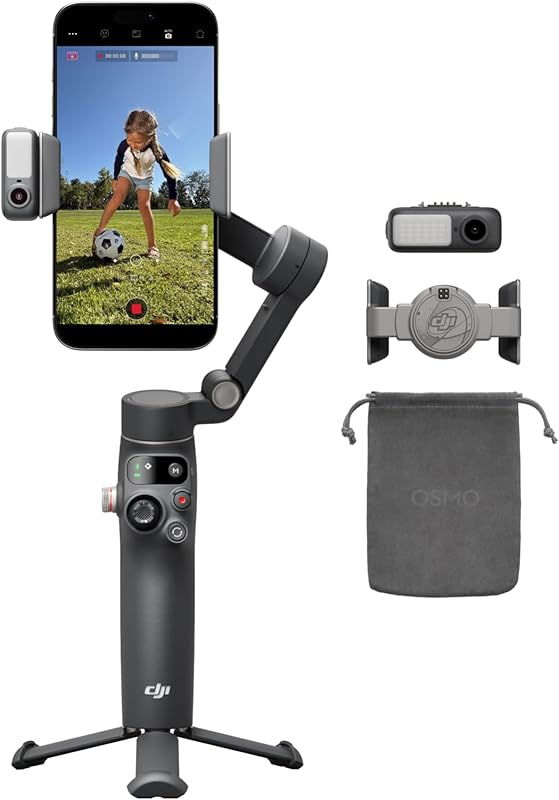
The DJI Osmo Mobile 7P provides 3-axis phone stabilization with built-in lighting, quick launch capabilities, native tracking, a built-in extension rod, an integrated tripod, phone charging, and 10 hours of use. Mobile vloggers who frequently shoot in dim settings and need built-in fill lighting with telescoping camera angles will appreciate its dedicated phone-centric features.

Final Verdict
The DJI RS 3 Mini succeeds by offering a focused set of features for solo video creators. By combining a 2 kg payload capacity with high-torque motors, a 3rd-Gen RS Stabilization Algorithm, and a weight of just 795 grams in portrait mode, it bridges the gap between bulky production gimbals and pocketable mobile stabilizers. Features like the 1.4-inch color touchscreen and cable-free Bluetooth shutter control streamline daily operation on location.
While creators with heavy cinema rigs or long telephoto setups must opt for larger, heavier stabilizers, hybrid mirrorless operators will find this compact gimbal an exceptional travel companion. If your camera and lens combination falls within the two-kilogram threshold, the DJI RS 3 Mini offers an agile, dependable tool for capturing smooth cinematic video wherever your projects take you.
FAQ
How much weight can the DJI RS 3 Mini hold?
The stabilizer features high-torque motors with a tested payload capacity of up to 2 kg (4.4 lbs), accommodating a wide range of mainstream mirrorless camera bodies and compact lens combinations.
How do you switch to native vertical shooting on the DJI RS 3 Mini?
Native vertical shooting is achieved by mounting the quick-release plate directly to the stabilizer vertical arm. This allows creators to film vertical video for social platforms without extra counterweights or brackets, while keeping the overall unit weight at 795 grams.
Why is the DJI Ronin app not available on the Google Play Store?
Due to platform compatibility issues, the DJI Ronin app has been removed from Google Play. Android users must visit the official DJI website to download the latest application package file directly to activate the gimbal and manage wireless firmware updates.
Does the DJI RS 3 Mini require a cable to trigger the camera shutter?
No, the stabilizer features Bluetooth shutter control that pairs wirelessly with compatible camera models. After the initial pairing, the gimbal automatically reconnects to control photo capture and video recording directly from the handle buttons.
What is the physical weight of the DJI RS 3 Mini during transport?
The stabilizer weighs 795 grams (1.75 lbs) in portrait mode and 850 grams (1.8 lbs) when configured with the horizontal arm. Both figures include the quick-release plate but exclude the removable extended grip tripod base.