As Amazon Associates, we earn from qualifying purchases. This means we may receive a small commission at no extra cost to you if you click through and make a purchase.
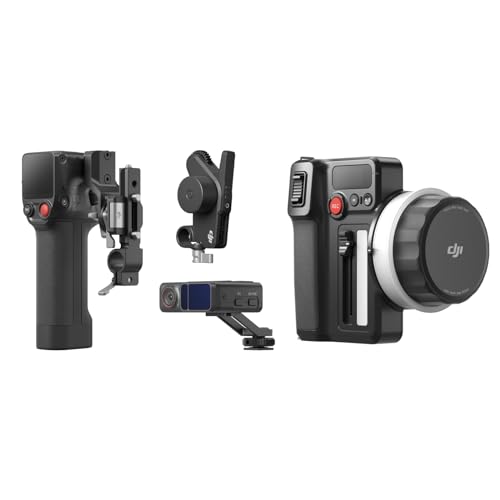
The DJI Focus Pro Grip serves as the control center of DJI’s modular lens manipulation platform, bringing advanced LiDAR scanning, electronic tactile feedback, and motorized precision to cinema glass. Serving as a dedicated command station for independent operators, this system transforms fully manual lenses into responsive, autofocus-capable tools. For filmmakers who demand cinema-grade optics without the constant overhead of a dedicated focus puller, the grip delivers an intelligent, mechanically sound bridge between analog glass and modern tracking technology.
This hardware suits solo cinematographers, independent commercial videographers, and documentary shooters running fast-paced shoots who need repeatable focus accuracy across varied distances. However, operators who shoot strictly on native autofocus mirrorless lenses, creators working in rainy outdoor environments without weather protection, or casual vloggers seeking minimal rig weight should pass on this comprehensive cinema unit.


DJI Focus Pro Grip at a Glance

| Attribute | Specification Details |
|---|---|
| Focusing Range | Up to 20 meters maximum subject distance |
| LiDAR Precision | 76,800 ranging points |
| Control Capabilities | FIZ (Focus, Iris, Zoom) multi-axis support |
| Subject Recognition | AI recognition algorithms for humans and vehicles |
| Operating Modes | AMF (Automated Manual Focus), Manual, Automatic |
| Ecosystem Compatibility | DJI Ronin 4D, DJI Inspire 3, DJI Transmission |
| Viewfinder / Screen | Integrated electronic display with LiDAR waveform |
| Connectivity | DJI Proprietary Wired Connection and DJI Transmission |
| Water Resistance | Not water resistant |
| Packaged Weight | 2512 g (total combo kit weight) |
LiDAR Autofocus Performance and AI Subject Tracking
The centerpiece of the DJI Focus Pro ecosystem is its sensor module, which projects 76,800 ranging points to map physical space continuously. This dense grid allows the system to read subject contours and depth shifts up to 20 meters away. By capturing depth information directly rather than relying purely on optical phase detection or contrast matching, the sensor functions reliably in complex lighting. Based on our analysis of the product specifications, this high-density array represents a massive computational leap that brings consistent subject acquisition to vintage and modern manual cinema glass alike.
Operating in conjunction with the depth sensor, an integrated camera feeds visual information into upgraded AI recognition algorithms. This onboard visual tracking specializes in pinpointing humans and vehicles, allowing the system to distinguish between intended subjects and background clutter. When managing camera moves along complex paths, the system preserves subject isolation without erratic focus hunting. For operators relying on dji focus pro lidar control, the processing engine keeps actors sharply rendered even as they move toward or away from the lens at rapid paces.
Achieving dependable dji focus pro manual lens autofocus requires visual confirmation, and the grip’s electronic screen provides this via a real-time LiDAR waveform. This top-down visual assistance tool displays the subject, physical boundary lines, and focus plane distance simultaneously. Operators should note that viewing fine details requires enabling the 2x zoom display function on the screen interface. This graphic representation eliminates guesswork, allowing solo shooters to verify subject depth with spatial clarity that standard peaking lines cannot match.
Automated Manual Focus and Collaborative Workflow
The headline operational advancement of the unit is its dji focus pro amf mode, designed to merge robotic tracking speed with human creative discretion. While conventional camera systems require you to toggle strictly between continuous autofocus and unassisted manual operation, this collaborative mode allows both layers to function at the same time. The motor moves the lens to track the subject automatically, while the grip’s dial rotates in physical lockstep with the motor’s position. This gives operators immediate physical insight into what the focus mechanism is doing at any microsecond.
This dynamic architecture proves invaluable during scenes with scripted compositional surprises. If an actor ducks out of frame or an unannounced foreground object enters the composition, the operator can simply grab the dial and instantly override the tracking point. Because the internal motor and mechanical dial remain synchronized, there is no disconnect or mechanical resistance when seizing manual control. As soon as manual intervention ends, the system can smoothly resume automated tracking. For productions that scale between single-operator days and larger set environments, the grip works alongside the wireless hand unit so a focus puller can collaborate seamlessly with the camera operator.
FIZ Lens Control and Tactile Magnetic Damping
True cinema control demands full lens authority, and the grip provides comprehensive dji focus pro fiz lens control across focus, iris, and zoom axes. When paired with compatible external motors, the control dial and rocker switch allow operators to set fine focal stops, conduct smooth aperture pulls during lighting transitions, or push focal length dynamically. The interface delivers continuous operational authority without requiring you to reach around the camera body or touch the lens barrel during a live take.
A stand-out physical characteristic of the grip is its magnetic damping tactile feedback. Rather than employing fixed friction pads or loose, free-spinning dials, the grip uses programmable electromagnetic resistance to simulate mechanical lens travel. When setting lens limits during calibration, the dial generates real physical hard stops at near and far focus distances. This tactile resistance gives operators intuitive muscle memory, making minute focus pulls feel grounded and controlled rather than loose or unpredictable.
- Precision Wheel Resistance: Dynamic magnetic damping provides realistic physical tension that mimics high-end cine mechanics.
- Configurable Hard Stops: The dial electronically creates rigid mechanical stopping points matched to the calibrated rotation of your lens.
- Multi-Axis Command: Dedicated ergonomic switches grant instantaneous management over focus, iris, and zoom motorized rings.
Physical Grip Setup, Ergonomics, and Ecosystem Integration
Evaluating the dji focus pro grip specs reveals a rugged, industrial design tailored to intensive production rigging. Weighing alongside its accompanying accessories in a comprehensive package, the grip functions as an ergonomic side handle that bolts directly to camera cages and baseplates. For shooters evaluating the dji rs4 combo or balanced gimbal setups, the grip can be configured on the camera rig to control the LiDAR and focus motors directly, completely independent of whether a gimbal stabilizer is powered on.
Executing the dji focus pro grip setup involves routing secure lines via DJI’s proprietary wired connection. This hardwired umbilical cord minimizes communication lag between the sensor, grip, and drive motors, ensuring physical lens elements react instantly to subject displacement. While the grip powers and coordinates the ecosystem locally, it also integrates natively into larger monitoring networks using DJI Transmission. This dual compatibility allows video feeds and control signals to pipe directly to remote monitors, the DJI Ronin 4D platform, or the Inspire 3 cinema drone system.
For independent camera crews, choosing between the available package configurations is an essential logistical decision. While the All-In-One Combo includes the independent wireless Hand Unit intended for multi-crew productions, the dji focus pro creator combo focuses solely on the LiDAR, Grip, Motor, and case. This streamlined package is optimized directly for solo operations, reducing unnecessary weight while keeping all essential hardware required to automate cinema lenses intact.
The unit relies heavily on its electronic viewfinder display to navigate menus, map lenses, and engage tracking parameters. By retaining internal memory profiles for calibrated lenses, switching focal lengths on set does not require a fresh, laborious manual calibration sequence. However, operators working outdoors must note that the listing explicitly states this equipment is not water resistant, meaning proper rain covers are mandatory when operating in wet or humid environmental extremes.
DJI Focus Pro Grip Pros and Cons
Pros
- 76,800-point LiDAR depth mapping
- 20-meter subject focusing range
- Intuitive AMF hybrid focus mode
- Magnetic damping tactile dial feedback
- Full FIZ multi-axis lens control
- Advanced AI vehicle and human recognition
Cons
- Not water resistant
- Requires multi-component rig cabling
- Higher complexity than native autofocus
Check DJI Focus Pro Grip on Amazon
Who Should Buy the DJI Focus Pro Grip
Buy It If
- You shoot solo on manual cinema glass: The system empowers dji focus pro grip for solo shooters by converting manual prime lenses into responsive, autofocus-driven capture tools.
- You require tactile manual override: AMF mode allows you to seize focus pulling authority instantly without disabling automated tracking parameters or encountering motor resistance.
- You demand deep ecosystem connectivity: Seamless hardwired and wireless integration links the grip with DJI Transmission, Ronin 4D systems, and professional multi-axis setups.
- You rely on visual focus tracking aids: The top-down LiDAR waveform provides clear spatial positioning data on screen that outperforms standard focus peaking.
Skip It If
- You shoot exclusively with native autofocus lenses: Modern mirrorless camera bodies already deliver advanced internal phase detection on electronic lenses, making external motors and LiDAR modules redundant.
- You film frequently in wet environments: The hardware lacks water resistance, making it vulnerable during unshielded outdoor shoots in inclement weather.
- You require an ultra-minimalist mobile setup: Operators seeking simple vlog grips or compact gear like the osmo action multifunctional charging handle will find this cine-rigging platform far too complex and bulky.
DJI Focus Pro Grip Alternatives Worth a Look
If you do not require a professional LiDAR-based electronic lens control ecosystem and merely need mechanical mounting handles or simple physical stabilizers for basic camera operation, several utility options exist.
Portable Handheld Selfie Stick, Long

The Portable Handheld Selfie Stick, Long is an entry-level mounting pole and light-support accessory designed for vloggers and social media creators using smartphones or light camcorders. Unlike the advanced Focus Pro platform, this product provides zero motorized drive components, lens control, or tracking technology. It is strictly an inexpensive physical extension for basic handheld framing.
ChromLives Camera Handle Grip Support

The ChromLives Camera Handle Grip Support is a barebones mechanical handgrip featuring a standard 1/4-inch male screw mount. It offers a solid physical purchase point for stabilizing compact digital cameras, LED lights, or action cameras. Buyers seeking simple physical holding comfort without any electronic FIZ controls or focus automation will find this an effective, utilitarian handle.
Camera Handle Grip,1 4″ Camera
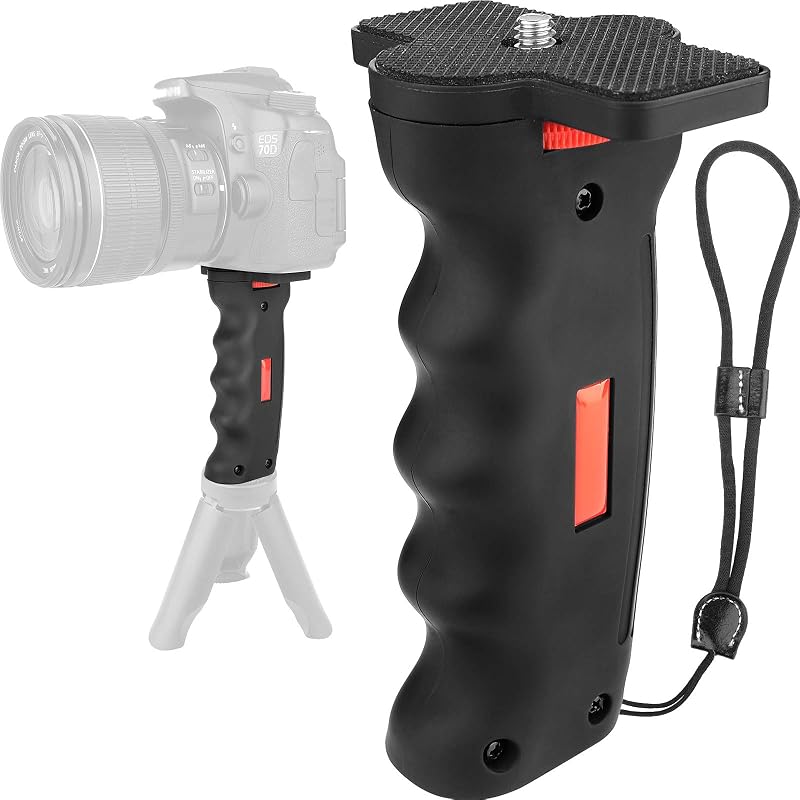
The Camera Handle Grip,1 4″ Camera provides a handheld camera stabilizer grip equipped with an integrated wrist strap. Built for basic run-and-gun support with DSLR and mirrorless setups, it improves ergonomic handling for low-angle shots. It serves as a mechanical support accessory rather than an automated focus-pulling control interface.
Final Verdict
When asking is dji focus pro grip worth it, the answer depends entirely on your optical inventory and crew structure. For solo videographers striving to shoot wide-aperture cinema glass without missing focus on critical narrative or commercial takes, the system is an unrivaled asset. The pairing of 76,800 LiDAR measurement points with motorized magnetic feedback solves one of the oldest challenges in filmmaking: keeping moving manual lenses pin-sharp without an assistant pulling focus on set.
While the initial rigging complexity and lack of weather sealing demand disciplined handling, the functional return is massive. By delivering multi-axis FIZ control, intuitive AMF manual overrides, and native integration into the DJI PRO ecosystem alongside tools like the dji rs3 pro, this grip establishes itself as an essential command center for serious independent filmmakers.
FAQ
Does the DJI Focus Pro Grip work with manual cinema lenses?
Yes. The Focus Pro platform is specifically engineered to bring LiDAR-powered autofocus and electronic focus pulling to fully manual cine lenses by driving external motors calibrated to the lens rings.
What is AMF mode on the DJI Focus Pro Grip?
AMF stands for Automated Manual Focus. This collaborative mode allows the LiDAR system to handle autofocus tracking while the control dial physically moves in tandem, enabling the operator to intervene manually at any time without switching shooting modes.
Can the Focus Pro Grip be used without a gimbal?
Yes. The grip is designed as an independent side handle that mounts directly to camera rigs and cages via hardwired connections, powering and coordinating the LiDAR unit and FIZ motors even when shooting handheld or on a tripod.
Is the DJI Focus Pro Grip waterproof?
No. The official specifications state that the hardware is not water resistant. Operators should avoid exposing the grip, LiDAR unit, and motor modules to rain, heavy splashing, or extreme moisture without protective weather housing.
What is the maximum tracking distance of the LiDAR system?
The LiDAR module provides an accurate subject focusing range up to a maximum distance of 20 meters, utilizing 76,800 ranging points to detect human and vehicle subjects reliably.