
As Amazon Associates, we earn from qualifying purchases. This means we may receive a small commission at no extra cost to you if you click through and make a purchase.
The DJI Mini 4K is a compact, ultra-lightweight quadcopter designed to deliver stabilized Ultra High Definition aerial video without subjecting pilots to complex aviation red tape. Engineered around an authentic 3-axis mechanical stabilization gimbal and a 12 MP CMOS sensor, this aircraft represents the baseline 4K standard in modern consumer flight technology. For casual filmmakers, vacationers, and first-time fliers seeking clear aerial imagery, this model serves as a reliable, direct route into the world of creative drone videography.
This aircraft primarily suits beginners, travel vloggers, and hobbyists who demand crisp 4K recording capabilities while staying strictly exempt from mandatory federal registration under normal recreational rules. Conversely, commercial pilots requiring omnidirectional obstacle avoidance, professional high-bitrate color profiles, or built-in display remotes will find its baseline hardware somewhat limiting and should look toward higher-tier enterprise platforms.
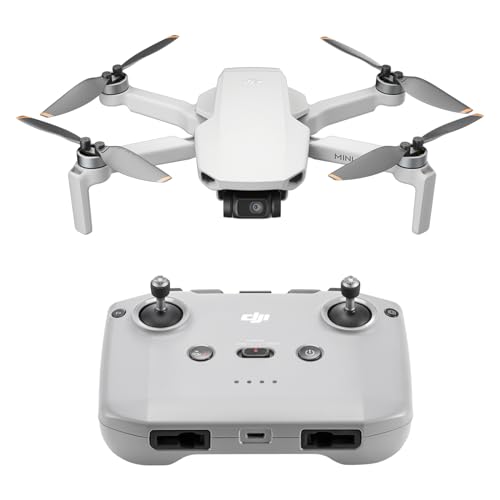


DJI Mini 4K at a Glance

| Feature | Specification |
|---|---|
| Takeoff Weight | 240 g (Under 249 g standard flight configuration) |
| Video Resolution | 4K Ultra HD (MP4 format) |
| Still Image Resolution | 12 MP (JPEG and DNG RAW formats) |
| Camera Stabilization | 3-Axis Mechanical Gimbal |
| Transmission Range | Up to 10 km (DJI O2 Video Transmission) |
| Wind Resistance | 38 kph (Level 5 Wind Resistance) |
| Maximum Flight Time | Up to 31 minutes per battery |
| Storage Media | Micro SD |
| Controller Hardware | RC-N1C Remote Controller |
| Max Takeoff Altitude | 4,000 meters |
Camera Quality and Video Performance
Evaluating the DJI Mini 4K camera quality reveals a capable optical platform tailored specifically for straightforward content creation. The onboard 12 MP CMOS sensor captures true 4K Ultra HD video at clean bitrates, providing crisp daytime footage across dynamic coastal landscapes, forest canopies, and city parks. The camera handles challenging high-contrast scenarios like early morning sunrises and late evening sunsets with commendable balance, preventing severe highlight blowout while preserving midtone shadows. Still photographers also benefit from dual-format capture, saving images in standard JPEG for rapid sharing or uncompressed DNG RAW for detailed post-flight color correction.
The defining technical asset of this camera system is its physical 3-axis mechanical gimbal. Unlike basic aircraft that rely solely on electronic image stabilization or software cropping, a motorized 3-axis gimbal physically counteracts pitch, roll, and yaw shifts caused by wind gusts and rapid flight control inputs. The result is fluid, cinema-grade video panning that maintains horizontal integrity without the jitter, warping, or frame degradation typical of budget toy drones. Travel storytellers looking to document vacations will find the visual output ready for YouTube or social media feeds without requiring third-party video stabilizing tools.
While the optical system performs reliably in bright and overcast daylight, low-light night scenes require realistic handling expectations. The compact sensor maintains clarity in well-lit urban night settings, but users should anticipate moderate noise when shooting over dark rural expanses. Filmmakers who assemble complete on-the-go production kits often pair aerial footage from this aircraft with ground recordings supported by dedicated audio tools like the mic mini 2 to round out their audiovisual storytelling.
Flight Dynamics, Wind Resistance, and Transmission Range
Flight stability is governed by efficient brushless motors that grant this aircraft an impressive Level 5 wind resistance rating, handling breezes up to 38 kph. Even when operating in choppy coastal headwinds, the aircraft holds its position steadily in mid-air through active motor compensation and integrated GPS coordinates. The manufacturer rates the craft for takeoff at altitudes reaching 4,000 meters above sea level, ensuring sufficient lift capacity for alpine expeditions and elevated holiday destinations. Compared to legacy lightweight platforms such as the dji mini se, this model handles turbulent gusts with greater stability and video composure.
Communication between the pilot and aircraft is driven by DJI O2 video transmission technology, which delivers high-definition live video feeds back to your smartphone at distances up to 10 km. This robust connection provides pilots with dependable real-time feedback, ensuring clear framing even when operating at conservative distances around sports fields or across lakes. The extended DJI Mini 4K range ensures that signal breakups, video stutter, and latency remain minimal within line-of-sight flying, giving beginners peace of mind when exploring larger recreational open zones.
The physical flight control is handled via the included RC-N1C remote controller, which docks your iOS or Android device securely at the top for optimal screen visibility. The ergonomic controller layout features responsive analog joysticks and a tactile gimbal control dial, allowing precise framing adjustments mid-flight. Wireless connectivity via Wi-Fi and Bluetooth ensures fast initial binding and streamlined firmware updates directly through your mobile device.
Battery Life and Power Options
Real-world aerial exploration depends directly on endurance, and the DJI Mini 4K battery life is engineered to maximize operational airtime. A single Intelligent Flight Battery delivers an official maximum flight duration of up to 31 minutes under ideal flying conditions. The aircraft utilizes high-density lithium-ion battery cells with a rated 5200 mAh capacity, supplying steady power draw to the high-efficiency brushless propulsion system throughout entire flight cycles.
To accommodate diverse shooting schedules, the manufacturer offers three distinct retail set configurations: a standard 1-battery set delivering up to 31 minutes, a 2-battery set providing up to 62 minutes, and an expansive 3-battery configuration achieving up to 93 minutes of total combined flight capability. For users documenting full-day outdoor excursions, road trips, or sporting events, acquiring multi-battery options avoids mid-day charging delays and allows pilots to focus on capturing the right lighting conditions.
Intelligent battery firmware monitors remaining cell voltage continuously, calculating accurate return times based on your current operational distance from the home point. When power reserves reach critical thresholds, automated warnings prompt the operator to begin the return sequence, eliminating the risk of mid-air power depletion.
Ease of Use, Safety Features, and Smart Flight Modes
Designing a capable DJI Mini 4K for beginners requires an accessible software interface alongside responsive hardware safeguards. The flight system features one-tap automated takeoff and landing, lifting the aircraft to a safe hover at the press of an on-screen prompt. Advanced GPS integration provides stable hovering without continuous manual stick trimming, allowing inexperienced fliers to release the controls entirely while the quadcopter maintains its exact position and altitude in space.
Critical safety is reinforced through an automated GPS Return to Home (RTH) protocol. If the aircraft loses transmission connection with the RC-N1C controller or experiences low remaining battery power, the internal GPS navigation takes control, climbing to a preconfigured safe altitude and landing accurately back at the initial takeoff point. In addition, novice fliers can access guided in-app flight academies and learning tutorials inside the DJI Fly application, establishing foundational piloting competencies safely before conducting long-range navigation flights.
Capturing complex, dynamic video angles is simplified through automated DJI Mini 4K QuickShots modes. By selecting a visual subject on screen, pilots can engage five preprogrammed flight trajectories:
- Dronie: Flies backward and upward while keeping the camera locked squarely on the selected subject.
- Rocket: Ascends vertically into the sky with the camera lens pointed straight downward toward the ground.
- Circle: Maintains a fixed distance while orbiting 360 degrees smoothly around the focal point.
- Helix: Ascends gradually in an expanding spiral pattern around the subject for dramatic cinematic reveals.
- Boomerang: Flies along an oval perimeter, climbing as it departs and descending as it sweeps back around.
It is important to note a key installation step regarding mobile software: due to external platform compatibility decisions, the DJI Fly companion application is not hosted on the Google Play store. Android smartphone users must download the official installation file directly from the DJI corporate website to initialize their hardware. Those considering premium models like the dji mini 4 will find similar core software workflows, making this baseline system an approachable entry point into modern consumer drone flying.
Regulatory Freedom Under the 249g Threshold
The standard takeoff weight of the aircraft stands at approximately 240 grams, placing it securely in the recreational category of a DJI mini drone under 249g. This deliberate engineering choice offers significant regulatory benefits for everyday hobbyists and casual travelers. In the United States, aircraft flown purely for recreational purposes that weigh under 249 grams do not require FAA registration or active Remote ID broadcasting hardware, sparing pilots extra administrative setup steps before their initial takeoff.
Internationally, this sub-249-gram standard means that casual fliers are not required to complete formal pilot testing or regulatory examinations in most global jurisdictions. However, regulatory requirements vary depending on operational locations and specific flight activities. Operators must always review local airspace regulations, respect temporary flight restrictions around critical infrastructure, and operate strictly within visual line of sight regardless of the drone’s lightweight classification.
DJI Mini 4K Pros and Cons
Pros
- Sub-249g weight avoids FAA recreational registration
- True 4K UHD video with 3-axis mechanical gimbal
- Reliable Level 5 wind resistance up to 38 kph
- Up to 31 minutes flight time per battery
- Long-range 10 km DJI O2 video transmission
- Automated QuickShots and GPS Return to Home
Cons
- No forward or lateral obstacle avoidance sensors
- DJI Fly app requires direct download on Android
- Low-light noise visible in dark scenes
Who Should Buy the DJI Mini 4K
Buy It If
- You want authentic 4K video stabilized by a physical 3-axis mechanical gimbal without handling professional-grade complexity.
- You want a drone under 249 grams to fly recreationally without mandatory FAA registration or Remote ID setup.
- You are a first-time drone pilot who values automated safety features like one-tap takeoff, GPS Return to Home, and preprogrammed QuickShots flight maneuvers.
- You want an extended flight boundary supported by dependable 10 km HD transmission technology and Level 5 wind resistance.
Skip It If
- You require active omnidirectional obstacle sensing sensors to prevent collisions when flying through dense forests or tight indoor spaces.
- You are an Android user unwilling to install mobile application installation files directly from an external manufacturer website.
- You need advanced 10-bit color profiles or commercial thermal imaging for industrial inspection projects.
DJI Mini 4K Alternatives Worth a Look
While the primary aircraft excels in overall stabilization and high-definition video capture, several alternative drone models on the market cater to different pilot budgets, travel priorities, and flight learning goals.
2K HD FPV Drone

The 2K HD FPV Drone is a beginner-oriented folding quadcopter that prioritizes accessible practice flying over professional video production. Featuring optical altitude hold, one-key takeoff and landing, three selectable flight speed modes, and headless orientation mode, it serves as an inexpensive training platform. It includes two flight batteries in the package, making it an appropriate choice for teenagers or recreational backyard pilots who do not require true 4K resolution or mechanical gimbal stabilization.
GPS Drone with EIS 4K

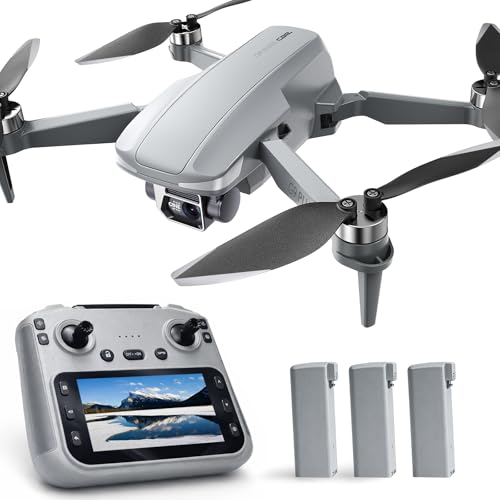
The GPS Drone with EIS 4K is a sub-249g folding quadcopter featuring Electronic Image Stabilization, automated GPS return, follow-me tracking modes, and circle fly flight routines. A key distinction of this package is the remote controller equipped with a built-in 4.5-inch HD display screen, eliminating the need to dock a personal smartphone. Bundled with three batteries promising up to 90 minutes of total flight time, this alternative suits buyers who want a complete self-contained flight monitor setup without draining their smartphone’s battery.
Drone with 1080P Camera

The Drone with 1080P Camera is a lightweight, basic entry quadcopter built primarily for casual recreational fun and introductory flight control practice. It incorporates altitude hold, gesture selfie triggers, voice control support, and 3D acrobatic flip maneuvers. Equipped with two batteries, this model appeals to shoppers seeking an entertaining indoor or calm-weather toy drone who have no commercial recording requirements.
Final Verdict
When assessing whether the aircraft justifies its investment, the answer is unequivocally positive for everyday content creators. The combination of an authentic 4K camera sensor, a physical 3-axis motorized gimbal, and reliable Level 5 wind resistance elevates this quadcopter far above generic toy options. It provides dependable flight stability, intuitive controls, and cinematic footage capture without demanding deep technical knowledge or difficult post-production work.
While power users tracking future platform announcements like the dji mini 5 may hold out for higher framerates or automated tracking sensors, the current offering sets the standard for consumer accessibility. By packaging industry-standard O2 transmission, 31 minutes of endurance per battery, and complete sub-249g regulatory convenience into a foldable design, this quadcopter proves itself as an outstanding entry-level tool for casual pilots.
FAQ
Does the DJI Mini 4K require FAA registration for recreational flying?
No. Weighing under 249 grams in its standard flying configuration (including battery, propellers, and microSD card), this aircraft does not require FAA registration or Remote ID equipment when operated exclusively for recreational purposes in the United States. Commercial operations under Part 107 still require registration regardless of aircraft weight.
How do Android phone users download the DJI Fly application?
Due to platform compatibility issues, the DJI Fly app is not available on the Google Play store. Android users must visit the official DJI corporate website using their mobile browser, download the official DJI Fly APK installation file directly to their smartphone, and grant the necessary device permissions to install the application.
What is the maximum transmission range of this drone?
The aircraft utilizes DJI O2 transmission technology, providing a maximum high-definition video transmission range of up to 10 km (approximately 32,800 feet) in unobstructed, interference-free conditions. Practical flight distance will vary based on local radio interference and line-of-sight terrain obstacles.
Does this drone feature obstacle avoidance sensors?
The aircraft relies on downward visual positioning and infrared sensors for stable hovering and ground clearance during landing. It does not feature forward, backward, upward, or lateral obstacle avoidance sensors, meaning pilots must maintain manual situational awareness to steer clear of trees, wires, and architectural barriers.
What memory cards are compatible with the aircraft?
The drone records media onto standard Micro SD cards. Because capturing 4K Ultra HD video generates sustained data transfer streams, using high-speed UHS-I Speed Class 3 (U3) rated microSD cards is recommended to ensure error-free video writing and playback performance.
What automated camera flight paths are included in QuickShots?
The system includes five automated flight routines: Helix, Dronie, Rocket, Circle, and Boomerang. Each mode executes a preprogrammed flight vector around a chosen subject while recording video, generating polished social-ready clips with a single tap.


