
As Amazon Associates, we earn from qualifying purchases. This means we may receive a small commission at no extra cost to you if you click through and make a purchase.
The Celestron NexStar 8SE is an iconic orange-tube Schmidt-Cassegrain telescope equipped with a motorized single fork arm and automated GoTo technology designed to help backyard observers navigate the night sky. By pairing an eight-inch objective lens diameter with a computerized hand controller database, it removes the manual struggle of locating dim celestial targets across suburban or dark skies. Our research into the specifications and intended design shows that for stargazers who prioritize substantial light-gathering aperture alongside automated tracking, this instrument delivers a comprehensive observational experience straight out of the box.
This computerized telescope suits intermediate hobbyists stepping up from a manual refractor who want clear views of lunar craters, planetary weather bands, and distant deep-space nebulae from a stable backyard location. Casual campers seeking a featherweight grab-and-go option might prefer a much smaller unit like the celestron moon mission travel scope 70 portable telescope, while tabletop users and young children will find an entry-level instrument like the celestron firstscope telescope far easier to manage.



Celestron NexStar 8SE at a Glance

| Attribute | Detail |
|---|---|
| Optical Design | Schmidt-Cassegrain |
| Aperture (Objective Lens Diameter) | 20.3 cm (8 inches) |
| Optical Tube Length | 43.2 cm |
| Mount Type | Computerized Altitude-Azimuth Single Fork Arm Mount |
| Hand Controller | NexStar+ with 40,000+ object database |
| Alignment System | SkyAlign technology |
| Included Eyepiece | 25mm eyepiece |
| Focus Type | Manual Focus |
| Finderscope | StarPointer red dot finderscope (CR2032 battery included) |
| Power Requirements | 8 AA batteries, 12V AC adapter, or external PowerTank (none included) |
| Product Dimensions | 32″D x 34″W x 52″H |
| Warranty | 2-Year US Warranty with US-based expert support |
Optical Performance and Deep Sky Clarity
The defining capability highlighted in the celestron nexstar 8se specs is its 20.3-centimeter aperture. In telescope design, physical aperture dictates total light gathering, and a schmidt cassegrain telescope 8 inch system captures substantially more light than entry-level four-inch or six-inch models. This extra light collection brings faint astronomical details into clear focus, turning diffuse smudges into textured celestial bodies when observing from a reasonably dark location.
Visual astronomers focused on celestron nexstar 8se planetary viewing will find that the optical tube resolves subtle cloud bands across Jupiter, the rings of Saturn, and intricate crater networks along the lunar terminator. When turning toward celestron nexstar 8se deep sky objects, the eight-inch optics collect enough photons to reveal bright globular clusters, planetary nebulae, and core structures of nearby galaxies. The Schmidt-Cassegrain configuration accomplishes this while keeping the optical tube length to a compact 43.2 centimeters by folding the optical path internally between two mirrors and a front corrector plate.
Focusing is handled through a manual focus knob on the rear cell, allowing precise adjustments to bring stars to sharp focal points. Celestron supplies a standard 25mm eyepiece in the package, providing an accessible baseline magnification for wide-field viewing of bright star clusters and extended lunar terrain. Observers who want to examine high-magnification planetary details will eventually need to supplement this single eyepiece with additional focal lengths or magnification accessories.
Computerized GoTo Mount and Sky Tracking
Navigating the night sky manually can be challenging for beginners, which is where the celestron goto computerized telescope mechanics provide immediate utility. The telescope sits atop a motorized single fork arm altitude-azimuth mount operated by the proprietary NexStar+ hand controller. Instead of manually pushing the optical tube or deciphering right ascension and declination offsets, users select their target from an onboard database containing more than 40,000 celestial objects.
Once an object is selected, internal servo motors quietly slew the telescope to the precise coordinates and keep the object centered in the field of view. Because the Earth is constantly rotating, unmotorized telescopes like the manual celestron omni az 102 require continuous hand adjustments to keep targets from drifting out of the eyepiece. The motorized tracking on the 8SE counteracts this movement automatically, allowing multiple observers to view Saturn or the Orion Nebula without losing the target between turns.
The single fork arm design keeps overall weight down compared to heavy German equatorial mounts, though the single-sided attachment can introduce minor vibrations when focusing at high magnification or in windy conditions. Celestron designed the electronics to be expandable, maintaining compatibility with optional brand accessories that add wireless device control, external GPS modules, or automated camera alignment tools as observing skills expand over time.
Assembly and SkyAlign Alignment Routine
Initial nexstar 8se setup is designed for straightforward field assembly without requiring specialized tools. The optical tube connects securely to the motorized fork arm using an integrated mounting dovetail, and the entire assembly attaches to a heavy-duty adjustable steel tripod. The package includes a StarPointer red dot finderscope, complete with its CR2032 coin battery, which mounts directly to the tube to assist with preliminary target acquisition and system calibration.
The centerpiece of the software interface is Celestron’s proprietary SkyAlign system, which simplifies celestron nexstar 8se alignment into a quick, user-friendly process. Traditional telescope alignment often forced astronomers to know the proper names and exact sky locations of obscure navigational stars like Polaris, Arcturus, or Vega. With SkyAlign, the observer enters the local date, time, and city location into the NexStar+ controller, then points the red dot finderscope and centers any three bright stars or planets visible in the sky.
Once those three bright reference points are centered and confirmed, the internal computer calculates the telescope’s orientation, level, and celestial coordinates within minutes. From that moment onward, the GoTo system accurately slews across the database with high reliability. This automated routine dramatically flattens the learning curve for amateur stargazers who understand basic astronomical concepts but have not yet memorized every seasonal star pattern.
Power Demands, Transportability, and Astrophotography Limitations
Managing the nexstar 8se battery requirements is one of the most critical operational aspects prospective owners must understand before purchasing. The mount’s motorized drive requires continuous electrical power to maintain alignment and tracking. While the internal battery compartment accommodates eight AA batteries, motorized GoTo systems drain disposable cells rapidly, which can cause erratic tracking, slew errors, or alignment loss mid-session. The manufacturer specifies compatibility with an external 12-volt AC adapter or portable external PowerTank battery sources, but none of these external power accessories are included in the box.
From a physical perspective, the telescope system commands a footprint measuring 32 inches deep by 34 inches wide by 52 inches high when fully assembled on its tripod. While the 43.2-centimeter optical tube is remarkably compact for an eight-inch telescope, moving the entire rig outdoors requires either two trips or transporting the tube and tripod as separate components. Backyard astronomers with a dedicated garage, patio, or shed will find the transport manageable, but hikers looking for back-country portability should expect significant physical bulk.
Shoppers often evaluate the celestron nexstar 8se for astrophotography, but it is important to understand the mechanical design parameters of this system. Because the motorized mount uses an altitude-azimuth movement pattern rather than an equatorial polar axis, the field of view experiences subtle optical rotation during exposures lasting longer than twenty to thirty seconds. The telescope excels at high-frame-rate planetary imaging and short-exposure lunar photography, but extended deep-sky astrophotography requires dedicated equatorial tracking platforms or premium motorized configurations like the celestron evolution 8, which offers upgraded internal batteries and worm gear drives.
Celestron NexStar 8SE Pros and Cons
Pros
- Substantial 8-inch aperture gathers abundant light for deep-sky views
- Computerized GoTo mount tracks over 40,000 celestial objects
- SkyAlign system allows fast three-star alignment without star charts
- Compact 43.2-centimeter optical tube length
- Includes NexStar+ hand controller and 25mm eyepiece
Cons
- Requires external power or eight AA batteries not included
- Single fork arm mount can produce focusing vibrations
- Bulky overall assembled dimensions of 32 by 34 by 52 inches
Check Celestron NexStar 8SE on Amazon
Who Should Buy the Celestron NexStar 8SE
Buy It If
- You want serious eight-inch light-gathering capability to observe dim deep-sky nebulae and fine planetary details from your backyard.
- You prefer automated GoTo tracking and an indexed 40,000-object database over manual star-hopping and paper sky charts.
- You appreciate fast calibration through the SkyAlign system without needing to memorize specific star names before observing.
- You already own or plan to purchase a reliable external 12V power supply or rechargeable battery pack to power motorized observing sessions.
Skip It If
- You need an ultralight, backpack-friendly telescope for rugged hiking, airline travel, or remote camping trips.
- You intend to capture long-exposure deep-sky astrophotography that demands an equatorial mount to prevent field rotation.
- You want an all-in-one package that works immediately without purchasing extra power supplies or supplemental high-power eyepieces.
Celestron NexStar 8SE Alternatives Worth a Look
If the footprint, power demands, or computerized complexity of the 8SE do not align with your observing goals, several manual and starter alternatives provide simpler or more portable stargazing solutions.
Gskyer Telescope

The Gskyer Telescope features a 70mm aperture refractor tube on an adjustable altitude-azimuth mount with a 400mm focal length, accompanied by a custom carry bag, smartphone adapter, and wireless remote. This manual refracting setup is aimed squarely at beginners, families, and traveling hobbyists who want a simple, unmotorized telescope that requires zero batteries and packs easily into a vehicle trunk for weekend camping trips.
90x Magnification

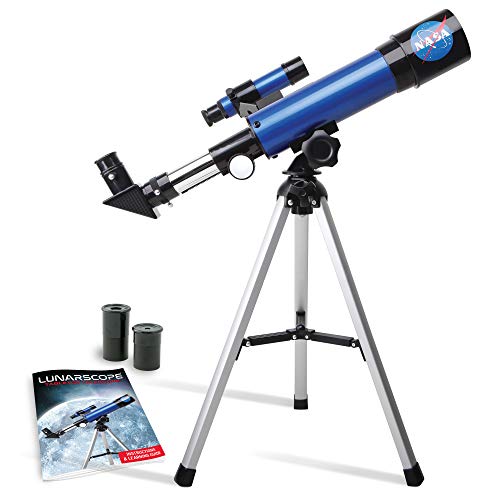
The 90x Magnification telescope is an educational space toy package designed specifically for children ages 8 to 12, featuring a compact tabletop tripod, finder scope, and two distinct eyepieces. Shoppers buying a gift for a younger student wanting to inspect the lunar surface from a bedroom desk will find this toy-focused kit far more approachable than a heavy, motorized Schmidt-Cassegrain system.
High Powered

The High Powered UncleHu refractor telescope provides a 90mm aperture and 500mm focal length paired with a faceted optical tube, full-height tripod, backpack, phone adapter, and moon filter. Adult beginners seeking a lightweight, manual refractor with a bit more light collection than basic 70mm tubes will appreciate this portable grab-and-go kit as a low-maintenance alternative that bypasses electronic alignment entirely.
Final Verdict
Determining whether the celestron nexstar 8se worth it comes down to balancing its remarkable optical performance against its operational demands. By housing an eight-inch Schmidt-Cassegrain mirror inside a compact 43.2-centimeter optical tube, Celestron provides hobbyists with serious deep-space and planetary viewing power that fits comfortably in a standard vehicle trunk. The SkyAlign alignment software and NexStar+ hand controller successfully bridge the gap between novice enthusiasm and complex sky navigation, making thousands of distant celestial objects accessible at the push of a button.
At the same time, prospective buyers must enter ownership with realistic expectations regarding power and stability. Relying on disposable AA batteries is impractical for regular observing, meaning an external 12-volt battery or AC adapter is an essential supplemental investment. Furthermore, the single fork arm mount prioritizes portability over absolute rigidity, creating minor vibrations during high-power manual focusing. For visual backyard astronomers who want large-aperture views without spending hours learning celestial coordinates, the Celestron NexStar 8SE remains a premier automated platform that delivers exceptional planetary and deep-sky observation.
FAQ
Does the Celestron NexStar 8SE include a power adapter or rechargeable battery?
No, the product listing explicitly notes that while the mount can run on eight AA batteries, a 12V AC adapter, or external PowerTank battery supplies, none of these power sources are included with the telescope. Purchasing an external 12V supply or rechargeable power pack is strongly advised for reliable, extended observing sessions.
How difficult is the SkyAlign alignment process for complete beginners?
The SkyAlign system is specifically engineered for observers who do not know the names or positions of stars. Users simply input the date, time, and city location into the NexStar+ hand controller, then center any three bright celestial objects using the StarPointer red dot finderscope and eyepiece. The internal processor calculates the sky model automatically in minutes.
Can the Celestron NexStar 8SE be used for deep-sky astrophotography?
While the telescope gathers plenty of light to observe deep-sky objects visually and can capture short-exposure photos of the Moon and bright planets, its altitude-azimuth single fork arm mount causes natural field rotation during long exposures. For long-exposure deep-sky photography lasting multiple minutes, an equatorial mount is generally required.
What accessories come in the box with the telescope?
The factory package includes the eight-inch Schmidt-Cassegrain optical tube, computerized single fork arm mount, steel tripod, NexStar+ hand controller with 40,000+ object database, one 25mm eyepiece, and a StarPointer red dot finderscope supplied with a CR2032 battery. Additional eyepieces, AC power adapters, and external batteries must be acquired separately.
What is the benefit of the Schmidt-Cassegrain optical design?
A Schmidt-Cassegrain telescope uses a combination of mirrors and a front corrector lens to fold the optical path back and forth inside the tube. This allows an eight-inch objective lens diameter with substantial focal length to fit inside an optical tube that is only 43.2 centimeters long, maximizing light-gathering power while keeping the instrument compact and relatively portable.


