
As Amazon Associates, we earn from qualifying purchases. This means we may receive a small commission at no extra cost to you if you click through and make a purchase.
The DWARFLAB Dwarf Mini is an ultra-compact digital smart telescope engineered to take the frustration out of observing deep-space targets. By eliminating traditional optical eyepieces in favor of automated tracking, an integrated imaging sensor, and wireless smartphone management, it aims to transform how everyday stargazers interact with the night sky. Our analysis shows that this diminutive device succeeds as an exceptionally portable imaging station that makes capturing faint nebulas and star clusters straightforward for beginners, even if its compact 30mm objective lens naturally limits planetary detail compared to heavy, traditional optical tubes.
This dwarf mini portable telescope is tailor-made for campers, travelers, and backyard stargazers who want an automated imaging setup that fits in a backpack without requiring complex counterweights or manual polar scopes. If you want a quick-deploying system that handles target locating and image stacking while you relax, it serves that mission admirably. However, visual observers who want the tactile experience of looking through physical glass or serious astrophotographers seeking high-resolution planetary views should look toward larger optical tube assemblies or high-end dedicated systems such as the vaonis vespera pro.

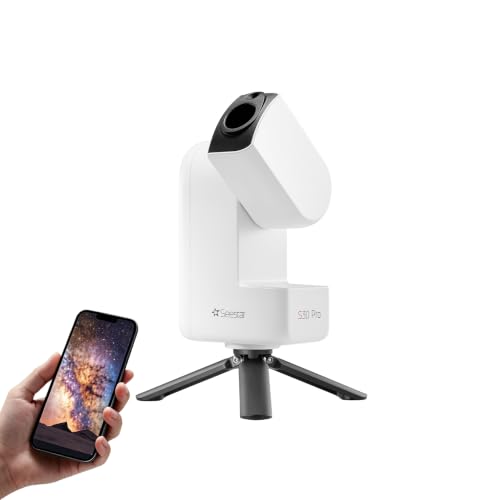


DWARFLAB Dwarf Mini at a Glance
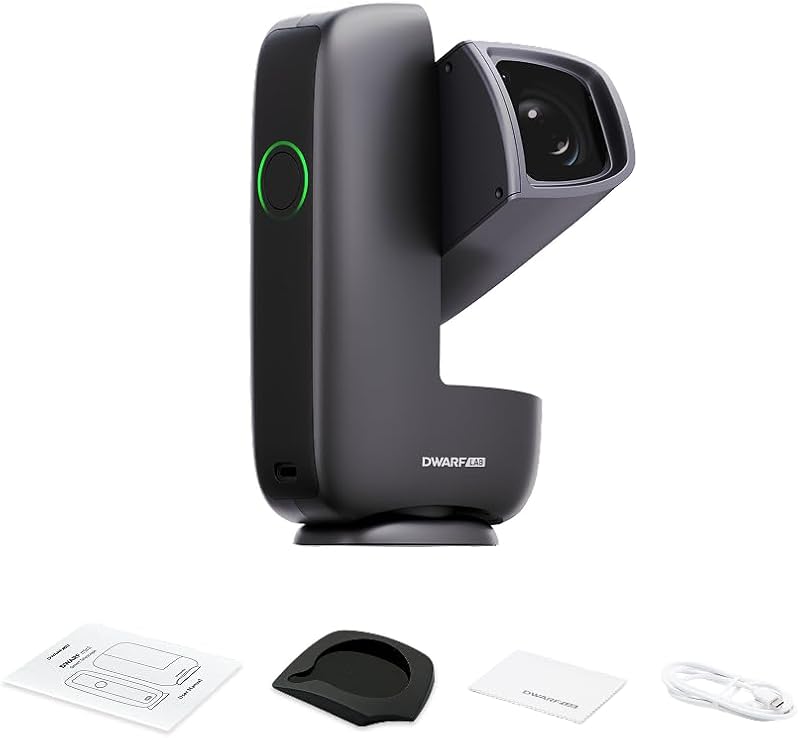
| Feature | Specification |
|---|---|
| Optical Aperture | 30 millimeters |
| Focal Length | 150 mm |
| Field of View | 2.45 degrees |
| Image Sensor | Sony IMX662 (1/2.8-inch format) |
| Image Resolution | 2MP RAW output |
| Mount Mechanics | Altazimuth (AZ) and Equatorial (EQ) modes |
| Maximum Exposure | Up to 90 seconds (in EQ mode) |
| Focusing System | Manual and Auto |
| Total Weight | 1.85 lbs (840g) / 1.9 pounds |
| Physical Dimensions | 2.39″ D x 3.95″ W x 7.23″ H |
Optical Performance and Sony IMX662 Sensor
At the optical core of the device sits a 30mm objective lens paired with a 150mm focal length, delivering a wide 2.45-degree field of view. In practical terms, this wide window is designed specifically for expansive deep-sky objects rather than tiny planetary discs. Broad celestial targets like the Andromeda Galaxy, the Orion Nebula, and vast star clusters comfortably fit within the frame, allowing the telescope to capture expansive swaths of space that narrower, high-magnification instruments often cut off.
Light gathering is handled by the dwarf mini sony imx662 sensor, a 1/2.8-inch imaging format featuring 2.9-micrometer pixels. The listing notes peak performance powered by this Sony component along with support for 2MP RAW output. In smart astrophotography, sensor sensitivity and low noise are crucial because deep-sky photography relies on collecting very faint signals over prolonged integration times. The low-noise architecture of the IMX662 allows the device to draw out celestial structures without drowning the frame in excessive electronic grain.
Because the optical aperture is capped at 30mm, buyers must keep their expectations aligned with the laws of physics. While the sensor extracts remarkable color from emission nebulas through digital stacking, this system is not built for crisp, high-magnification surface views of Jupiter’s cloud belts or Saturn’s rings. The optical design prioritizes portability and wide-field deep-sky targets over planetary resolution, making it a specialized digital imager rather than an all-purpose astronomical instrument like the larger dwarf 3 smart telescope.
Tracking Versatility with AZ and Equatorial EQ Modes
A primary challenge in long-exposure astrophotography is Earth’s rotation. Traditional consumer smart telescopes often operate solely in Altazimuth (AZ) mode, moving up-and-down and left-to-right. While AZ mode is simple to level, it suffers from field rotation, where stars at the edges of the frame appear to pivot around the center during exposures longer than 15 or 20 seconds. The Dwarf Mini addresses this constraint by supporting both standard Altazimuth and pro-level dwarf mini eq mode operation.
When operating in Equatorial mode, the telescope tracks targets along an axis parallel to Earth’s rotational axis. This orientation unlocks single-frame exposures lasting up to 90 seconds without inducing rotational star trailing. Being able to capture 90-second sub-exposures allows the sensor to gather considerably more light from dim nebulas in a single shot than would be possible under short AZ exposures, fundamentally improving signal-to-noise ratios in the final stacked images.
Complementing its dual-mode mount is full 360-degree pivot freedom and an automated Auto GOTO system. Once initialized, the motorized tracking keeps celestial targets centered in the frame as they traverse the sky. The mount’s motorized drive smoothly compensates for celestial movement, eliminating the tedious manual adjustments that often discourage newcomers from pursuing deep-sky imaging.
Integrated Filter System and Noise Suppression
Urban illumination remains the greatest enemy of backyard stargazing, but the Dwarf Mini integrates specialized hardware solutions to combat ambient skyglow. The internal architecture features a dedicated filter system designed to handle the challenges of city and suburban observation. This setup includes a Duo-Band filter optimized specifically for H-alpha and OIII light wavelengths, which are the exact wavelengths emitted by glowing gas clouds and emission nebulas.
By filtering out the broad-spectrum wavelengths generated by city lighting, streetlights, and moonlight, the dwarf mini light pollution filter setup isolates the targeted celestial photons. This allows urban users to resolve faint nebular structures from suburban yards that would otherwise be entirely washed out by local light pollution. Additionally, an Astro filter is included to enhance infrared sensitivity and boost overall contrast across faint nebular boundaries.
Sensor thermal noise is another obstacle during extended nighttime imaging, especially when taking dozens of consecutive long exposures. The Dwarf Mini incorporates an automated Dark filter system that handles dark frame calibration. By recording frames with the sensor blocked from external light, the software maps internal thermal noise and hot pixels, automatically subtracting these electronic artifacts from your active light frames before final processing.
App Control and Cloud Processing Workflow
Operating the device requires zero physical hand dials or optical crosshairs; everything runs via the dwarf mini app control interface on a connected smartphone. The DWARFLAB app includes an interactive star map and built-in sky atlas that allows users to browse visible constellations, planets, and deep-sky objects in real time. The manufacturer states that users can go from unboxing the unit to taking their first celestial photograph in approximately three minutes, minimizing the steep setup curve of conventional astronomy.
Once an object is selected within the mobile atlas, the automated GOTO routine takes over. The telescope pivots to the designated coordinates and engages tracking. Users can alternate between manual and autofocus controls within the app to ensure stars remain tight pinpoints before initiating an automated capture sequence. The app handles the complex mechanics of shooting sequences, interval timing, and exposure management behind the scenes.
For processing, the system incorporates smart cloud processing alongside local device capability. Rather than requiring users to transfer dozens of RAW files to a desktop computer for complex alignment and stacking routines in specialized software, the system offloads image enhancement to integrated processing tools. This automated pipeline stacks multiple sub-exposures, sharpens structural details, and balances color saturation, making dwarflab dwarf mini for beginners an approachable reality for family stargazing or casual backyard sessions.
Portability, Build Quality, and Everyday Usability
Portability is the definitive design priority of this smart telescope. Measuring 2.39 inches deep, 3.95 inches wide, and 7.23 inches tall, with an overall weight of 1.85 pounds (approximately 840 grams; the listing also notes 1.9 pounds), the unit is genuinely pocket-sized. It packs down smaller than most telephoto camera lenses, slipping effortlessly into a travel bag, daypack, or glove compartment without demanding dedicated carrying cases.
The compact chassis is powered by an internal rechargeable battery setup, listed as using one nonstandard battery that comes integrated with the unit. Field recharging and continuous power are handled via a modern USB-C connection, with a USB-C to USB-C charging cable supplied in the box. Because it draws power through standard USB-C architecture, it can easily run off portable external power banks during extended nighttime sessions far away from grid electricity.
Inside the packaging, the manufacturer supplies the Dwarf Mini smart telescope itself, one filter, a USB-C to USB-C charging cable, and an optical cleaning cloth. Its minimalist unboxing experience matches its overall operational philosophy: unpack the unit, link it to your smartphone, mount it securely, and begin imaging without assembling an array of loose brackets, finderscopes, or external cable harnesses.
DWARFLAB Dwarf Mini Pros and Cons
Pros
- Weighs only 1.85 pounds
- EQ mode enables 90-second exposures
- Built-in light pollution and duo-band filters
- Sony IMX662 sensor with 2MP RAW
- Automated dark frame noise calibration
- Fast three-minute app setup
Cons
- Small 30mm aperture limits planetary detail
- No physical eyepiece for optical viewing
- Relies completely on a smartphone
Check DWARFLAB Dwarf Mini on Amazon
Who Should Buy the DWARFLAB Dwarf Mini
Buy It If
- You want an ultra-lightweight, 1.85-pound smart telescope that fits easily inside a travel backpack for camping and dark-sky road trips.
- You are a beginner who wants automated GOTO tracking and smart cloud processing without mastering complex manual star alignment.
- You plan to shoot wide-field nebulas and star clusters from city or suburban locations using built-in light pollution and duo-band filters.
- You want pro-level Equatorial mode capabilities that allow extended 90-second single-frame exposures without rotational star blur.
Skip It If
- You prefer looking through physical glass eyepieces rather than viewing an automated digital stream on a smartphone screen.
- Your primary astronomical goal is observing fine, high-magnification planetary details on Jupiter, Saturn, or Mars.
- You want a high-resolution sensor exceeding 2MP RAW output for large-format physical astrophotography prints.
DWARFLAB Dwarf Mini Alternatives Worth a Look
If you are exploring the smart telescope market, several alternative options provide different trade-offs in sensor resolution, optical design, and display setups.
4K Dual Camera

The 4K Dual Camera smart telescope listing highlights a dual-camera architecture designed for wide-field imaging alongside deep-sky tracking, incorporating 4K capture, one-tap capture processing, and star trail modes. Stargazers who want dedicated dual-perspective imaging and higher-resolution sensor capabilities for Milky Way captures might lean toward this platform over the compact 2MP output of the Dwarf Mini.
Desktop Tripod Portable 4K Astrophotography
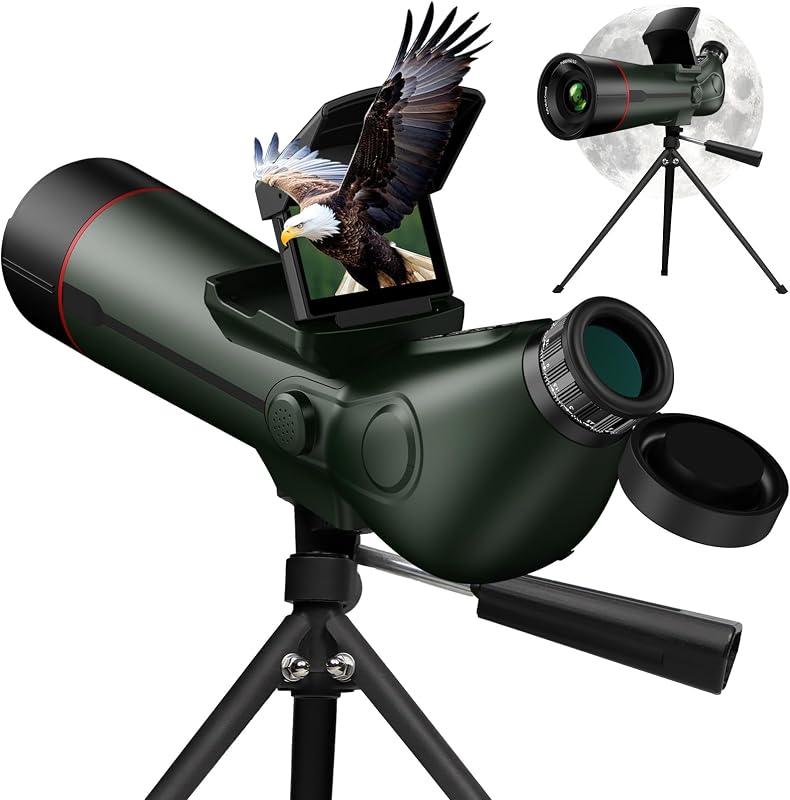
The Desktop Tripod Portable 4K Astrophotography camera is billed as a multi-purpose refractor telescope with a large objective lens aimed at both astronomy and terrestrial daylight viewing, such as wildlife monitoring and bird watching. Shooters who need a hybrid digital scope that explicitly handles daylight nature observation on a desktop tripod alongside night sky sessions may find its broad utility attractive.
Smart Telescope

The Smart Telescope model features a 4K astrophotography camera paired with internal and external dual screens, packaged with a 64GB memory card. Users who dislike relying purely on a smartphone screen and prefer having built-in hardware displays right on the telescope body will appreciate its standalone dual-screen design.
Final Verdict
When weighing whether the dwarflab dwarf mini astrophotography system fits your needs, it helps to view it as a dedicated digital imaging tool rather than a traditional optical instrument. Its modest 30mm aperture and 2MP RAW sensor are intentionally scaled to preserve maximum portability and wide-field coverage. By integrating advanced tracking mechanics like a 90-second EQ mode, motorized 360-degree rotation, automated dark-frame noise calibration, and duo-band filtration into an 840g body, it packs an impressive amount of modern imaging technology into an ultra-portable frame.
So, is dwarflab dwarf mini worth it for your personal astronomy journey? If your priority is effortless grab-and-go convenience, zero-friction app control, and the ability to capture colorful deep-space nebulas from light-polluted backyards or remote campsites, this miniature telescope offers outstanding utility. It successfully strips away the intimidating technical hurdles of traditional astrophotography, delivering an automated, pocket-sized stargazing station that makes deep-sky exploration accessible to anyone with a smartphone.
FAQ
How does the DWARFLAB Dwarf Mini find stars and deep-sky objects automatically?
The telescope utilizes an integrated motorized mount with 360-degree pivot freedom paired with the DWARFLAB mobile app. Using the app’s interactive sky atlas, you select your desired celestial target, and the onboard Auto GOTO tracking system automatically rotates and tilts the telescope to locate and center the object in the camera frame.
Can you look through the DWARFLAB Dwarf Mini with your eye?
No, the Dwarf Mini is a purely digital smart telescope without an optical eyepiece. The incoming light through the 30mm objective lens is captured directly by the Sony IMX662 image sensor and transmitted wirelessly to your connected smartphone screen for live viewing and image capture.
How does EQ mode differ from standard AZ mode on this telescope?
Altazimuth (AZ) mode moves the telescope along horizontal and vertical axes, which is quick to set up but can cause field rotation during longer exposures. Equatorial (EQ) mode aligns the tracking axis with the Earth’s rotational axis, preventing field rotation and enabling extended single-frame exposures of up to 90 seconds for cleaner deep-sky imaging.
Does the telescope work under light-polluted city skies?
Yes, the Dwarf Mini features an integrated filter system that includes a Duo-Band filter designed to isolate H-alpha and OIII wavelengths emitted by nebulas while blocking common urban light pollution and moonlight. It also features automated dark-frame calibration to subtract internal sensor thermal noise.
What items are included in the box with the DWARFLAB Dwarf Mini?
According to the official listing data, the package includes one DWARF Mini smart telescope, one filter, a USB-C to USB-C charging cable, and an optical cleaning cloth.


