
As Amazon Associates, we earn from qualifying purchases. This means we may receive a small commission at no extra cost to you if you click through and make a purchase.
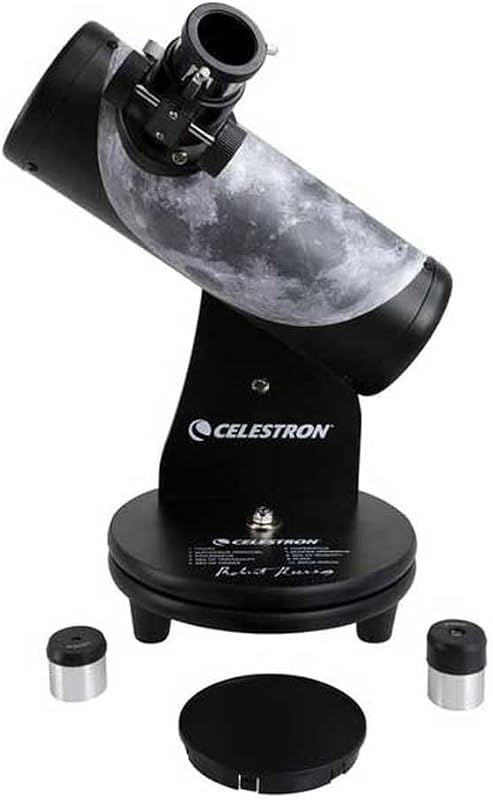
The Celestron FirstScope is a compact tabletop reflector telescope engineered to make basic astronomy immediately accessible without the technical hurdles of traditional tripods. Featuring an entry-level optical tube mounted on a smooth rotating base, this special Signature Series edition pairs a 76mm primary mirror with a custom lunar map wrap designed alongside master lunar imager Robert Reeves. It serves as a true grab-and-go instrument that removes setup friction, offering an honest, beginner-friendly viewing experience focused squarely on bright, wide-field observations of the Moon, open star clusters, and prominent night-sky landmarks.
This portable tabletop instrument is best suited for families, students, and casual skywatchers who want an uncomplicated porch telescope that can be set up in seconds on an outdoor table or picnic bench. However, experienced observers seeking deep-sky resolving power, long-exposure astrophotography platforms, or motorized tracking will find its manual optical design limiting, and should instead consider dedicated motorized systems such as the celestron nexstar 8se telescope.



Celestron FirstScope at a Glance
| Feature | Specification |
|---|---|
| Optical Design | Reflector with spherical glass mirror |
| Objective Aperture | 76 mm (3.0 inches) |
| Focal Length | 300 mm (12 inches) |
| Mount Type | Manual Tabletop Dobsonian |
| Optical Coatings | Aluminum with SiO2 protective overcoat |
| Eyepieces Included | 20 mm and 4 mm |
| Apparent Field of View | 1.3 degrees |
| Dawes Limit Resolving Power | 1.53 arc seconds |
| Optical Tube Length | 26.6 cm (10.5 inches) |
| Dimensions and Weight | 9 x 9 x 18 inches; 4.3 pounds |
Optical Performance and Lunar Viewing
When evaluating the celestron firstscope optical performance, the central component is its 76-millimeter (3-inch) spherical glass primary mirror. With an objective diameter of 76mm and a compact 300mm focal length, this optical assembly delivers a fast focal ratio of f/3.95. This short optical path gathers sufficient light to produce bright, punchy wide-field views. The optics feature an aluminum coating protected by a silicon dioxide (SiO2) overcoat, which safeguards the reflective surface against ambient moisture and degradation over extended use. According to the manufacturer specifications, the Dawes limit for this aperture is 1.53 arc seconds, representing the theoretical limit for separating tight binary stars and resolving subtle surface markings under steady atmospheric conditions.
As its signature moniker suggests, celestron firstscope moon viewing is where this small reflector genuinely excels. The wide 1.3-degree field of view provides complete, contextual framing of the lunar disc, giving viewers bright, sharp perspectives of prominent craters, jagged mountain ranges, and expansive basaltic lunar maria. Beyond our nearest neighbor, the optical tube gathers enough light to pan across the Milky Way star clouds, bring bright open star clusters into view, render the gaseous glow of the Orion Nebula, and reveal the distinctive ring structure encircling Saturn. While spherical mirrors at very fast focal ratios naturally produce mild optical softness near the outer edges of the view, the center of the frame remains adequately sharp for bright solar system targets.
For observers comparing beginner gear across optical categories, it is helpful to note that small reflectors behave differently than standard entry refractors like the celestron moon mission travel scope 70 portable telescope. The Newtonian reflector design places the eyepiece near the front top of the tube, allowing comfortable seated viewing when placed on an elevated table, while the generous 76mm light-gathering area outperforms typical pocket refractors in total image brightness.
Tabletop Dobsonian Mount and Setup Simplicity
The core philosophy of the celestron firstscope setup is immediate usability with zero mechanical frustration. Traditional equatorial mounts require polar alignment, counterweights, and altitude latitude adjustments, which can overwhelm first-time stargazers. In contrast, the FirstScope utilizes an integrated manual tabletop Dobsonian mount. The entire unit measures just 9 inches deep, 9 inches wide, and 18 inches tall, weighing in at a very manageable 4.3 pounds. To begin observing, you simply place the wooden base onto a stable picnic table, car hood, or porch railing, slide an eyepiece into the focuser, and aim the tube toward your target.
Navigating the night sky is completely manual and intuitive. The azimuth axis rotates smoothly in a full horizontal circle, while the altitude axis pivots up and down to adjust elevation. This dual-axis swivel mechanism lets users pan freely across constellations or sweep the horizon. Because there are no internal gears or motorized drives, the scope relies entirely on gentle hand pressure to track celestial objects as the Earth rotates. The friction on both axes is tuned to keep the 26.6-centimeter optical tube steady once pointed, preventing unwanted drift during casual viewing sessions.
A notable design consideration is that the listing specifies that a finderscope is not included in the package. Because there is no auxiliary red-dot finder or optical sighting scope mounted on the tube, targeting requires pointing along the barrel of the tube or starting with low magnification to acquire your target in the eyepiece. For bright, obvious targets like the Moon, sighting along the optical tube is quick and natural, but hunting down faint, pinpoint stars requires some initial patience and practice.
Eyepieces and Manual Focusing System
The included package comes equipped with two standard celestron firstscope eyepieces: a 20mm eyepiece and a 4mm eyepiece. Because magnification is calculated by dividing the telescope’s 300mm focal length by the eyepiece focal length, these two lenses provide two distinct magnification levels right out of the box. The 20mm ocular delivers 15x magnification, yielding a generous field of view and an exit pupil diameter of 3.17 millimeters. This low-power configuration produces the brightest views and is ideal for scanning star fields, locating bright planets, and taking in full-disc views of the Moon.
Switching to the 4mm eyepiece jumps the magnification to 75x, allowing observers to inspect individual crater rims, central peaks, and lunar shadows in greater detail. While the product specifications cite a theoretical zoom ratio limit of 180, high magnifications push the limits of small 76mm optics. The 4mm eyepiece features a narrower viewing portal and tighter eye relief, which demands precise eye placement and careful focusing. Focusing itself is controlled via a manual focus barrel that adjusts the drawtube smoothly to bring targets into crisp definition.
Because the optical tube uses a standard eyepiece holder compatible with supplementary oculars, owners can expand the telescope’s flexibility over time. The manual focus mechanism provides enough travel to accommodate standard 1.25-inch astronomical eyepieces, letting users experiment with intermediate focal lengths to find the optimal balance between image brightness, field width, and magnification.
Signature Series Design and Build Quality
This edition belongs to the celestron firstscope signature series, created as an educational collaboration with master lunar photographer Robert Reeves. Rather than featuring a plain black or silver finish, the exterior of the 26.6-centimeter optical tube is wrapped in a custom lunar map. This high-contrast photographic wrap labels key lunar features, including major impact craters and prominent maria, turning the body of the telescope itself into a physical reference guide. Beginners can study the wrap in daylight or with a dim red flashlight to identify specific geographical formations on the Moon before locating them through the eyepiece.
Structurally, the FirstScope balances low weight with dependable mechanical stability. The Dobsonian base is constructed from solid composite materials with a wide footprint that dampens vibrations far better than lightweight aluminum tripods found in many entry-level sets. The optical tube clamps firmly into the mount’s side bracket, allowing the balance point to stay centered during elevation changes. The finish on the mount and tube wrap is durable enough to withstand evening dew and frequent handling by young observers.
Ownership security is backed by Celestron’s established heritage. Based in California since 1960, the brand supports the FirstScope with a 2-Year US Warranty and unlimited technical assistance from their US-based customer service team. This provides peace of mind regarding structural materials, optical alignment, and factory defects, ensuring long-term value for households introducing young learners to astronomy.
Celestron FirstScope Pros and Cons
Pros
- Zero-assembly tabletop Dobsonian mount
- Generous 76mm aperture for lunar viewing
- Custom Robert Reeves lunar map wrap
- Lightweight and compact 4.3-pound design
- Protective SiO2 mirror optical coatings
- Two-year warranty with US-based support
Cons
- Finderscope not included in the box
- Requires a sturdy elevated tabletop
- Tight eye relief on 4mm eyepiece
Check Celestron FirstScope on Amazon
Who Should Buy the Celestron FirstScope
Determining whether this celestron firstscope tabletop dobsonian matches your personal goals comes down to how and where you plan to observe. As an introductory instrument, it prioritizes ease of use, swift deployment, and dependable optical clarity on wide targets over high-power magnification or specialized tracking.
Buy It If
- You want a grab-and-go lunar telescope that requires absolutely zero assembly or technical alignment before viewing.
- You need a stable, kid-friendly instrument that sits firmly on a patio table without fragile tripod legs getting bumped.
- You want an educational tool featuring Robert Reeves’ custom Moon wrap to help identify craters and maria in real time.
- You prioritize compact storage, lightweight portability at 4.3 pounds, and a reliable 2-year manufacturer warranty.
Skip It If
- You do not have an outdoor table, bench, or raised surface available at your primary stargazing location.
- You want an included finderscope to pinpoint small, faint celestial targets quickly across dark sky regions.
- You require motorized tracking, automated target finding, or specialized planetary astrophotography capabilities.
Celestron FirstScope Alternatives Worth a Look
If you are exploring the wider entry-level astronomy landscape, several alternatives offer different configurations, including traditional tripods, refractor optics, and varied accessory kits.
Gskyer Telescope

The Gskyer Telescope features a 70mm aperture and a 400mm focal length paired with an alt-azimuth mount and full-height tripod. Unlike the FirstScope’s reflector design, this is a refracting telescope that includes an adjustable travel tripod, a carry bag, a smartphone adapter, and a wireless remote. Buyers who want a complete grab-and-go travel kit with smartphone photography support and a standing tripod rather than a tabletop mount should consider this package.
90x Magnification

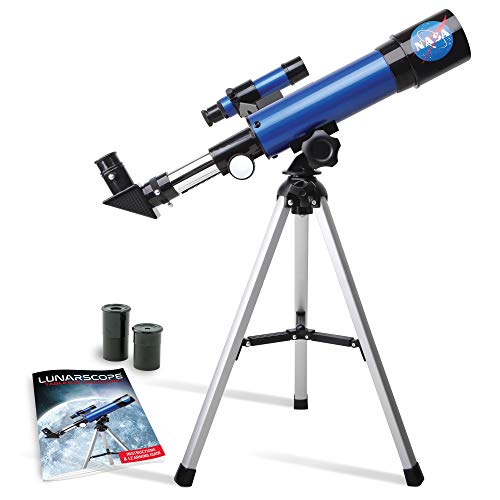
The 90x Magnification NASA Lunar Telescope is aimed specifically at younger beginners aged 8 to 12. It includes two eyepieces capable of up to 90x magnification, a tabletop tripod, and an integrated finder scope. Families looking for an official NASA-themed astronomy gift that comes standard with a dedicated finder scope to teach kids target acquisition will appreciate this educational alternative.
High Powered

The High Powered UncleHu Telescope offers a larger 90mm aperture and 500mm refractor tube mounted on a full-height tripod. This kit includes a faceted tube, an included backpack, a phone adapter, and a dedicated moon filter. Observers willing to manage a larger physical kit in exchange for greater light-gathering aperture, an included moon filter, and a full tripod will find this refractor well suited for adult beginners.
Final Verdict
When asking whether the celestron firstscope for beginners delivers on its promises, the answer is a resounding yes within its intended design envelope. By skipping complicated mechanical gears, spindly tripod legs, and intricate polar alignments, Celestron has built an inviting gateway into the night sky. The 76mm glass primary mirror, Aluminum and SiO2 protective coatings, and intuitive Dobsonian base make scanning the lunar surface and bright star clusters as straightforward as pointing a spotlight. Adding Robert Reeves’ custom lunar map wrap elevates the telescope from a basic optical tool into an engaging educational centerpiece.
Ultimately, is celestron firstscope worth it for shoppers seeking practical tabletop astronomy? If your goal is to introduce children to the wonders of stargazing, keep a low-maintenance porch telescope ready for clear evenings, or study lunar topography without spending time on complex setup routines, the FirstScope represents outstanding utility. It delivers reliable optical quality, robust tabletop stability, and trusted manufacturer support in a compact 4.3-pound package that invites frequent, joyful use.
FAQ
Does the Celestron FirstScope come with a finderscope?
No, the product specifications state that a finderscope is not included. Users aim the telescope by sighting along the top of the compact 26.6-centimeter optical tube or by utilizing the low-power 20mm eyepiece, which provides a wide 1.3-degree field of view to locate bright targets like the Moon.
What can you see with the Celestron FirstScope?
With its 76mm aperture and 300mm focal length, the FirstScope provides clear views of lunar craters, valleys, and mountain ranges. It is also designed for sweeping along the Milky Way, observing open star clusters, viewing the Orion Nebula, and observing the distinct rings around Saturn under favorable sky conditions.
How do you focus the Celestron FirstScope?
The FirstScope utilizes a manual focus mechanism located at the eyepiece drawtube. Observers turn the manual focus knob clockwise or counterclockwise until the target reaches optimal sharpness through the selected eyepiece.
Does the Celestron FirstScope require batteries or power?
No, the power source is entirely manual. The telescope uses a manual tabletop Dobsonian mount that requires no batteries, power cords, or charging, making it completely independent and ready to operate anywhere at any time.
What eyepieces are included in the box?
The telescope includes two distinct eyepieces: a 20mm eyepiece yielding 15x magnification for bright, wide-field viewing, and a 4mm eyepiece providing 75x magnification for closer inspection of lunar details.


