
As Amazon Associates, we earn from qualifying purchases. This means we may receive a small commission at no extra cost to you if you click through and make a purchase.
The Buzz Lightyear RC Helicopter from World Tech Toys is an officially licensed indoor flying novelty that translates the iconic Pixar Space Ranger into an operational aircraft. Frequently searched as an introductory buzz light year drone, this single-flyer unit combines character styling with basic automated flight stabilization to deliver an approachable entry point for younger pilots. Its core appeal rests on hassle-free liftoffs and quick living room entertainment without requiring the technical calibrations common to modern hobby-grade quadcopters.
This buzz lightyear flying toy suits children aged eight and older who want immediate recreational fun, as well as Pixar enthusiasts who appreciate a dynamic shelf display that can actively take flight. Conversely, aerial hobbyists searching for outdoor wind resistance, long-distance navigational range, camera functionality, or complex manual aerobatics will need to look toward dedicated outdoor platforms, as this model is engineered strictly for indoor recreation within confined domestic spaces.



Buzz Lightyear RC Helicopter at a Glance

| Feature | Specification |
|---|---|
| Manufacturer | World Tech Toys |
| Model Number | 36297 |
| Recommended Age | 8 years and older |
| Chassis Material | Impact-resistant polymer plastic |
| Rotor System | Coaxial main blades with stabilizing rear rotor |
| Safety Detection | Integrated obstacle motion sensors |
| Internal Aircraft Power | Rechargeable Lithium-Ion battery |
| Charging Interface | USB charging cable |
| Transmitter Power | 3 AA batteries (required) |
| Flight Environment | Indoor usage only |
Durability and Impact Resistance Indoors
Indoor aircraft intended for younger operators inevitably encounter walls, furniture edges, and hard floor drops. The structural foundation of this buzz lightyear rc helicopter relies on a lightweight, flexible polymer frame designed specifically to absorb energy during sudden collisions. When an unseasoned pilot misjudges spatial clearance in an enclosed hallway or living room, the plastic chassis flexes rather than fractures, keeping the internal electronic connections and drive gears secure from structural shock.
Complementing the polymer shell is a twin-blade coaxial rotor layout. Unlike rigid carbon-composite blades found on outdoor photography craft, these plastic rotor blades are cast with enough pliability to withstand direct strikes against drywall or table legs. If the rotating assembly makes contact with an obstruction, the blades are engineered to yield and minimize motor strain, significantly reducing the likelihood of snapped rotor hubs during everyday household tumbles.
While the exterior components handle routine bumps with ease, maintaining long-term durability requires keeping flights within clutter-free zones. Sustained drops onto tile or repeated entrapment in drapery can place unnecessary mechanical stress on the tiny motor shafts. As observed with compact tech gear like the pocket 4 pro, miniature electronics thrive when shielded from severe repetitive shocks, making wide-open living areas the ideal staging ground for this Space Ranger.
Flight Mechanics and Motion Sensor Performance
Controlling an aerial toy indoors can quickly overwhelm beginners, which makes the automated buzz lightyear helicopter motion sensor a central feature of the aircraft’s architecture. The integrated detection array actively monitors the immediate airspace beneath and around the craft. When the helicopter drifts toward a solid object, such as a floor, tabletop, or an outstretched hand, the sensors trigger compensatory rotor adjustments that gently repel the toy upward and away from the obstacle.
This automated obstacle response fundamentally alters how children interact with the aircraft. Instead of relying solely on precise transmitter stick inputs to avoid a crash, users can utilize their own hands to guide the craft upward, introducing an interactive, physical dimension to flight sessions. The technology smooths out erratic descents, reducing panicked pilot corrections and giving young operators the confidence to navigate indoor rooms without fearing an instant crash.
The aerodynamic balance is governed by a stacked coaxial rotor system paired with a functional rear tail rotor. Coaxial designs utilize two sets of blades spinning in opposite directions to cancel out rotational torque naturally. This counter-rotating configuration eliminates the rapid spinning motion common to single-rotor helicopters, delivering an inherently stable hover that remains level even when guided by operators who have never handled a radio-controlled device before.
Controls and Indoor Flight Handling
Executing smooth buzz lightyear drone indoor flight depends on a basic, user-friendly remote transmitter. World Tech Toys configured the controller to prioritize direct, uncomplicated inputs suitable for hands aged eight and up. Rather than presenting complex multi-channel trim adjustments, the handheld unit focuses on essential directional throttle and altitude commands, allowing children to launch and maneuver the aircraft without parental troubleshooting or technical training.
The transmitter operates wirelessly on standard battery power, calling for three AA cells to drive the command signals. Communication between the handheld unit and the helicopter is tuned for standard residential dimensions, maintaining dependable responsiveness across typical room lengths. Because the remote handles fundamental lift while the onboard sensors mitigate proximity collisions, the flying experience feels cooperative, blending pilot direction with automated safety buffers.
Indoor aerodynamics present unique environmental variables, including ceiling-fan drafts, HVAC currents, and confined room dimensions. The lightweight nature of this recreational toy means it reacts quickly to localized air currents. Operating the craft in rooms with high ceilings and deactivated ceiling fans yields the most predictable flight paths, allowing the automated stabilization systems to maintain a consistent altitude without external aerodynamic interference.
Battery Life and Power Management
Power delivery for the aircraft centers on an internal, rechargeable Lithium-Ion cell. Understanding buzz lightyear drone battery life is vital for managing playtime expectations, as compact airborne toys must balance cell weight against rotational lift capacity. The onboard lithium-ion battery provides several minutes of continuous powered hovering per run, aligning with standard output thresholds observed across the recreational micro-aviation category.
Replenishing the helicopter is handled via an included USB charging connection. The USB interface allows users to plug the aircraft into standard wall adapters, computer ports, or portable charging blocks without needing a specialized charging dock. Turnaround times are brisk, meaning young pilots do not face excessive downtime between flight sorties, which keeps spontaneous play sessions flowing smoothly throughout the day.
Managing the dual power sources requires keeping fresh AA batteries on hand for the handheld transmitter. While the helicopter itself draws its power from the integrated rechargeable cell, the remote relies entirely on external dry cells. Much like managing specialized battery systems in travel optics such as the ricoh gr iii x hdf, maintaining fully charged power sources across both the controller and the craft guarantees consistent signal strength and responsive throttle control.
Visual Design and Integrated LED Lights
Beyond its mechanical attributes, the toy stands out through its faithful aesthetic homage to Pixar’s Space Ranger. The figure features the signature white, green, and purple armor detailing, complete with molded chest graphics and flight suit elements. For Disney collectors, the sculpt holds aesthetic merit on a desk or display shelf, serving as an attractive decorative item when parked on its landing skids between indoor missions.
Visual engagement increases significantly once the power switch engages and activates the onboard LED lighting array. The integrated lights illuminate the helicopter’s frame during flight, casting vibrant reflections across walls and floors. This illumination makes twilight and low-light indoor flying especially captivating for children, enhancing the illusion of an active space mission within a darkened bedroom or basement play space.
The LEDs also serve a practical functional purpose by assisting with visual orientation. When piloting any aircraft at a distance, discerning front-to-back orientation is essential for directional navigation. The light emission makes the craft’s position instantly recognizable, assisting young pilots in tracking the helicopter’s heading even when flying across dimly lit domestic environments.
Buzz Lightyear RC Helicopter Pros and Cons
Pros
- Durable impact-resistant polymer frame
- Built-in obstacle avoidance motion sensors
- Stable counter-rotating coaxial rotor design
- Convenient rechargeable USB aircraft battery
- Vibrant integrated LED flight illumination
- Officially licensed Pixar character detailing
Cons
- Restricted to indoor flight only
- Transmitter requires three AA batteries
- No integrated camera or video functionality
Check Buzz Lightyear RC Helicopter on Amazon
Who Should Buy the Buzz Lightyear RC Helicopter
Evaluating this buzz lightyear drone review comes down to matching its specific capabilities with the user’s intended environment and operational expectations. This device is intentionally built as an accessible, character-driven toy rather than a professional hobbyist flyer, meaning its strengths lie in straightforward fun and visual charm rather than long-range navigation.
Buy It If
- You want a durable, indoor-safe flying toy specifically designed for children aged eight and older.
- You need an aircraft with automated motion sensors that prevent hard crashes against floors and furniture.
- You are shopping for a dedicated Pixar fan who values an authentic Buzz Lightyear character sculpt.
- You prefer a simple, out-of-the-box flying experience with convenient USB battery recharging.
Skip It If
- You intend to fly outdoors, where natural breezes easily overpower lightweight polymer airframes.
- You require an integrated camera system for aerial photography or video recording.
- You are an advanced remote control pilot looking for multi-channel manual stunt configurations.
Buzz Lightyear RC Helicopter Alternatives Worth a Look
If your aerial goals extend beyond indoor character novelty, several alternative aircraft in adjacent categories offer contrasting feature sets, ranging from camera-equipped training quadcopters to advanced outdoor imaging platforms.
2K HD FPV Drone

The 2K HD FPV Drone is a beginner-focused quadcopter equipped with an integrated 2K high-definition camera, altitude hold, headless mode, and three selectable speed settings. It includes two flight batteries and utilizes a foldable, portable frame geared toward teenagers and beginners wanting real-time first-person-view video feeds. Pick this option over the Buzz Lightyear model if you want an introductory camera platform for aerial recording rather than an indoor novelty toy.
3-Axis Gimbal

The 3-Axis Gimbal drone represents a major leap into dedicated aerial cinematography, featuring a 4K UHD stabilized camera, wind resistance, up to a 31-minute flight duration, and a 10km video transmission range while keeping total weight under 249 grams. This platform is tailored for adult pilots and travel videographers seeking stabilized scenic footage, making it the proper pick if you require high-altitude outdoor operation and true cinematic imaging.
DJI Mini 4K Camera Drone
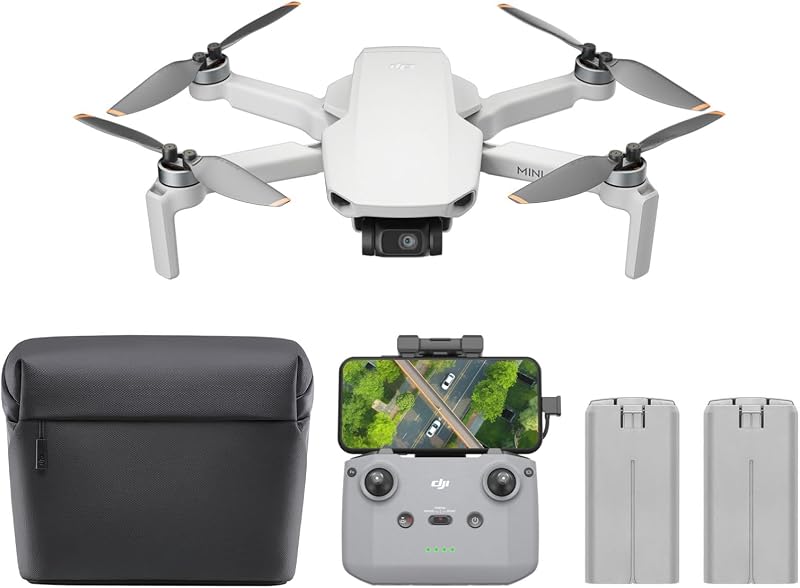
The DJI Mini 4K Camera Drone bundle expands on professional-grade capabilities by pairing a 4K UHD camera with a 3-axis mechanical gimbal, automated QuickShot flight paths, and two flight batteries providing up to 62 minutes of cumulative airtime under 249 grams. Choose this package if you are searching for an advanced, reliable outdoor creative tool for serious video production rather than an indoor recreation toy for children.
Final Verdict
When assessing whether is buzz lightyear drone worth it, the answer depends entirely on the pilot’s age and expectations. World Tech Toys succeeded in engineering a charming, remarkably approachable recreational flyer that captures the whimsical spirit of the Pixar universe. By combining a resilient polymer body with forgiving coaxial rotors and automated obstacle avoidance, this helicopter removes the typical frustrations that plague early remote control experiences for young children.
While the aircraft lacks outdoor capability, advanced manual handling, and camera integration, it excels within its designated operational lane. It provides dependable indoor entertainment, quick USB recharging, and eye-catching LED illumination that keeps flights engaging day or night. For parents seeking a dependable, crash-friendly gift or collectors wanting an active Space Ranger display, this helicopter delivers reliable, accessible indoor fun.
FAQ
Can the Buzz Lightyear RC Helicopter be flown outside?
No, the manufacturer specifies that this helicopter is strictly for indoor use. Because the aircraft features a very light polymer chassis and delicate coaxial rotors, even slight outdoor wind currents will push it off course and potentially cause severe damage or loss.
How do the motion sensors assist during flight?
The onboard motion sensors continuously scan the space immediately beneath the helicopter. When the sensors detect an approaching solid boundary—such as flooring, furniture, or a child’s hand—the internal system automatically increases lift to hover upward and steer clear of an impact.
What type of batteries are required to operate the toy?
The helicopter itself utilizes an integrated rechargeable Lithium-Ion battery that charges via a standard USB cable. However, the handheld remote transmitter requires three AA batteries, which must be purchased separately.
What is the recommended age range for this aircraft?
The manufacturer recommends this remote control toy for children aged eight years and older. The simplified controller and automated collision sensors make it accessible for beginners while maintaining safe handling characteristics for home environments.
What components are included in the buzz lightyear drone specs?
The package contains one World Tech Toys Buzz Lightyear RC Helicopter (Model 36297) with an integrated Lithium-Ion rechargeable battery, a dedicated remote control transmitter, and a USB charging cable. The transmitter’s three AA batteries are not included.
Before taking flight, clearing the surrounding room ensures fewer collisions with monitors and dangling cables. Safe workspace layouts highlighted by Standing Desk Judge demonstrate that maintaining unobstructed vertical clearance makes indoor piloting much easier. Taking a few seconds to tidy the launch zone protects both the novelty flyer and your home office gear.


