
As Amazon Associates, we earn from qualifying purchases. This means we may receive a small commission at no extra cost to you if you click through and make a purchase.
The Nikon Coolscan 5000 ED is a high-performance dedicated film scanner engineered specifically for photographers, collectors, and preservationists who demand uncompromised archival fidelity from 35mm transparencies and negative film strips. Built around a specialized Scanner-Nikkor ED glass lens, a 3,964-pixel two-line linear CCD sensor, and a high-efficiency LED light source, this dedicated machine delivers a true optical resolution of 4,000 dpi alongside an impressive 4.8 optical density. Our verdict is clear: if you need preservation-grade digital captures that resolve authentic film grain and pull delicate details out of dense slide shadows, this dedicated desktop unit easily outperforms consumer-grade snapshot converters, provided you have the desktop space and dedicated archival workflow to support it.
This desktop scanner directly suits serious photographers, historical archivists, and dedicated family historians managing large collections of mounted transparencies or valuable film negatives. If your priority is maximum detail preservation, color precision, and hardware-based scratch correction, setting up this dedicated unit is well worth the effort. However, casual hobbyists who only want to take a quick glance at old snapshots on a television screen or share low-resolution family pictures on social media will find this professional machine unnecessarily complex and physically bulky. Those seeking casual digital snapshots might be better served by simple digital cameras such as the nikon coolpix s570 or inexpensive standalone digital snapshot viewers.



Nikon Coolscan 5000 ED at a Glance

| Attribute | Detail |
|---|---|
| Scanner Type | Dedicated Film Scanner |
| Optical Sensor | 3,964-pixel, 2-line linear CCD |
| Optical Resolution | 4,000 dpi |
| Optical Density | 4.8 Dmax |
| A/D Conversion and Color Depth | 16-bit A/D conversion (8- or 16-bit output), 48-bit color |
| Greyscale Depth | 65,536 shades of grey (16-bit) |
| Light Source | LED |
| Scanning Speed | 11-second preview, full scan as fast as 20 seconds |
| Media Handling | 35mm slides, 35mm film strips, APS (optional IX240 adapter), medical slides (optional holder) |
| Standard Sheet Capacity | 50 |
| Dimensions and Weight | 12.4″D x 6.8″W x 12.4″H; 10.5 pounds |
| Interface and Compatibility | USB interface; PC and Mac compatible |
| Warranty | 1-year parts warranty, 1-year labor warranty |
Optical Resolution and Sensor Performance
The centerpiece of the Nikon Coolscan 5000 specs is its uncompromising optical system. Unlike consumer flatbed scanners or budget CMOS sensor converters that capture a digital photograph of a backlit frame through cheap plastic optics, this unit relies on a true Scanner-Nikkor ED glass lens assembly. Extra-low Dispersion (ED) glass elements minimize chromatic aberration, ensuring sharp edge-to-edge optical clarity across the entire frame. Paired with a 3,964-pixel, two-line linear CCD image sensor, the Nikon Coolscan 5000 resolution reaches a true 4,000 dpi. This means every individual line pair and grain cluster embedded in 35mm film emulsion is faithfully resolved into digital data without artificial digital interpolation.
Achieving this level of optical resolution results in massive digital image files that allow for huge print enlargements and rigorous digital restoration. When you scan a standard 35mm frame at the native 4,000 dpi setting, you capture an image that can easily exceed 20 megapixels of raw optical detail. Modern digital camera enthusiasts who appreciate crisp optics on portable setups like the nikon coolpix a900 will recognize the unmistakable value of sharp glass when evaluating these film scans. Film grain appears defined rather than smeared, fine textures like fabric or distant foliage remain distinct, and micro-contrast across the film plane is preserved with remarkable precision.
Another major advantage of the optical design is the integration of a stable LED light source. Traditional fluorescent or cold-cathode scanner bulbs take time to warm up, run hot, and can shift color temperature over extended scanning sessions. The LED illumination inside the Nikon Super Coolscan 5000 ED emits virtually no heat against sensitive vintage film emulsion, reaches operational readiness instantly, and delivers a consistent, daylight-balanced spectrum across every pass. This stable light source ensures that your scans remain uniform from the first slide in a batch to the fiftieth frame.
Dynamic Range and 16-Bit Color Depth
Capturing the full exposure range of slide films like Kodachrome, Fujichrome Velvia, or Ektachrome is one of the most challenging tasks in imaging. The Nikon Coolscan 5000 for 35mm slides excels here due to its class-leading 4.8 optical density rating. Optical density represents a scanner’s ability to penetrate the darkest shadows without losing image separation or introducing electronic noise. In deep, dense emulsion areas where lesser scanners record pure black, this scanner’s sensor penetrates the layer to reveal subtle textural gradations, shadowed foregrounds, and nuanced tonal transitions.
Color fidelity is driven by a 16-bit per color analog-to-digital (A/D) conversion system. This architecture samples analog light values across 48-bit color channels and yields 65,536 shades of grey for monochrome work. The scanner allows users to output either standard 8-bit files for immediate viewing or uncompressed 16-bit files for comprehensive archival grading. Having access to genuine 16-bit data gives archivists immense latitude when color-correcting faded negatives, balancing stubborn color casts, or brightening shadow zones in photo-editing software without risking posterization or severe digital banding.
Furthermore, the true-to-life color processing makes this unit exceptional for processing both color reversal slide stocks and traditional black-and-white negative strips. Because the linear CCD reads density levels with linear accuracy across 65,536 tonal steps, monochrome films retain smooth highlight roll-offs, deep rich blacks, and balanced midtones. Archivists who document both historical still frames and vintage visual media can appreciate having this level of tonal consistency across their digitization workflow.
Scanning Speed and Film Handling
Archiving physical film libraries can be an agonizingly slow process, making the Nikon Coolscan 5000 scanning speed a massive selling point for serious projects. The unit completes preview scans in as little as 11 seconds, allowing you to rapidly inspect framing, orientation, and exposure before committing to a full-resolution capture. When executing a full 4,000 dpi scan, the hardware can finish processing a frame in as fast as 20 seconds depending on computer throughput and selected processing options. Compared to consumer flatbed scanners that take several minutes per frame, this rapid scan engine saves hundreds of hours across large projects.
Film handling versatility is equally impressive. The standard unit is built to manage both mounted 35mm slides and raw 35mm film strips. The listing specifies a standard sheet capacity of 50, providing high-volume automated capability when paired with compatible slide feeders. For specialized archival work, the system supports APS film using an optional IX240 film adapter and prepared medical slides with an optional medical slide holder. These optional adapters transform the scanner into a versatile workstation capable of processing specialized media formats that flatbed machines often handle poorly.
The physical construction of the scanner reflects its heavy-duty professional status. Measuring 12.4 inches deep, 6.8 inches wide, and 12.4 inches high, and tipping the scales at 10.5 pounds, this is a substantial piece of desktop hardware. Its heavy, rigid chassis dampens internal motor vibrations during high-resolution linear scanning, preventing blur and maintaining focus accuracy. It requires dedicated workspace on your desk, making it clear that this is a specialized production tool rather than a portable gadget.
Digital ICE4 Advanced Defect Correction
Anyone who has digitized vintage film knows that dust specks, light surface scratches, and fingerprints are inevitable, even on well-preserved negatives. The Nikon Coolscan 5000 Digital ICE implementation uses the Digital ICE4 Advanced suite of image correction technologies to resolve this issue automatically at the hardware level. Unlike software filters that blur the image to mask defects, Digital ICE utilizes an infrared channel alongside visible light to create an accurate topographic map of surface imperfections on the film.
Because film emulsion is transparent to infrared light while dust, lint, and physical scratches are opaque, the scanner isolates physical defects with pinpoint accuracy. The image processing software then automatically fills in the damaged areas using surrounding pixel data, leaving organic film grain and razor-sharp image edges completely intact. This hardware-level approach eliminates the need to spend hours manually cloning out dust specks in editing software after scanning.
The Digital ICE4 Advanced suite goes beyond basic scratch removal by offering automated color restoration and tone enhancement routines. For slides that have suffered from dye fading or chemical shifts due to decades in storage, the suite helps restore original saturation levels and contrast curves. This technology ensures that even badly aged photographic archives can be revived with minimal manual intervention.
Connectivity and Hardware Compatibility
The unit features a standard USB interface, ensuring direct connectivity to both PC and Mac operating environments. When setting up archival hardware alongside modern digital tools like the nikon coolpix p1100 digital camera, having straightforward USB connectivity simplifies cabling and hardware routing. The scanner provides dependable high-speed data transmission required to transfer large 48-bit image files quickly from the linear CCD to your host computer.
When assessing Nikon Coolscan 5000 software compatibility, potential buyers should recognize the realities of managing professional vintage hardware. While the scanner hardware is fully compatible with both PC and Mac operating systems via its USB port, original manufacturer software utilities may require third-party scanning software packages or specific driver solutions on modern 64-bit operating systems. Fortunately, the dedicated scanning community actively maintains compatibility solutions, allowing this industrial-grade machine to run smoothly on contemporary computers.
Durability is backed by Nikon’s original warranty framework, which includes a 1-year parts warranty and a 1-year labor warranty. The robust internal components, metal structural frame, and solid transport motors mean these scanners remain reliable workhorses for years of consistent digitization service.
Nikon Coolscan 5000 ED Pros and Cons
Pros
- True 4,000 dpi optical resolution
- Digital ICE4 Advanced hardware defect correction
- High 4.8 optical density for deep shadows
- Premium Scanner-Nikkor ED glass lens
- Fast full scans down to 20 seconds
Cons
- Heavy 10.5-pound desktop footprint
- APS and medical slides require optional adapters
- Dedicated to film rather than paper documents
Check Nikon Coolscan 5000 ED on Amazon
Who Should Buy the Nikon Coolscan 5000 ED
Buy It If
- You manage a large archive of 35mm mounted slides or negative strips that demands uncompromised 4,000 dpi optical resolution.
- You need the automated dust and scratch removal capabilities of the hardware-based Digital ICE4 Advanced system.
- You require professional dynamic range with a 4.8 optical density rating to resolve deep shadow detail in dense slide film.
- You value high-throughput batch scanning capabilities with rapid scan speeds as fast as 20 seconds per frame.
Skip It If
- You only want a simple, portable snapshot digitizer for casually viewing family photos on a TV or mobile device.
- You primarily need to scan physical paper prints, documents, or medium format roll film rather than 35mm media.
- You have limited desktop workspace and prefer a lightweight, compact scanner over a 10.5-pound industrial unit.
Nikon Coolscan 5000 ED Alternatives Worth a Look
If you are exploring a Nikon Coolscan 5000 alternative, the market offers several distinct approaches ranging from standalone desktop viewers to simple portable film digitizers. Here are three alternatives based on current listing specifications.
Converts color and B&W negatives
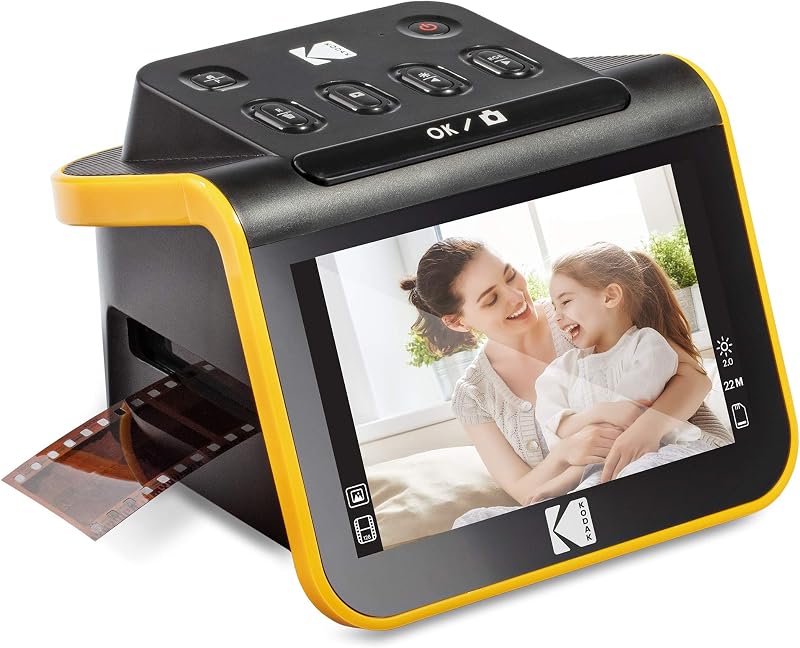
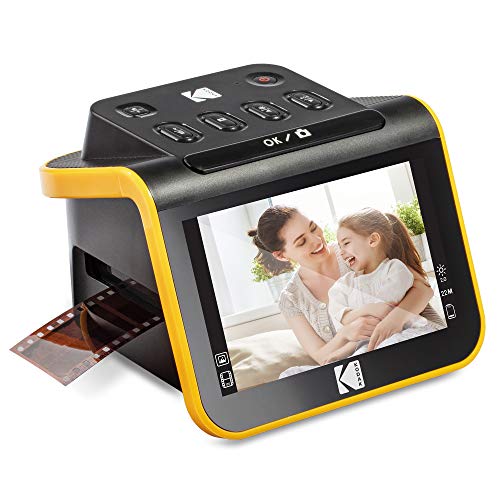
The Converts color and B&W negatives scanner, listed under the KODAK Slide N Scan line, is an all-in-one consumer device equipped with a 22MP sensor, a 5-inch built-in LCD screen, and support for 135, 110, and 126mm formats. It converts color and black-and-white negatives to JPEG digital photos and saves them directly to an SD or SDHC card (not included), or connects directly to a PC, Mac, or TV.
Choose this unit over the Coolscan if you want an easy, computer-free workflow with a built-in display to preview family snapshots quickly without installing drivers or managing complex desktop scanning software.
Magnasonic All-in-One 24MP Film Scanner

The Magnasonic All-in-One 24MP Film Scanner is another standalone solution designed for multi-format consumer film conversion. Featuring a large 5-inch display, HDMI output, and 128MB of built-in memory, it converts 35mm, 126, 110, and Super 8 film, as well as 135, 126, and 110 slides into digital photos.
This option is ideal for shoppers who want broad format versatility and direct television output through HDMI, avoiding computer tethering entirely while managing mixed formats like Super 8 and 110 film.
TCNEWCL 35mm Negative Slide Scanner
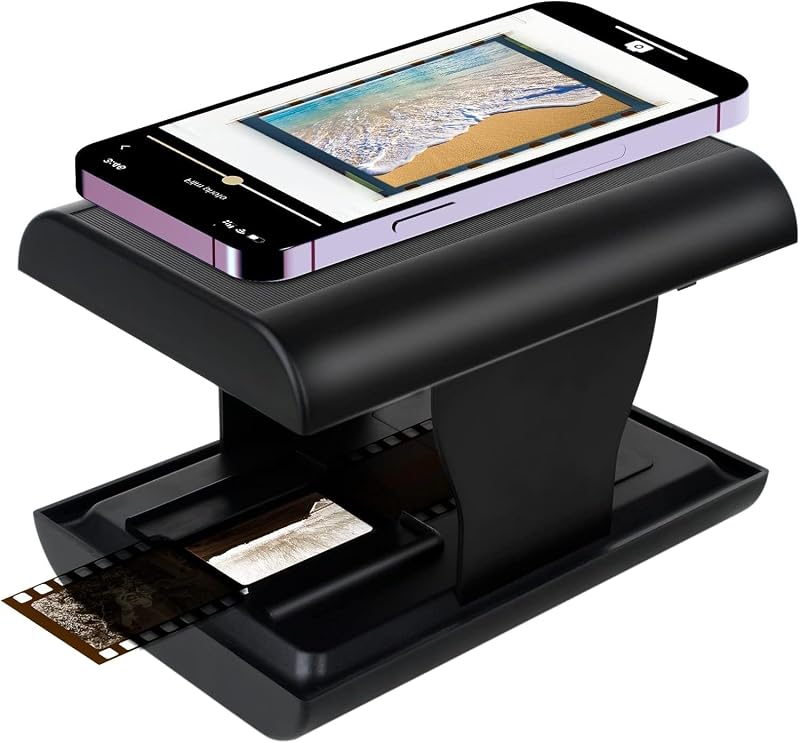
The TCNEWCL 35mm Negative Slide Scanner represents an ultra-portable, minimalist approach to film capture. This mobile film scanner is a portable and foldable unit equipped with a built-in LED light designed for converting old slides into digital images using a smartphone camera.
Select this model if your priority is minimal equipment size, zero software setup, and an ultra-portable design that folds flat for easy storage between occasional casual digitizing tasks.
Final Verdict
When asking whether the Nikon Coolscan 5000 is worth it, the answer depends entirely on your archival standards. For everyday shoppers seeking a fast, effortless gadget to convert a dozen vacation slides, the unit’s 10.5-pound desktop footprint and dedicated computer tethering represent unnecessary friction. Standalone capture units or simple compact digital cameras are far more practical for casual snapshot needs.
However, for preservationists, historical archives, and photographers who refuse to compromise on image fidelity, the Nikon Coolscan 5000 ED remains an unmatched benchmark in 35mm film digitizing. Combining genuine 4,000 dpi resolution from a Scanner-Nikkor ED glass lens, true 4.8 Dmax shadow penetration, and hardware-level Digital ICE4 defect removal, it ensures that your analog photographic history is preserved with the absolute highest standard of clarity.
FAQ
What makes the Nikon Coolscan 5000 resolution suitable for archival work?
The scanner features a true 4,000 dpi optical resolution powered by a Scanner-Nikkor ED glass lens and a 3,964-pixel two-line linear CCD. Unlike consumer converters that rely on digital interpolation, this optical setup captures true grain-level details across 35mm film frames, producing uncompromised digital files suitable for large archival prints.
How does Digital ICE4 Advanced work on the Nikon Coolscan 5000 ED?
Digital ICE4 Advanced uses a dedicated infrared light channel during scanning to detect physical surface defects like dust, lint, and scratches on the film emulsion. Because the infrared sensor maps only surface flaws, the software automatically removes the blemishes without softening or blurring organic image details.
What types of film media can the scanner process?
The scanner handles mounted 35mm slides and 35mm film strips natively, with a standard sheet capacity of 50. It also supports APS film using an optional IX240 film adapter and prepared medical slides using an optional medical slide holder.
How fast is the Nikon Coolscan 5000 scanning speed?
The scanner delivers fast workflow speeds, completing preview scans in as little as 11 seconds. Full-resolution 4,000 dpi scans can be completed in as fast as 20 seconds, allowing users to process high-volume film collections significantly faster than standard flatbed scanners.
What computer interface does the Nikon Coolscan 5000 use?
The scanner connects via a standard USB interface and is compatible with both PC and Mac systems, providing direct data transfer for 48-bit color and 16-bit greyscale digital image files.


