As Amazon Associates, we earn from qualifying purchases. This means we may receive a small commission at no extra cost to you if you click through and make a purchase.
The Transcend 4GB SDHC Card is a compact flash memory card built to supply dedicated storage for digital camcorders like the Canon Legria HF M56. Designed with standard Secure Digital High Capacity architecture and an entry-level speed classification, it offers a dependable, direct replacement for users who need a functional card to keep an older AVCHD camcorder running without running into modern card formatting headaches.
This memory card is an ideal match for casual videographers, home archivists, and equipment owners who capture brief video clips and want full reassurance of legacy device compatibility. However, filmmakers planning to document full-day conferences, extended family vacations, or multi-hour recitals will quickly encounter storage boundaries and should look toward higher-capacity media instead.


Transcend 4GB SDHC Card at a Glance

| Attribute | Specification Details |
|---|---|
| Brand | Transcend |
| Flash Memory Type | SDHC |
| Memory Storage Capacity | 4 GB |
| Speed Class | Class 4 |
| Hardware Connectivity | SDHC, Secure Digital Card |
| Compatible Devices | Camcorder |
| Manufacturer Part Number | LEGRIA HF M56-KSD4GB |
| Model Number | LEGRIA HF M56-KSD4GB |
| UPC | 023005243548 |
| Special Feature | Lightweight |
Storage Capacity and Real-World Recording Time
Evaluating storage capacity on a video-centric medium requires looking closely at how camcorders encode data. The Canon Legria HF M56 relies primarily on the AVCHD video container, which uses predefined bitrates to balance picture fidelity and file size. Because the Transcend card provides 4 GB of gross flash storage, your practical recording duration depends entirely on which encoding quality mode you select in the camcorder menus.
At the highest AVCHD bitrate of 24 Mbps (often designated as MXP or FXP mode), video data consumes roughly 3 megabytes every second. In practical terms, that means a 4 GB card holds roughly 20 to 25 minutes of continuous footage before running out of room. If you dial the camcorder down to standard compression tiers such as 17 Mbps or standard definition LP modes running near 5 Mbps, the usable recording time expands to roughly 30 to 80 minutes. For brief home scenes or quick project cuts, this overhead is manageable, but extended scenes demand careful planning.
Shoppers accustomed to still photography often misjudge how quickly video streams consume flash storage. In a still camera such as the canon powershot sx150, a 4 GB partition can comfortably store hundreds of individual JPEG images across an afternoon of shooting. With digital video, data accumulates continuously, meaning that selecting a canon legria hf m56 memory card with only 4 GB requires an active habit of transferring clips to a computer or external storage drive immediately after each session.
Write Speed and Video Bitrate Stability
Data throughput is the second crucial metric when assessing camcorder storage. The transcend 4gb sdhc class 4 memory card is certified by the SD Association to deliver a minimum sustained write speed of 4 MB/s (megabytes per second). In digital video terms, 4 MB/s converts to a sustained pipe of 32 Mbps (megabits per second), which creates an essential safety buffer above the maximum 24 Mbps bitrate of standard AVCHD video streams.
Because the sustained write floor exceeds the 24 Mbps ceiling of standard-definition and high-definition AVCHD recordings, the card avoids the buffer overflow issues that cause dropped frames or sudden recording halts. Camcorders do not require extreme burst write capabilities designed for continuous raw still photography; instead, they demand a predictable, uninterrupted data stream. In this regard, a Class 4 card meets the fundamental requirements of older camcorders without introducing instability.
However, it is important to remember that Class 4 represents an older operational baseline. While the write speed easily satisfies standard AVCHD formats, offloading footage from the card to a desktop workstation will feel slow compared to modern UHS-rated media. If your post-production workflow involves moving large batches of video files through a card reader regularly, the lower sequential read and write speeds of a standard Class 4 card require patience during file ingestion.
Camcorder Hardware Compatibility and Format Standards
One of the primary benefits of choosing a standard SDHC card is reliable hardware recognition. Older camcorders were engineered around the original Secure Digital High Capacity specification, which spans capacities from 4 GB up to 32 GB formatted in FAT32. Many early-to-mid generation camcorders cannot natively read modern SDXC cards, which rely on the exFAT file system and capacities of 64 GB or higher, often returning card errors or requiring unsupported firmware updates.
By sticking strictly to the SDHC specification, this Transcend card delivers seamless plug-and-play canon legria hf m56 sd card compatibility. The camcorder recognizes the partition table instantly upon insertion, minimizing the need for complex formatting workarounds. Unlike modern hybrid cameras such as the cannon rebel t7 that readily accommodate diverse modern formats, dedicated legacy camcorders operate most reliably when paired with cards built to their original design specifications.
Furthermore, standard SDHC media features a physical write-protect switch along the side rail of the plastic casing. Sliding this switch prevents accidental in-camera formatting, deletion, or overwriting of important footage while handling the card in the field. This mechanical safeguard provides a welcome layer of operational security when passing media between different users or older card readers.
Everyday Handling and Archival Workflow
The physical design of the card emphasizes portability and compliance with standard SD slots. Measuring standard SD dimensions, it slides securely into the camcorder’s memory bay with a firm mechanical click. The manufacturer listing notes that the card is lightweight, fitting the standard profile of modern solid-state flash media where minimal mass ensures easy storage in any camera bag pouch or protective plastic jewel case.
Adopting smaller storage capacities also establishes a disciplined archival workflow. When shooting on massive media cards, users frequently leave weeks or months of unorganized clips sitting on a single chip, increasing the potential loss if the card is misplaced or corrupted. With a 4 GB capacity limit, videographers are naturally prompted to offload, label, and back up their recordings after every single shoot.
This workflow mirrors the disciplined approach used by content creators operating compact tools like the canon powershot g7 x, where managing storage efficiently ensures seamless media archiving. While swapping cards during long events can be inconvenient, isolating specific events or family milestones onto individual 4 GB cards provides clean physical separation for physical media archives.
Transcend 4GB SDHC Card Pros and Cons
Pros
- Native SDHC camcorder compatibility
- Sustained Class 4 write speed
- Prevents legacy card format errors
- Lightweight physical construction
- Matches standard AVCHD bitrates
Cons
- Limited 4 GB storage room
- Slower file transfer to computers
- Not suited for continuous long events
Check Transcend 4GB SDHC Card on Amazon
Who Should Buy the Transcend 4GB SDHC Card
Buy It If
- You own a legacy AVCHD camcorder and want guaranteed SDHC format compatibility without dealing with unreadable exFAT partitions.
- You record short video clips, brief family updates, or test footage and regularly offload your files directly to a computer.
- You prefer a dedicated physical card for individual events to keep your archival recordings neatly compartmentalized.
- You need a dependable Class 4 card that meets the sustained 4 MB/s write threshold required for standard high-definition camcorder streams.
Skip It If
- You film long continuous events, such as theater productions, sports games, or all-day seminars, that require hours of uninterrupted recording time.
- You plan to use the card in modern 4K video cameras that demand high-speed UHS Speed Class 3 or Video Speed Class ratings.
- You want rapid data transfer speeds when copying large video archives to external hard drives via high-speed USB hubs.
Transcend 4GB SDHC Card Alternatives Worth a Look
If you find that a standalone 4GB card provides insufficient recording time, or if you are considering updating your entire filming setup rather than investing in accessories for an older camcorder, several modern alternatives offer bundled storage and updated hardware.
ZYDIIE 4K Video Camera Camcorder
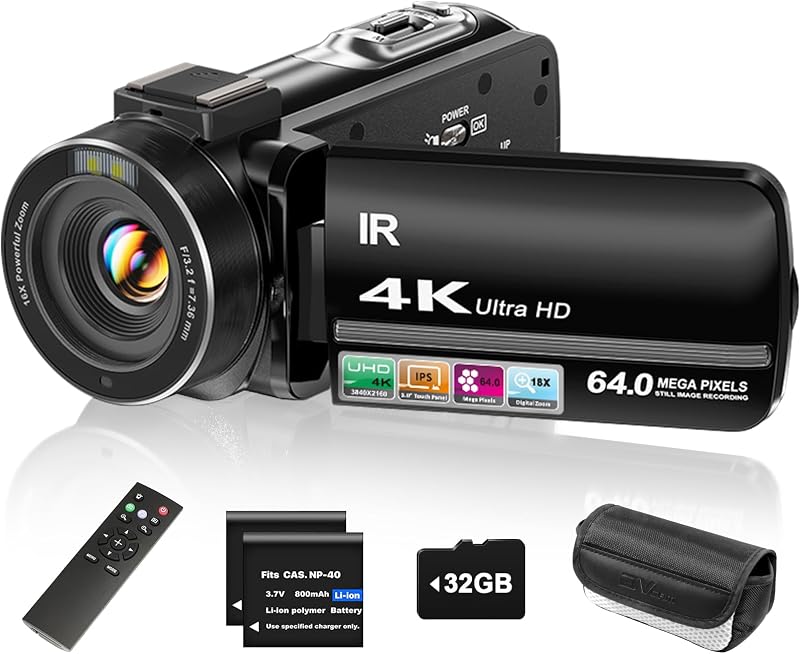
The ZYDIIE 4K Video Camera Camcorder is an all-in-one vlogging camera featuring Ultra HD 4K video recording, a 64MP photo mode, an 18x digital zoom, and a 3-inch 270-degree rotating IPS touchscreen. The listing highlights that it includes night vision, a remote control, two batteries, and a 32GB memory card right in the package. Buyers who want to bypass the limitations of older AVCHD hardware entirely will appreciate that this modern kit includes eight times the storage capacity of a 4GB card out of the box.
kimire Video Camera Camcorder Digital
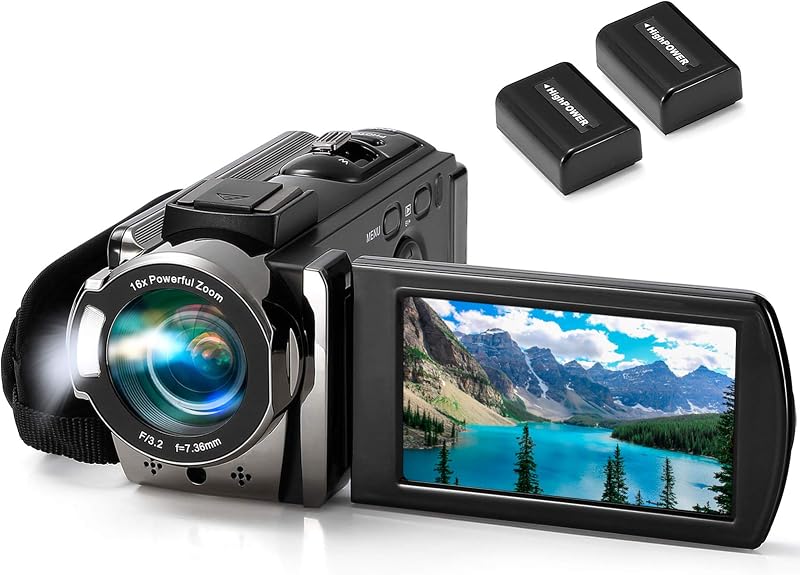
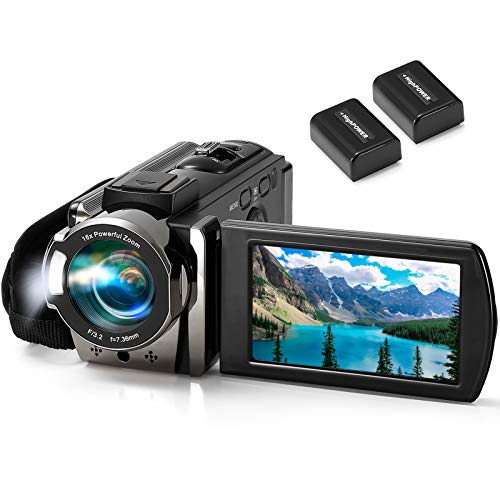
The kimire Video Camera Camcorder Digital is a starter video camera that captures Full HD 1080P footage at 15 frames per second and 24MP still images. It is equipped with a 3.0-inch 270-degree rotation LCD screen, a 16X digital zoom, and two rechargeable batteries. This option suits shoppers looking for an accessible, standalone filming unit with spare power rather than spending time troubleshooting card compatibility on older consumer camcorders.
2.8″ 270° Rotatable Screen Camcorder

The 2.8″ 270° Rotatable Screen Camcorder delivers QHD 2.7K video recording and 56MP photo resolution, backed by a built-in LED fill light and 16X digital zoom. The listing specifies that it comes packaged with a 16GB memory card and two batteries. Users who want a ready-to-shoot bundle with quadruple the storage headroom of a basic 4GB SDHC card will find this complete package practical for casual social media and YouTube projects.
Final Verdict
The Transcend 4GB SDHC Card serves a focused, functional purpose in today’s video landscape. While a 4 GB capacity is modest by modern media standards, it delivers exactly what owners of legacy camcorders like the Canon Legria HF M56 need: guaranteed file system compatibility, stable Class 4 write performance, and zero risk of format incompatibility. It easily satisfies the data demands of AVCHD video streams without forcing users to navigate complex partitioning or unsupported high-capacity card issues.
If you need an inexpensive, reliable replacement card to revive a trusted camcorder for short-form recording, family clips, or structured digital archiving, this card fulfills its technical brief completely. However, if your projects demand multiple hours of uninterrupted capture or high-speed post-production ingest, investing in larger capacity SDHC media or a modern camera bundle remains the smarter path forward.
FAQ
How much video recording time does a 4GB card provide on the Canon Legria HF M56?
A 4 GB card provides approximately 20 to 25 minutes of continuous footage when recording at the camcorder’s top AVCHD bitrate of 24 Mbps. If you reduce the video quality to standard compression settings like 17 Mbps or lower-bitrate standard-definition modes, total recording time can expand to roughly 30 to 80 minutes.
Is a Class 4 SDHC card fast enough for high-definition video recording?
Yes, for standard AVCHD camcorders. Class 4 guarantees a sustained minimum write speed of 4 MB/s, which equals 32 Mbps. Because standard AVCHD video peaks at 24 Mbps, the card has sufficient bandwidth to record without dropping frames or stalling.
Can I use a larger SDXC card in my camcorder instead of this SDHC card?
Older camcorders were built specifically for SD and SDHC cards up to 32 GB formatted in FAT32. SDXC cards use the exFAT file system and capacities of 64 GB or larger, which may cause card read errors or formatting prompts on older camcorder hardware unless explicitly supported by firmware.
Does the Transcend 4GB SDHC card come with a write-protect switch?
Standard full-size SDHC cards, including this Transcend model, incorporate a physical mechanical slide switch on the left edge. Sliding this switch into the locked position prevents the camcorder or computer from deleting, modifying, or formatting the stored video files.
What is the manufacturer part number for this specific card?
According to the product specifications, the manufacturer part number and model number for this Transcend memory card is LEGRIA HF M56-KSD4GB, with a registered UPC of 023005243548.