As Amazon Associates, we earn from qualifying purchases. This means we may receive a small commission at no extra cost to you if you click through and make a purchase.
The Kodak Printomatic is an entry-level instant print camera that merges a simple digital snapshot sensor with an integrated Zero Ink thermal printer. Designed for immediate physical gratification, the device produces two-by-three-inch full-color sticker prints on the spot while concurrently saving digital copies to an external memory card. Our verdict on this colorful hybrid shooter is clear: it delivers an uncomplicated, mess-free way to produce physical keepsakes and novelty stickers for casual gatherings, even if its modest image resolution and basic optical viewfinder lack the refinement of modern smartphone cameras.
This camera suits hobbyists, party planners, journal enthusiasts, and younger users who prioritize tactile prints and immediate creative crafts over technical camera settings. If your goal is handing out physical snapshots at family parties or decorating planners with adhesive pictures, it provides straightforward entertainment. However, photographers looking for razor-sharp digital imagery, manual exposure adjustments, or an LCD review screen to inspect shots before printing should look elsewhere.


Kodak Printomatic at a Glance

| Feature | Specification Detail |
|---|---|
| Sensor Resolution | 5 megapixels |
| Lens Aperture | Wide-angle f/2 lens |
| Printing Technology | Kodak Zink Photo Paper (Zero Ink) |
| Print Dimensions | 2 x 3 inches (5.1 x 7.5 cm) sticky-back prints |
| Storage Media | MicroSD memory card slot |
| Shutter System | Hybrid shutter with 1/125s maximum speed |
| Exposure Control | Automatic exposure with ambient light sensor |
| Sensitivity Range | ISO 100 to 3200 |
| Continuous Shooting | Up to 3 frames per second |
| Power Source | Built-in rechargeable lithium battery |
Print Performance and Zink Sticky-Back Paper
The primary appeal of the Kodak Printomatic instant camera centers on its ink-free thermal printing mechanism. Instead of relying on liquid ink cartridges, toner ribbons, or chemical developer packets, the camera utilizes specially engineered Kodak Mini Shot 3 style alternatives and proprietary kodak printomatic zink paper. Each sheet contains heat-sensitive dye crystals that activate when passed beneath the camera’s internal thermal print head. The finished two-by-three-inch photograph emerges completely dry within seconds, eliminating any risk of ink smudges, wet chemical stains, or prolonged drying periods.
Evaluating the kodak printomatic print quality requires understanding the physical constraints of miniature thermal paper. Images produce a distinctly retro aesthetic, featuring warm color balances and soft contrast rather than lab-grade fidelity. Because prints originate from a five-megapixel digital capture, fine micro-textures and subtle background details appear softened. Nevertheless, the physical prints are smudge-proof, tear-resistant, and water-resistant, making them remarkably sturdy when passed around at social events or stored inside wallets.
Creative hobbyists will find extensive utility when using the kodak printomatic for scrapbooking. Each Zink sheet features an integrated peel-off adhesive backing that turns every snapshot into a durable sticker. You can quickly snap a photo, peel off the protective backing paper, and adhere the image directly into a travel journal, guestbook, or photo album without needing glue sticks or double-sided tape. The printing workflow is further streamlined by the camera speed, which allows you to continue shooting new frames while the device is actively outputting your previous photograph.
Camera Optics and Automated Exposure
A closer look at the kodak printomatic specs reveals a minimalist photographic platform engineered strictly for point-and-shoot convenience. The optical system incorporates a 5MP image sensor paired with a wide-angle f/2 lens. This wide field of view lets you easily capture indoor group photos, casual portraits, and everyday scenes without having to back far away from your subjects. A hybrid shutter offers speeds up to 1/125s alongside continuous shooting capabilities up to three frames per second, helping reduce hand-shake blur in standard ambient daylight.
Exposure management operates entirely automatically, removing complicated menus or manual dials. The camera body houses an ambient light sensor that measures incoming light levels. When environmental illumination falls below an acceptable threshold, the system automatically fires the integrated flash to illuminate subjects. The camera operates across an ISO sensitivity range of 100 to 3200, adjusting dynamically between bright outdoor sun and dimly lit living rooms. While this automatic flash ensures subjects stay recognizable in low-light scenarios, harsh directional lighting can occasionally wash out subjects at very close distances.
Composition relies exclusively on a physical optical viewfinder situated on the upper chassis, as the unit lacks a rear digital preview screen. Because the viewfinder sits slightly above and to the side of the lens barrel, close-up framing requires compensating for slight parallax offset. Unlike screen-equipped hybrid cameras such as the Kodak Mini Shot 3 Retro, the Printomatic commits to printing the moment you press the shutter button, offering a spontaneous snapshot experience reminiscent of traditional instant film cameras.
MicroSD Storage and Digital File Setup
One major advantage this camera holds over purely analog instant cameras is its dual capture capability. While the mechanical printer feeds out a physical sticker, the internal hardware simultaneously records a digital JPEG file to an inserted memory card. This dual workflow ensures that you retain a permanent digital copy of every physical print you distribute to friends, making future digital archiving and social sharing effortless.
Completing the kodak printomatic sd card setup requires minor user preparation before your first outing. The product packaging does not include a MicroSD card, nor does it include a USB cable. Users must supply their own MicroSD card to enable digital storage. Inserting a card into the dedicated slot activates automatic saving. If the camera is loaded with Zink paper but lacks a memory card, it will still print physical snapshots normally, but no digital backups will be saved. To retrieve your digital JPEG photos, you can remove the card and insert it into a standard computer card reader or connect the camera using your own micro-USB data cable.
Archived digital files are saved at standard JPEG resolution matching the 5MP sensor. While five megapixels cannot compete with modern multi-lens smartphones, the digital files provide ample resolution for digital scrapbooks, online message boards, and small photo reprints. Having digital files stored safely on a card eliminates the fear of losing rare personal moments when you give away your physical prints.
Form Factor, Portability, and Battery Life
From an ergonomic standpoint, the camera features a flat, rectangular form factor with smooth corners and a modern finish. Available in bold colors like bright blue, the slim chassis slips neatly into a jacket pocket, shirt pocket, or handbag. Its compact silhouette avoids the bulky, bulbous dimensions typical of traditional chemical instant cameras, making it practical to carry throughout an entire day of travel or sightseeing.
Monitoring the kodak printomatic battery life is an essential consideration for event use. The camera relies on an internal, non-removable rechargeable lithium battery. Supplying power to an optical digital sensor while concurrently heating a thermal print head requires significant electrical current. While the listing does not specify the exact number of prints achieved on a single charge, heavy printing sessions deplete the battery faster than standard digital snapshot shooting. Recharging between events ensures you avoid unexpected power interruptions during family parties.
Recharging the internal lithium cell requires connecting the camera to an external power source using your own USB cable. Compared to older chemical instant models like the Polaroid Now Gen 3 camera that often require separate film pack batteries or dedicated accessories, an integrated rechargeable cell offers everyday charging convenience via power banks, laptops, or standard wall adapters.
Kodak Printomatic Pros and Cons
Pros
- Adhesive-backed 2×3-inch water-resistant photo prints
- Zero Ink technology requires no ink or toner
- MicroSD card slot saves digital JPEG files
- Continuous shooting while previous photo prints
- Compact pocket-sized design with automatic flash
Cons
- No USB cable included in box
- Modest 5MP image sensor resolution
- Optical viewfinder lacks digital image preview
Check Kodak Printomatic on Amazon
Who Should Buy the Kodak Printomatic
The Kodak Printomatic occupies a distinctive space within the instant photography category, prioritizing pocket portability, adhesive printing, and ink-free convenience over fine-art photographic controls.
Buy It If
- You want instant sticky-back photo prints designed specifically for bullet journals, scrapbooks, and creative crafts without liquid glue.
- You prefer clean Zero Ink technology that eliminates the need to purchase liquid ink cartridges, toners, or ribbons.
- You want a pocketable camera that automatically saves digital JPEG files to a MicroSD card while printing physical copies.
- You enjoy continuous shooting speeds that allow you to photograph your next shot while the previous photo is still printing.
Skip It If
- You demand high-resolution imagery, sharp background details, and broad dynamic range from your camera hardware.
- You want an LCD preview screen to compose frames accurately and reject poor shots before wasting photo paper.
- You frequently shoot portraits in low light without wanting an automatic flash to fire.
Kodak Printomatic Alternatives Worth a Look
If the Kodak Printomatic does not quite align with your photographic preferences, alternative instant cameras provide different physical film formats, bundled accessories, and framing tools.
Fujifilm Instax Mini 41 Instant

The Fujifilm Instax Mini 41 Instant package arrives as an extensive bundle containing a vintage black camera, a 40-sheet film value pack, a compatible carrying case, and a 64-pocket photo album. In the debate between kodak printomatic vs instax mini platforms, the primary distinction is the film format: Instax uses real chemical instant film with iconic white borders rather than borderless adhesive Zink paper. Buyers seeking a complete retro starter set with physical albums and carrying protection should consider this bundle.
Polaroid Now 3rd Generation I-Type
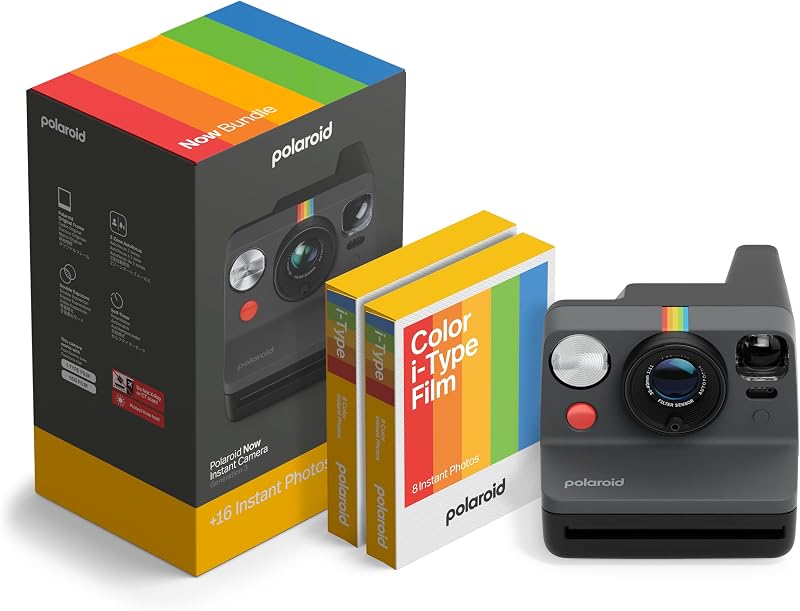
The Polaroid Now 3rd Generation I-Type bundle includes a classic black camera body paired with 16 color photos. This model utilizes Polaroid’s larger square-format chemical instant film. Shoppers who value vintage analog square prints, authentic chemical color characteristics, and traditional tactile photo development will prefer this system over the smaller 2×3-inch sticker format of the Kodak camera.
Automatic exposure with selfie mirror

The Automatic exposure with selfie mirror camera (Fujifilm Instax Mini 12 in Lilac Purple) features automated exposure control combined with an integrated selfie mirror and parallax correction. If you find the Printomatic’s simple optical viewfinder tricky for framing close-up self-portraits, this camera’s dedicated front-facing mirror and close-up lens alignment make group selfies and party portraits noticeably easier to compose.
Final Verdict
Deciding is kodak printomatic worth it comes down to how you define value in an instant camera. If you view it purely through the lens of modern digital photography, the 5MP sensor, fixed optical viewfinder, and lack of manual controls feel decidedly basic. However, evaluating it strictly as a high-tech digital camera overlooks its primary purpose. The Printomatic is meant to be a fun, spontaneous social tool that transforms everyday moments into tangible, shareable photo stickers without the expense or delicate handling required by wet chemical films.
With its ultra-portable form factor, sticky-back Zink paper, dual MicroSD digital storage, and continuous shooting speed, the Kodak Printomatic provides genuine practical utility for party hosts, crafters, and casual memory keepers. Provided you supply your own MicroSD card and USB charging cable, it remains an entertaining, accessible option for anyone who loves instant tangible prints.
FAQ
Does the Kodak Printomatic require separate ink cartridges?
No, the Kodak Printomatic does not use ink cartridges, toners, or print ribbons. It utilizes Kodak Zink Photo Paper, which features Zero Ink technology. Heat-activated dye crystals are embedded directly inside the paper, which the camera activates thermally to generate full-color prints.
Can you take pictures without inserting a MicroSD card?
Yes, the camera will take and print physical photos even without a MicroSD card installed, provided you have Zink paper loaded. However, without a memory card inserted into the slot, the camera cannot save digital JPEG files for future backup or computer transfer.
Are Kodak Printomatic prints stickers?
Yes, the 2×3-inch Kodak Zink photo paper features an adhesive peel-off backing. You can leave the backing intact to use them as standard pocket photos, or peel the backing off to place them as stickers in journals, scrapbooks, and craft projects.
Does the Kodak Printomatic package come with a USB charging cable?
The listing specifically notes that no USB cable is included in the box. To recharge the internal lithium battery or transfer files via a wired connection, you will need to provide your own compatible USB cable.
How does the camera decide when to turn on the flash?
The camera is equipped with an integrated ambient light sensor. In low-light environments, the sensor automatically detects the dim conditions and activates the built-in flash without requiring any manual button presses from the user.