
As Amazon Associates, we earn from qualifying purchases. This means we may receive a small commission at no extra cost to you if you click through and make a purchase.
The KEF Q8 Meta is a specialized dual-purpose home theater speaker engineered to deliver authentic overhead height effects and ambient surround sound without forcing you to cut holes into your ceiling or run wire through finished drywall. Operating either as an upward-firing Dolby Atmos module placed directly atop front or rear floorstanding speakers or as a wall-mounted boundary speaker, it leverages precision acoustics to build a convincing three-dimensional soundfield. If you want genuine vertical dimension in your movie and gaming audio without undertaking major structural modifications, this speaker pair offers an exceptionally refined, zero-construction solution.
This speaker is ideally suited for home cinema enthusiasts who already own or plan to assemble an AV receiver-powered surround sound system and want seamless height immersion in rooms where in-ceiling installation is impractical or forbidden. It is a natural match for listeners who appreciate refined acoustic engineering, apartment dwellers unable to modify rental walls, and owners of matching front-stage speakers looking for cohesive acoustic steering. However, anyone shopping for an all-in-one plug-and-play soundbar such as the sonos arc sl or those running basic, low-current amplification unrated for 4-ohm loads should look toward self-powered or less demanding alternatives.



KEF Q8 Meta at a Glance

| Attribute | Detail |
|---|---|
| Speaker Type | Atmospheric height and surround speaker |
| Driver Array | 5.25-inch 12th-generation Uni-Q point source driver |
| Acoustic Technology | Metamaterial Absorption Technology (MAT) |
| Enclosure Design | Sealed / closed-box precision cabinet |
| Nominal Impedance | 4 ohms |
| Recommended Amplifier Power | 10 to 150 watts |
| Maximum Output Power | 150 watts |
| Mounting Type | Integrated wall mount or upward-firing topper |
| Dimensions | 10.2 inches deep by 7.1 inches wide by 6.9 inches high |
| Unit Weight | 9.9 pounds per speaker |
Dolby Atmos Height Channels and Ceiling Reflection
The primary appeal of the KEF Q8 Meta is its ability to create expansive vertical soundscapes without requiring physical ceiling speakers. Bouncing sound to create height channels relies on strict acoustic geometry. When deployed as kef dolby atmos up-firing speakers, the cabinet positions the driver at an exact upward angle, firing acoustic energy toward the ceiling so it reflects back down toward the primary listening position. When properly calibrated through an AV receiver, movie effects such as overhead rainstorms, descending aircraft, and ambient environmental cues appear to originate from the space above your head rather than the front stage.
Using the kef q8 meta for dolby atmos avoids the disruptive process of cutting into finished drywall or fishing speaker wire through ceiling joists. For renters, homeowners with concrete or vaulted ceilings, or anyone setting up audio in a finished basement, upward-firing modules preserve the physical integrity of the room while unlocking true object-based audio formats. Unlike legacy surround packages like the older bose acoustimass 10 that attempted ambient dispersion strictly across horizontal planes, modern height channels isolate discrete vertical sound objects in the soundtrack for much greater directional realism.
Reflective audio performance inherently depends on room characteristics. The angled design works most effectively when bounced off flat, smooth ceilings constructed from standard plaster or drywall at heights between eight and fourteen feet. Rooms with deeply coffered ceilings, rough acoustic tiles, or aggressive slants will scatter upward acoustic energy rather than reflecting it downward cleanly, which can dilute the precision of the height illusion. When paired with a supportive ceiling surface, the speaker produces an exceptionally cohesive atmospheric bubble that blends naturally into the wider soundstage.
Driver Technology and Metamaterial Absorption
At the center of the speaker’s sonic capability is KEF’s proprietary 12th-generation Uni-Q driver array featuring Metamaterial Absorption Technology. In standard speaker layouts, the tweeter and midrange driver sit apart on the baffle, which creates timing differences and off-axis lobing that narrow the effective sweet spot. The Uni-Q array solves this by placing the high-frequency tweeter directly at the acoustic center of the 5.25-inch midrange cone, producing a unified point-source wavefront that disperses sound evenly in all directions.
The addition of kef metamaterial absorption technology addresses unwanted backward radiation from the rear of the tweeter. The MAT structure functions as an acoustic black hole, utilizing a complex maze of resonant channels where each pathway targets and absorbs specific frequency bands. According to manufacturer engineering data, this structure absorbs 99 percent of unwanted sound from the rear of the tweeter, virtually eliminating high-frequency distortion that would otherwise bounce inside the cabinet and color the forward sound output.
In practice, this acoustic precision allows height and ambient effects to emerge with crisp, natural clarity. Subtle audio cues, such as wind rustling through trees or debris scattering in an action sequence, remain distinct rather than getting lost in muddy treble reflections. While conventional split-driver speakers like the wharfedale diamond 12.1 rely on standard internal damping materials to manage rear-wave energy, the specialized metamaterial architecture keeps transient response sharp and spatial steering accurate across the entire room.
Cabinet Design and Placement Flexibility
A major design strength of the KEF Q8 Meta is its dual-purpose functional profile. The listing specifies a closed-box, sealed cabinet precision design rather than a ported bass-reflex layout. Ported speakers require significant clearance behind the cabinet to prevent boomy bass and air turbulence, making them difficult to place flush against boundaries. Because this enclosure is completely sealed, low-frequency output remains tight and predictable whether the speaker sits freely on top of another cabinet or mounts directly to a flat wall.
The integrated kef q8 meta wall mount system transforms the unit from an up-firing height module into a high-fidelity direct-radiating surround or rear monitor. Using the integrated mounting hardware, owners can hang the speakers high on side or rear walls angled downward toward the seating area, or deploy them flat against boundaries for side-surround duty in 5.1.2 or 7.1.4 configurations. This flexibility ensures that if you move homes or reconfigure your living room layout, the speakers adapt to your new room geometry rather than becoming obsolete.
Physical build quality reflects standard KEF engineering standards, with wood and advanced composite materials yielding a sturdy 9.9-pound enclosure per unit. The 10.2-inch depth, 7.1-inch width, and 6.9-inch height create a stable, low-profile footprint that fits securely atop standard bookshelf and tower speakers. When installed on walls, the angled baffle directs sound downward into the listening area naturally, eliminating the need for bulky aftermarket swivel brackets that protrude awkwardly into the room.
Amplification and System Integration
Analyzing the kef q8 meta specs reveals an important electrical consideration: a 4-ohm nominal impedance paired with a recommended amplifier power range of 10 to 150 watts. Many entry-level AV receivers are optimized strictly for 6-ohm or 8-ohm speaker loads and may run hot or engage protection circuitry when driving multiple 4-ohm speakers simultaneously. To extract dynamic, distortion-free performance during demanding film sequences, pairing these speakers with an AV receiver or power amplifier explicitly certified for 4-ohm loads is strongly advised.
Achieving an optimal kef q8 meta setup requires deliberate calibration within your receiver’s audio processing menu. When used as upward-firing modules, the receiver must be configured for Dolby Atmos Enabled speakers so the internal DSP can apply the proper acoustic head-related transfer function curve. Because these are sealed compact enclosures, bass management should route lower frequencies below 80Hz or 100Hz to a powered subwoofer, preserving headroom and allowing the Uni-Q driver to focus entirely on midrange articulation and high-frequency steering.
System matching is another critical factor in multi-channel coherence. The Q8 Meta is timbre-matched to KEF’s broader line of Q Series Meta floorstanding, bookshelf, and center speakers, ensuring that panning effects move across the front stage and overhead without jarring shifts in tone. While ultra-slim options like a kef t series home theater setup focus purely on flat aesthetic profiles, incorporating Q8 Meta modules introduces robust point-source height imaging that elevates traditional surround sound into a fully cohesive three-dimensional environment.
KEF Q8 Meta Pros and Cons
Pros
- Dual up-firing or wall-mount deployment
- 12th-gen Uni-Q driver with MAT
- Sealed cabinet ensures controlled bass
- Timbre-matched to Q Series Meta speakers
- Ceiling-free Dolby Atmos installation
Cons
- Requires 4-ohm capable amplification
- Sold without speaker wire or receiver
- Height effects depend on ceiling texture
Who Should Buy the KEF Q8 Meta
Buy It If
- You want convincing Dolby Atmos height channels without cutting holes into drywall or running ceiling cables.
- You already own KEF Q Series Meta speakers and want seamless tonal matching across your entire surround setup.
- You need versatile hardware that functions equally well as up-firing height toppers or wall-mounted direct-radiating surrounds.
- You own a modern multi-channel AV receiver rated to comfortably deliver power into 4-ohm speaker loads.
Skip It If
- Your room features heavily textured acoustic tiles, rough exposed beams, or steeply pitched ceilings that disrupt reflected sound.
- You are looking for a standalone, all-in-one powered soundbar package with built-in amplification and processing.
- Your existing AV receiver is an entry-level unit unequipped to handle 4-ohm nominal impedance speakers.
KEF Q8 Meta Alternatives Worth a Look
If the passive architecture, physical dimensions, or receiver requirements of the KEF Q8 Meta do not align with your existing home cinema configuration, several alternative audio systems provide different approaches to multi-channel surround sound.
Yamaha Audio YHT-4950U 4K Ultra

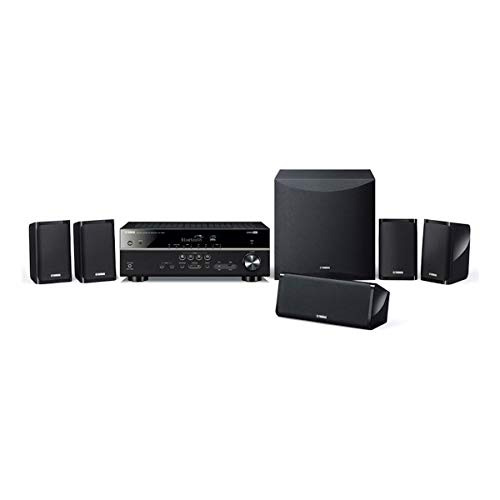
The Yamaha Audio YHT-4950U 4K Ultra is a complete 5.1-channel home theater system that includes both the traditional satellite speakers and an AV receiver with Bluetooth and 4K Ultra HD pass-through in a single box. While the KEF Q8 Meta is an unpowered add-on speaker pair intended for existing modular setups, this Yamaha package serves shoppers starting completely from scratch who require a full receiver-and-speaker ecosystem without purchasing separate electronic components.
VoiceMX
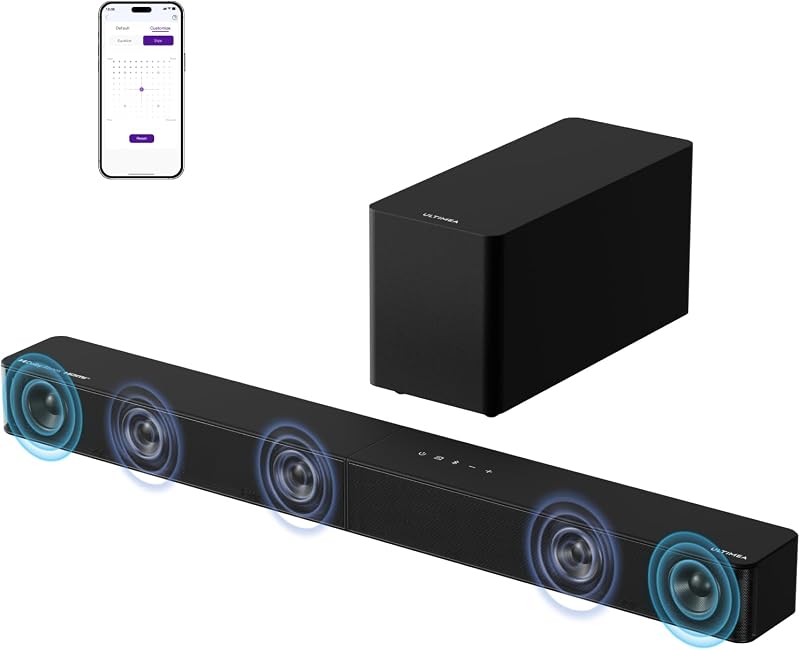
The VoiceMX is a 300W 5.1-channel soundbar system equipped with a dedicated subwoofer, Bluetooth 5.4, and onboard Dolby Atmos decoding. Compared to passive modular speakers that demand dedicated speaker wire and multi-channel amplification, this self-powered soundbar package suits users seeking quick television audio enhancement with wireless convenience and simplified connectivity.
Sony HT-S40R 5.1ch Home Theater

The Sony HT-S40R 5.1ch Home Theater provides a comprehensive 5.1-channel surround configuration utilizing a three-channel soundbar, wired rear satellite speakers, and a dedicated subwoofer. It targets entertainment spaces that require traditional rear-channel sound envelopment through a single-brand ecosystem, contrasting sharply with the component-grade hi-fi audio design represented by KEF.
Final Verdict
Any comprehensive kef q8 meta home theater review must evaluate whether upward-firing modules can truly bridge the gap between flat surround sound and architectural ceiling speakers. By integrating the 12th-generation Uni-Q driver array with Metamaterial Absorption Technology into an acoustically stable, sealed enclosure, KEF has engineered an add-on speaker that manages boundary reflections with exceptional discipline. Dialogue pans, environmental height cues, and directional panning effects transition across the soundstage with clean coherence and minimal high-frequency harshness.
When asking is kef q8 meta worth it, the answer depends largely on your room geometry and existing electronics. If you have flat, reflective ceilings, a capable AV receiver that handles 4-ohm loads, and a desire to avoid destructive home renovation, this speaker pair provides genuine object-based immersion in a durable, attractive package. It represents one of the most acoustically refined, zero-construction upgrade paths currently available for expanding a modern home theater into Dolby Atmos.
FAQ
What ceiling types work best for the KEF Q8 Meta in up-firing mode?
The up-firing configuration performs best with flat, smooth ceilings made of drywall, plaster, or hardwood ranging between eight and fourteen feet in height. Highly textured finishes, dropped acoustic tiles, or vaulted angles tend to scatter and absorb high-frequency sound waves, reducing the focus of the overhead reflection.
Can the KEF Q8 Meta be used as regular surround speakers instead of Atmos height speakers?
Yes. The speaker features an integrated wall-mount bracket and a sealed cabinet design, allowing it to hang flat on side or rear walls as a direct-radiating surround or rear channel speaker in 5.1, 7.1, or larger audio setups.
What type of receiver or amplifier is needed to power the KEF Q8 Meta?
Because the speaker has a 4-ohm nominal impedance and a recommended power range of 10 to 150 watts, it requires an AV receiver or multi-channel power amplifier explicitly rated to drive 4-ohm loads safely and cleanly.
Do these speakers require speaker wire and an external receiver to work?
Yes. The KEF Q8 Meta consists of passive, unpowered speakers that do not contain internal amplifiers or wireless receivers. They must be connected to an AV receiver or power amplifier using standard speaker wire.
Can you pair the KEF Q8 Meta with front speakers made by other brands?
While the speakers can operate with any standard AV receiver alongside other brands, they are specifically voice- and timbre-matched to KEF’s Q Series Meta line. Using them with matching KEF speakers ensures the smoothest tonal consistency as audio objects move overhead and across the front stage.


