As Amazon Associates, we earn from qualifying purchases. This means we may receive a small commission at no extra cost to you if you click through and make a purchase.
The JBL LSR310S is an active 10-inch subwoofer engineered to anchor the low-end monitoring chain in project studios and home editing suites. In this JBL LSR310S review, our verdict is straightforward: it delivers authentic sub-bass extension down to 27 Hz that exposes critical frequencies smaller desktop nearfields completely conceal.
This powered unit suits audio engineers, electronic producers, and video editors who need genuine acoustic insight beneath 50 Hz to balance kick drums, basslines, and low-frequency effects. However, producers working in cramped, untreated bedrooms or creators who mix entirely on headphones will find that adding a powerful sub introduces room mode problems that complicate rather than improve critical listening.
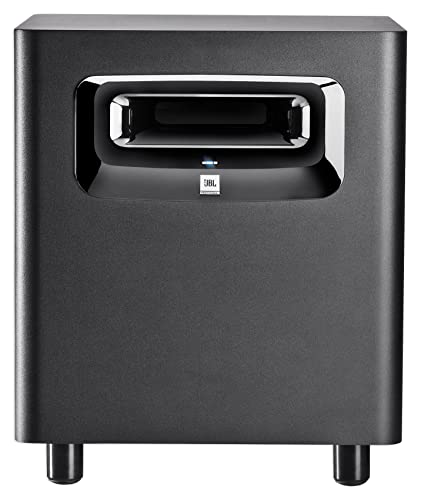


JBL LSR310S at a Glance

| Feature | Specification |
|---|---|
| Speaker Type | Studio monitor subwoofer |
| Woofer Diameter | 10 inches (25.4 cm) |
| Frequency Response | 27 Hz |
| Peak Sound Output | 113 dB |
| Enclosure Material | Polyvinyl Chloride (PVC) |
| Audio Output Modes | Stereo, Surround (.1 LFE) |
| Input Connections | Balanced XLR, Balanced 1/4-inch |
| Output Connections | Balanced XLR |
| Sensitivity Switching | -10 dBV / +4 dBu |
| Form Factor | Floor standing |
Low-Frequency Precision and Driver Performance
A studio monitor subwoofer has a very specific job: it must reveal the true weight and dynamic contours of your sub-bass without masking subtle timing nuances. The custom-designed 10-inch driver inside this unit is engineered to push performance into the 20 Hz region with an official JBL LSR310S frequency response rating down to 27 Hz. Achieving clean extension at those sub-audible thresholds allows producers to detect unwanted microphone rumble, low-end synthesizer mud, and plosives before audio leaves the studio.
When assessing the JBL studio subwoofer specs, raw volume capability matters because subwoofers require substantial headroom to prevent distortion on dynamic peaks. This driver provides up to 113 dB of peak output, allowing sustained playback at full rated power without risking mechanical driver failure. For tracking sessions where drums and bass must feel physical, that headroom ensures you hear clean transient impact rather than voice coil compression.
Deploying a dedicated JBL studio subwoofer for music production fundamentally changes the workload on your primary monitors. By filtering sub-bass away from smaller 5-inch or 8-inch two-way speakers, your main monitors operate with lower cone excursion, which cleans up vocal clarity and midrange separation. Whether your workstation is built around an audio interface connected to a desktop tower or a mobile setup like the microsoft surface laptop studio, routing low-frequency energy to a 10-inch driver creates a balanced full-range listening environment.
Inputs, Routing, and Studio Integration
A studio subwoofer must integrate smoothly between your primary audio interface and your desktop monitor pair. The connection panel provides balanced stereo inputs via XLR and 1/4-inch jacks, alongside dedicated balanced XLR outputs. In a typical studio signal path, your interface stereo outputs plug directly into the subwoofer, which handles crossover duties and passes filtered high-frequency signals out to your main left and right monitors.
A reliable JBL LSR310S setup also accommodates multi-channel configurations. Beyond standard stereo playback, the unit functions as the dedicated “.1” Low-Frequency Effects (LFE) channel in a professional surround sound system. This flexibility gives home post-production editors the ability to balance cinematic sound design without purchasing specialized cinema monitoring gear.
Source level matching is handled by an input sensitivity switch offering -10 dBV and +4 dBu settings. The +4 dBu position matches balanced professional studio outboard hardware and commercial audio interfaces, preventing input stage clipping when receiving hot signals. The -10 dBV position adapts the sub to consumer audio gear and semi-pro equipment, ensuring clean gain structure across varied playback sources.
The XLF Setting and Dance Club Tuning
Standard studio monitoring demands an uncolored, ruler-flat frequency response so that mixes translate evenly across earbuds, car stereos, and large club rigs. However, evaluating how sub-bass behaves in high-SPL venue environments is notoriously difficult in a domestic room. To solve this, the sub features the proprietary JBL LSR310S XLF setting, an engineered response profile that replicates the ample, lifted bass tuning commonly deployed in modern dance clubs.
Engaging the XLF mode shifts the sonic profile from clinical measurement tool to high-energy listening system. During the arrangement phase of club tracks, trap beats, or bass music, this setting lets producers feel how sustained sub-bass notes interact with punchy kick drums at venue-style proportions. It provides an immediate preview of physical bass weight without forcing you to manually alter your master channel equalizer.
While the XLF setting offers valuable translation insight, precision mix adjustments should still occur in standard reference mode. Using the XLF tuning for general corrective EQ work can cause engineers to over-compensate by cutting too much bottom end, resulting in thin mixes on normal consumer systems. Used deliberately, however, having both flat monitoring and club tuning in one chassis makes this JBL 10 inch studio subwoofer an adaptable production tool.
Port Design and Cabinet Build Quality
Cabinet turbulence and port chuffing are common flaws in low-end subwoofers, often producing distracting whistling sounds that ruin critical listening. This unit incorporates a patented double-flared port design calculated specifically to smooth airflow at high driver excursions. By controlling internal air velocity, the flared design optimizes low-frequency extension while keeping mechanical air noise inaudible during intense sub-bass passes.
The cabinet itself is constructed from durable Polyvinyl Chloride (PVC) in a floor-standing configuration designed to couple directly with your studio floor. Unlike decorative home speakers like the aura studio 4 that prioritize visual flair, this enclosure is utilitarian, matte black, and built to survive busy work environments under a desk or alongside gear racks.
Because accurate monitoring depends on rigid construction rather than exaggerated cabinet resonance, the internal bracing ensures clean acoustic transfer. The floor-standing design minimizes chassis vibrations that could bleed into your desk or microphone stands. Unlike living room audio gear such as the jbl bar 500mk2 which focuses on wide dispersion for movie watching, this studio cabinet prioritizes phase coherence and directional accuracy for focused mixing desks.
JBL LSR310S Pros and Cons
Pros
- Frequency response down to 27 Hz
- XLF setting emulates dance club acoustics
- Balanced XLR and quarter-inch inputs
- Double-flared port eliminates air noise
- High 113 dB peak sound output
Cons
- Substantial floor footprint in small rooms
- Enclosure made of PVC not solid wood
- Not water resistant for humid environments
Who Should Buy the JBL LSR310S
Buy It If
- You produce bass-heavy electronic, hip-hop, or cinematic music and need linear extension down to 27 Hz.
- You already run JBL 3-Series or comparable studio monitors and need a matching balanced crossover routing system.
- You want the flexibility to switch between neutral studio monitoring and an energetic dance club bass profile using the XLF switch.
- Your tracking space has basic acoustic bass trapping to handle high peak output levels up to 113 dB.
Skip It If
- Your studio resides in a tiny, untreated box room where low frequencies will create overwhelming room resonance nodes.
- You mix primarily on headphones and only need compact desktop speakers for casual reference listening.
- You need an outdoor, moisture-tolerant, or portable sound reinforcement speaker, as this unit is non-water-resistant and corded electric.
JBL LSR310S Alternatives Worth a Look
While this dedicated studio monitor sub excels in music production environments, buyers with different listening priorities or multi-purpose entertainment rooms might consider these alternative options.
12-inch IMG woofer with 400W

The 12-inch IMG woofer with 400W digital amplifier and LFE input is designed primarily for music, movies, and games. With its larger 12-inch injection-molded graphite driver and high digital wattage, it caters to shoppers building a home theater or living room entertainment hub rather than a neutral desktop mixing chain.
Klipsch R-100SW 10″ Subwoofer

The Klipsch R-100SW 10″ Subwoofer features deep bass output driven by an all-digital amplifier within a compact footprint measuring 14.5 by 12.5 by 16.4 inches. Choose this model if your primary objective is dynamic movie playback and room-shaking gaming audio through a traditional home theater receiver.
BESTISAN Basscore Powered Subwoofer

The BESTISAN Basscore Powered Subwoofer utilizes an 8-inch side-firing design with a 100-watt Class-D amplifier. It includes auto on/off functionality alongside RCA, LFE, AUX, and high-level speaker inputs and outputs, making it suitable for compact secondary television spaces or budget-friendly desktop audio receivers.
Final Verdict
The core question for home studio owners is whether this dedicated hardware addition improves mixing accuracy or simply adds room clutter. In our assessment, this JBL studio subwoofer proves its worth by delivering disciplined low-end response down to 27 Hz, robust 113 dB peak headroom, and flexible XLR routing that integrates seamlessly into serious recording chains. The double-flared port manages mechanical noise effectively, ensuring that what you hear is actual instrument tone rather than wind turbulence.
If you have struggled to balance kick drums, bass lines, and deep synth patches on compact speakers, the JBL LSR310S studio monitor subwoofer provides the technical precision needed to make confident decisions. When placed in a reasonably treated acoustic space and calibrated through its sensitivity switch, it serves as a reliable, workhorse monitoring anchor that takes the guesswork out of sub-bass production.
FAQ
What is the JBL LSR310S frequency response?
The JBL LSR310S features a frequency response reaching down to 27 Hz, with its custom 10-inch driver delivering deep low-frequency performance into the 20 Hz region.
How does the JBL LSR310S XLF setting work?
The XLF setting activates a custom-engineered frequency curve that emulates the boosted low-end acoustic tuning found in modern dance clubs, providing an inspiring reference check for club-focused music tracks.
Can I use this subwoofer with monitors from other brands?
Yes. Although designed as an ideal companion to JBL 3-Series monitors, its balanced XLR and 1/4-inch inputs alongside balanced XLR outputs allow it to integrate into virtually any studio monitoring system.
What audio connections are needed for a standard setup?
A standard setup requires balanced XLR or 1/4-inch cables from your audio interface into the subwoofer inputs, followed by balanced XLR cables running from the subwoofer outputs directly into your left and right studio monitors.
Does the JBL LSR310S support surround sound setups?
Yes. The subwoofer supports both stereo configurations and multi-channel surround setups, where it functions as the dedicated “.1” Low-Frequency Effects (LFE) channel.