
As Amazon Associates, we earn from qualifying purchases. This means we may receive a small commission at no extra cost to you if you click through and make a purchase.
The Fujifilm Instax Mini 99 is a premium analog instant film camera engineered for photographers who want tactile control, creative flexibility, and genuine film character rather than a plain point-and-shoot snapshot tool. Clad in a refined matte black finish, this model differentiates itself from entry-level instant models by integrating internal LED lighting elements, five dedicated shooting modes, and dedicated physical exposure dials. Our detailed fujifilm instax mini 99 review highlights how this camera bridges the divide between spontaneous pocket prints and thoughtful creative photography, delivering real optical experiments directly to physical print sheets.
This camera suits hobbyists, street photographers, and creative artists who want to craft deliberate photographic effects through multi-exposure layering, extended shutter openings, and color-shifted lighting. If your goal is simply handing a camera around at a party for quick point-and-press group shots without worrying about dials, simpler alternatives such as the instax mini 40 are easier to pick up, but visual storytellers who want complete command over their instant prints will find immense utility here.


Fujifilm Instax Mini 99 at a Glance

| Feature | Specification |
|---|---|
| Film Compatibility | Instax Mini instant film |
| Shutter Mechanism | Focal plane shutter (1.8 seconds to 1/400 seconds) |
| Exposure Management | Automatic exposure with 5 brightness levels (L+, L, N, D, D-) |
| Shooting Modes | Normal, Indoor, Sports, Double Exposure, Bulb |
| Artistic Effects | 6 internal LED Color Effect settings plus Normal |
| Focus Distance Options | Landscape Mode and Macro Mode via lens dial |
| Flash System | Built-in automatic flash control |
| Timer Function | Built-in self timer |
| Accessory Support | Tripod mountable socket |
| Durability Rating | Not water resistant |
Creative Lighting and Built-in Color Effects
The defining technical innovation on the fujifilm mini 99 camera is its internal illumination system. Rather than using software processing, digital screens, or drop-in physical plastic filters, this model features built-in color-changing LEDs situated directly inside the camera body behind the lens. When you twist the dedicated effect dial to select one of the six color effect settings, these miniature LEDs fire subtle colored light onto the light-sensitive chemical emulsion of the film at the exact moment of exposure.
This optical approach gives instax mini 99 color effects an authentic, organic feel that software simulation cannot replicate. You can shift the mood of a frame from cool tones to warm vintage glows, or introduce deliberate cross-process styling to everyday street captures. If you want true-to-life tones, switching back to the normal setting turns off the internal LEDs completely, letting the natural daylight balance of the chemical print take center stage.
Using the fujifilm mini 99 for creative photography lets users experiment freely with atmospheric visual effects. Because the colored LEDs wash across the print during exposure, subjects with deep shadows or bright highlights react differently depending on the chosen hue. Combining these color shifts with natural ambient lighting offers an artistic playground that elevates the compact film format into an expressive, physical medium.
Shooting Modes and Shutter Flexibility
Beyond color manipulation, the selection of fujifilm mini 99 shooting modes turns this camera into a remarkably adaptable photographic tool. Users can choose between five dedicated settings: Normal, Indoor, Sports, Double Exposure, and Bulb mode. Normal handles daily snapshot tasks, while Indoor mode optimizes the balance between ambient background light and the built-in flash control, preventing portraits taken inside dim venues from suffering from completely blacked-out backgrounds.
Sports mode pushes the focal plane shutter toward its maximum speed of 1/400 second, helping freeze subjects in motion and minimizing camera shake when capturing active scenes. For experimentalists, the instax mini 99 double exposure mode exposes two separate frames on a single sheet of film before ejection. This mechanical double exposure enables surreal portraiture, patterned silhouettes, and complex landscape layering without needing post-processing software or darkroom equipment.
For night photography and intentional light trails, Bulb mode keeps the shutter open for up to several seconds as you hold down the shutter release, utilizing the slow minimum shutter speed capabilities of the focal plane shutter down to 1.8 seconds. Because steady framing is critical during extended exposures, the camera includes a built-in tripod mount on the base, allowing you to secure it firmly onto any standard photographic tripod. Loading standard instax mini instant film packs into this camera unlocks a level of optical craft rarely seen in compact analog units.
Exposure Balancing and Zone Focus Controls
Proper exposure has always been one of the trickiest parts of shooting instant film, but the instax mini 99 specs provide reliable tools to master exposure in unpredictable lighting. The camera features a built-in automatic exposure system designed to analyze ambient light levels and select appropriate parameters. However, unlike entry-level point-and-shoots that lock you into whatever the sensor dictates, this unit provides five manual brightness steps: L+ for ultra-bright high-key results, L for standard fill brightness, N for neutral exposure, D for dark low-key shots, and D- for deep, shadowy tones.
These brightness steps provide creative control over contrast. If you are shooting against high-contrast backlighting, selecting an L or L+ setting prevents your subject from turning into a dark silhouette. Conversely, dialing in D or D- deepens black values in well-lit environments, creating dramatic, mood-heavy portraits. The built-in flash works in tandem with these brightness levels, providing supplemental burst light or adapting automatically according to your chosen mode.
Focusing is operated manually through the rotating lens ring on the front barrel. Rotating the dial powers the camera on and clicks between distinct focusing zones, including a dedicated Macro Mode for sharp close-up compositions and a Landscape Mode geared for subjects positioned from three meters away to infinity. Having direct control over these focus zones removes the guesswork commonly found in fixed-focus toy cameras, ensuring that distant mountain horizons and close-up portraits both develop with optimal sharpness.
Build Quality, Handling, and Battery Details
Fujifilm opted for a mature, tactile aesthetic with the Mini 99, finishing the exterior in a textured matte black that offers a secure, tactile grip. The body features an optical viewfinder that assists with eye-level framing, while physical tactile dials allow you to make quick adjustments without taking your eye away from your subject. A built-in self timer is also included, letting photographers stage group portraits or mount the camera to a tripod for hands-free shooting.
Prospective buyers frequently inquire about fujifilm instax mini 99 battery life. While the official listing notes the camera’s compact electronics, internal flash, and LED lighting system, the listing does not specify the exact battery pack chemistry, milliamp-hour rating, or the precise number of film packs you can shoot on a single charge. However, because this is an analog camera that expels film mechanically and powers internal micro-LEDs during exposure, users can expect consistent operation across normal shooting sessions before needing battery maintenance.
Prospective buyers should also pay close attention to environmental durability. The camera carries a designated rating of not water resistant, meaning its mechanical dials, film ejection slot, and lens assembly lack rubber gasket weather seals. Operating the camera in heavy rain, blowing beach sand, or extreme humidity risks damaging the internal electronics and focal plane shutter. Those looking for durable, family-friendly alternatives might explore entry-level gear such as the fujifilm instax mini se instant camera with bonus 10 pack mini film, or compare standard formats against models like the fujifilm instax mini 13 camera.
Fujifilm Instax Mini 99 Pros and Cons
Pros
- Six built-in LED color effect settings
- Five dedicated shooting modes including Bulb
- Tactile brightness dial with five levels
- Macro and Landscape focus zones
- Focal plane shutter up to 1/400s
- Integrated tripod mount and self timer
Cons
- Not water resistant
- Listing does not specify battery details
- Requires manual adjustment of focus zones
Check Fujifilm Instax Mini 99 on Amazon
Who Should Buy the Fujifilm Instax Mini 99
Determining whether this premium camera suits your workflow comes down to how much you value creative control over pure point-and-shoot simplicity. Review the following practical scenarios to decide whether this camera matches your creative needs.
Buy It If
- You want in-camera color styling without needing to carry separate tinted plastic lens filters.
- You love experimenting with long exposures, night photography, or double-exposure layering on physical instant film.
- You appreciate tactile physical dials for brightness adjustment, focus zoning, and mode switching.
- You require a tripod-mountable instant camera with a built-in self timer for steady group frames and light painting.
Skip It If
- You only want a simple, budget-friendly party camera for kids or casual events where automatic operation is preferred.
- You frequently photograph in wet, muddy, or rainy outdoor conditions where water resistance is essential.
- You dislike managing manual focus zones and prefer an automatic fixed-focus lens that requires zero user adjustment.
Fujifilm Instax Mini 99 Alternatives Worth a Look
While the Mini 99 offers exceptional creative depth, other instant and film products fulfill different creative needs, skill levels, and physical formats.
Polaroid Now 3rd Generation I-Type
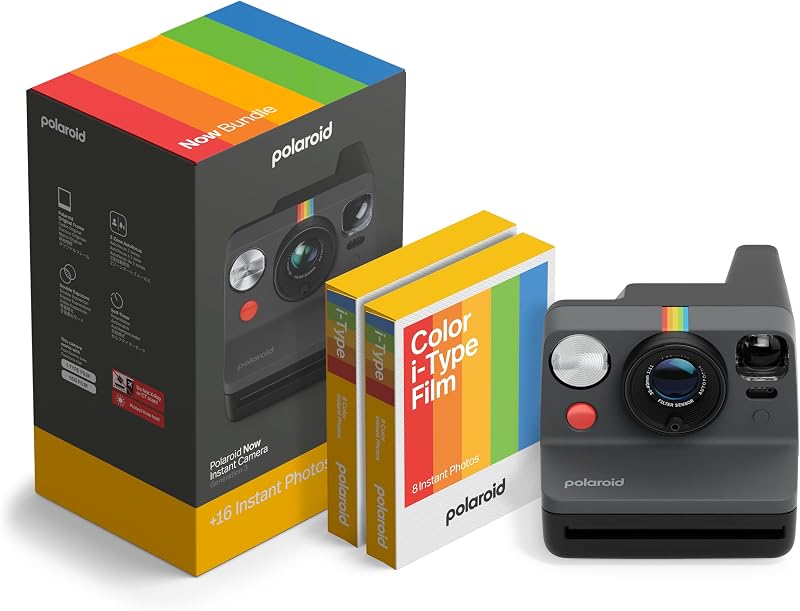
When evaluating the Polaroid Now 3rd Generation I-Type, the primary distinction in the fujifilm mini 99 vs polaroid comparison is physical print size and workflow. The Polaroid Now 3rd Generation I-Type Instant Camera + Film Bundle includes the black camera and 16 color photos, shooting on larger square-format I-Type film rather than the compact rectangular Instax Mini film format.
Photographers who prioritize large classic square prints over the Mini 99’s internal LED tinting and compact pocket print format may lean toward Polaroid’s heritage offering. However, the Mini 99 retains an advantage for users who desire focal plane shutter controls, double exposure dials, and color-changing LED effects in a more portable body.
Dylanto Kids Camera Instant Print,1080P

For parents and younger creators, the Dylanto Kids Camera Instant Print,1080P serves an entirely different market. Described as an instant print camera that prints photos and records 1080P video, this portable toy is geared directly toward young children ages 3 to 12 as a birthday or holiday gift.
Instead of chemical analog emulsion that requires delicate handling, this kids camera uses digital capture paired with immediate thermal black-and-white printing. Shoppers seeking an indestructible, child-safe toy should pick this option instead of an advanced analog camera like the Mini 99.
Fujifilm QuickSnap Flash 400 One-Time-Use

If you want authentic analog film grain without investing in a dedicated camera body, the Fujifilm QuickSnap Flash 400 One-Time-Use 2-pack provides a convenient alternative. These preloaded 35mm disposable cameras include a built-in flash and ISO 400 negative film, ready to shoot right out of the packaging.
Travelers attending weekend weddings or camping trips who want genuine film photos without the responsibility of carrying reusable camera equipment will appreciate the simplicity of a disposable camera. Unlike the Mini 99, however, you do not get instant physical print gratification, as the film must be sent off to a commercial lab for chemical developing.
Final Verdict
When asking the central question, is the fujifilm mini 99 worth it, the answer depends entirely on your passion for hands-on analog experimentation. By integrating built-in LED lighting, five-level brightness adjustments, and specialized shooting modes like Bulb and Double Exposure, Fujifilm has produced a mature instant camera that rewards photographic intention. It moves the Instax format away from simple disposable-style snapshots toward an authentic medium for expressive fine art.
While the lack of water resistance and the natural learning curve required to master manual focus rings and exposure modes mean it is not the ideal choice for every casual user, it remains unmatched in creative versatility within the compact instant film category. If you want tactile creative control over your physical instant prints, the Mini 99 delivers an exceptionally rich shooting experience.
FAQ
How do the color effects work on the Fujifilm Instax Mini 99?
The color effects are created using built-in, color-changing LEDs located inside the camera body. When you twist the dial to one of the six color settings, the LEDs cast colored light directly onto the analog film during the exposure process, imparting an authentic optical tint rather than a digital software filter.
What are the shooting modes on the Fujifilm Instax Mini 99?
The camera features five distinct shooting modes: Normal, Indoor, Sports, Double Exposure, and Bulb mode. Normal handles routine daily scenes, Indoor balances flash and ambient light, Sports prioritizes fast shutter speeds up to 1/400 second, Double Exposure layers two exposures on one print, and Bulb keeps the shutter open for extended light captures.
Does the camera offer manual focusing?
The camera uses zone focusing operated by turning the lens ring. You can toggle between standard shooting distances, a Macro Mode designed for close-up framing, and a Landscape Mode calibrated for distant subjects located from three meters away to infinity.
Is the Fujifilm Instax Mini 99 waterproof?
No, the listing specifies that the camera is not water resistant. Users should avoid shooting in heavy rain, near splashing water, or in dusty outdoor environments to protect the internal focal plane shutter and LED electronics.
Can I mount the Fujifilm Instax Mini 99 on a tripod?
Yes, the camera is tripod mountable and includes a standard threaded socket on its base. This is especially useful for keeping the camera completely still when shooting in Bulb mode or when staging group photos using the built-in self timer.


