As Amazon Associates, we earn from qualifying purchases. This means we may receive a small commission at no extra cost to you if you click through and make a purchase.
The Fujifilm Instax Mini 12 is a dedicated analog instant print camera built around simplicity, physical picture sharing, and automated capture mechanics. Serving as an accessible entry point to physical photography, this model focuses on removing technical guesswork so anyone can press the shutter button and walk away with a pocket-sized physical photograph. Our bottom-line verdict is that it succeeds remarkably well at delivering dependable, well-balanced snapshots with minimal user intervention, making everyday instant photography accessible rather than intimidating.
This camera suits casual party hosts, event planners, parents, and social snappers seeking tangible keepsakes without managing manual camera menus. Given the automated operation, choosing the fujifilm mini 12 for beginners represents one of the easiest ways to dive into instant photography without wasting expensive packs. However, photographers who demand manual shutter adjustments, switchable flash controls, creative multi-exposure tools, or digital image backups should look elsewhere, as this device focuses entirely on immediate analog prints with zero internal file storage.


Fujifilm Instax Mini 12 at a Glance

| Attribute | Detail |
|---|---|
| Film Compatibility | Fujifilm Instax Mini Film (Color and Black & White) |
| Picture Size | 2 inches by 3 inches |
| Shutter Mechanism | Rolling shutter, 1/2 second to 1/250 second |
| Exposure Control | Fully automatic exposure and automatic flash control |
| Light Sensitivity | Automatic ISO 80 to ISO 300 range |
| Viewfinder | Real image optical finder, 0.37x magnification with target spot |
| Lens Operation | Twist-barrel for power on, power off, and close-up focus |
| Print Speed | Ejection in approximately 5 seconds; development takes about 90 seconds |
| Power Source | Two AA alkaline batteries |
| Included Items | Hand strap, user manual, two AA batteries, 1-year limited warranty |
Automatic Exposure and Flash Performance
Getting accurate lighting on instant photo paper has historically been a struggle for entry-level gear. A significant technical highlight here is the fujifilm mini 12 auto exposure system, which pairs programmed shutter speeds ranging from 1/2 second to 1/250 second with an automated light meter. Instead of asking the photographer to select indoor, cloudy, or sunny dials before pressing the shutter, the internal sensors assess environmental brightness and adjust shutter speed alongside automatic flash output to prevent washed-out subjects.
The automated flash fires on every shot to ensure proper fill and subject illumination, adapting its output intensity based on ambient conditions. In dim venues or indoor gatherings, the rolling shutter can drop to 1/2 second to gather ambient background light, while the flash freezes foreground subjects. Because the camera operates across an ISO range of 80 to 300 automatically, users avoid harsh glare off foreheads or chalky skin tones that often plague manual budget snapshot hardware. For shoppers comparing format variants, reading a fujifilm instax mini se instant camera with bonus 10 pack mini film overview highlights how automated metering upgrades simplify capture across varying light levels.
The primary compromise with this system is the inability to disable the flash manually. In bright direct outdoor sunlight, the flash still fires as a fill light, which balances harsh shadows effectively but restricts artistic shadow play. Looking closely at the fujifilm mini 12 specs confirms there are no manual exposure compensation overrides, so high-contrast lighting situations require careful framing to keep the sensor from reading bright backgrounds and underexposing faces in shade.
Close-up Mode and Parallax Framing
Older instant cameras often suffer from framing discrepancies when shooting objects closer than arm’s length because the viewfinder sits several centimeters higher than the physical lens. The fujifilm mini 12 close-up mode tackles this challenge directly through an internal parallax correction mechanism. Twisting the outer lens barrel past the standard power setting moves an internal optical baffle inside the 0.37x viewfinder, shifting the viewing window to mirror what the camera lens actually captures.
This optical correction makes tight portraits, food snapshots, and tabletop still lifes straightforward. In standard mode, attempting a tight macro portrait on traditional instant formats often cuts off the top of the subject’s head in the final print. With the corrected optical alignment active, what you see inside the target circle aligns reliably with the ejected print, cutting down on wasted film sheets caused by misjudged composition.
Selfies represent another major focus of the close-up design. Placed right beside the front glass element, the fujifilm mini 12 selfie mirror lets users frame solo or duo portraits at arm’s length without guessing. The combination of the mirror, the shifted close-up optic, and the softened close-range flash output ensures arm-length selfies remain centered, in focus, and properly illuminated without harsh hotspots.
Film Handling and Print Mechanics
The device uses standard fujifilm mini 12 film cartridges, producing credit-card-sized prints with an image area inside a distinct border. The camera accepts both vibrant color emulsions and monochrome black-and-white cartridges, providing aesthetic flexibility for different gatherings. Shoppers researching the format should note that film packs are sold separately from the camera body, making an investment in a multi-pack like the fujifilm instax mini film bundle a sensible way to secure extra exposures for upcoming events.
Once you click the shutter, internal motorized rollers grip the cartridge, spread developing chemistry across the chemical pods, and eject the picture through the top slot in approximately five seconds. The print emerges fully blank and begins to slowly show image outlines within thirty seconds, with full chemical stabilization and color depth reached at roughly ninety seconds. This mechanical process runs smoothly and quietly, avoiding paper jams as long as the film exit slot remains unobstructed during ejection.
Because the physical prints measure two by three inches, they fit neatly into wallet sleeves, mini photo albums, or refrigerator magnetic frames. Users familiar with analog film know that exposure to direct heat or physical shaking during the ninety-second development phase does not speed up the process and can damage print chemistry. Letting the print rest flat on a table provides the cleanest contrast and color balance.
Ergonomics, Power, and Daily Usability
Ergonomics on the camera, often referred to informally as the fuji mini 12 or mistakenly typed by online shoppers as the intax mini 12, rely on smooth, curved plastic contours. The exterior shell features rounded corners with an integrated thumb rest and a front-facing shutter button. Activating the device requires no separate buttons; a simple twist of the lens barrel extends the optical assembly and turns on the metering circuitry, while a second twist engages the close-up focus range.
Power comes from two standard AA alkaline batteries, which are included inside the retail packaging alongside a color-matched wrist lanyard. Using common AA cells eliminates the need for proprietary charging cables or wall adapters when taking the camera on trips, though it does require carrying spare batteries for long vacations. Those who prefer printing digital mobile snaps directly from phones rather than carrying a standalone lens unit may find companion devices like the mini link 2 useful for hybrid workflows, though the Mini 12 remains dedicated to authentic analog capture.
Durability reflects casual indoor and outdoor party use rather than rugged outdoor exploration. The product data explicitly notes that the housing has no water resistance rating. Users must keep the camera protected during heavy rain, splash zones near swimming pools, or dusty outdoor environments. The included wrist strap helps prevent accidental drops, while the physical lens barrel retracts securely into the body when twisted to the off position, safeguarding the glass during bag transport.
Fujifilm Instax Mini 12 Pros and Cons
Pros
- Automatic exposure prevents washed-out prints
- Twist-lens design powers on and engages modes quickly
- Parallax correction aligns viewfinder accurately in close-up mode
- Built-in selfie mirror simplifies framing self-portraits
- Fast print ejection in approximately five seconds
Cons
- Film is not included in the box
- Lacks water resistance against moisture or rain
- No manual control to turn off the flash
Check Fujifilm Instax Mini 12 on Amazon
Who Should Buy the Fujifilm Instax Mini 12
Buy It If
- You want a completely automatic instant camera that eliminates light-meter guesswork and dial adjustments.
- You frequently shoot portraits, party snapshots, and arm-length selfies using a physical mirror and parallax correction.
- You prefer standard, readily available AA batteries over built-in rechargeable packs that require wall cords.
- You need immediate, pocket-sized physical keepsakes that develop in roughly ninety seconds for guests.
Skip It If
- You need manual control over exposure parameters, shutter speeds, or the ability to disable the flash.
- You want internal digital image storage, an SD card slot, or wireless smartphone connectivity on the camera body.
- You plan to use the camera in wet, rainy, or marine environments where water resistance is essential.
Fujifilm Instax Mini 12 Alternatives Worth a Look
While the Mini 12 serves everyday party photographers well, other options on the market target different formats, age groups, and operating styles.
Polaroid Now 3rd Generation I-Type
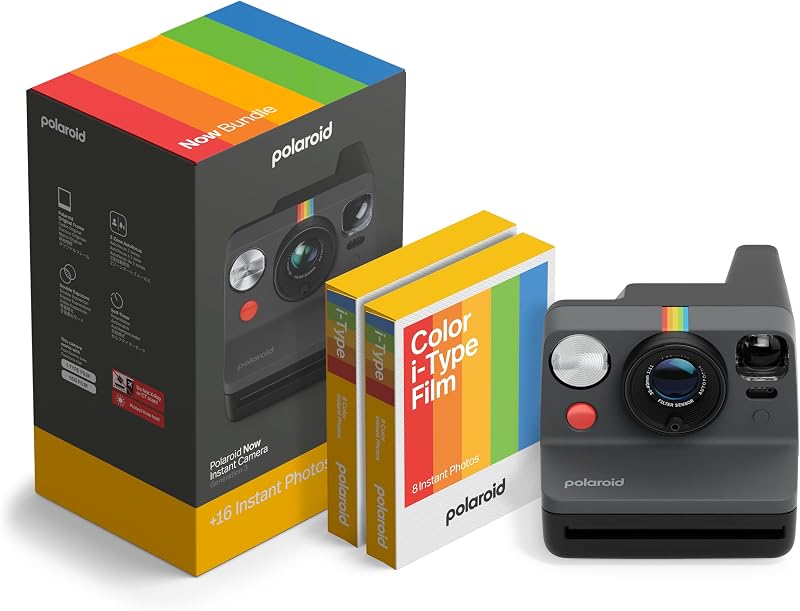
The Polaroid Now 3rd Generation I-Type uses the classic square Polaroid film format rather than the rectangular Mini format. Shoppers who want iconic, larger square prints and the heritage aesthetic of classic film borders should consider this alternative over the smaller rectangular Instax print standard.
Dylanto Kids Camera Instant Print,1080P

The Dylanto Kids Camera Instant Print,1080P combines digital image capture with a thermal print mechanism designed for younger children. Parents looking for an inexpensive toy-focused print device with digital video capture rather than chemical analog film will find this design better suited for young kids.
Fujifilm QuickSnap Flash 400 One-Time-Use

The Fujifilm QuickSnap Flash 400 One-Time-Use is a traditional 35mm disposable film camera pack rather than an instant print camera. Travelers heading into rough conditions who do not want to carry a permanent camera body or worry about battery life can pick this one-time-use option, though prints require lab development.
Final Verdict
Evaluating whether the fujifilm mini 12 is worth it comes down to what you expect from an analog instant camera. By refining the mechanical lens twist, introducing parallax alignment inside the optical viewfinder, and automating both the rolling shutter and flash output, this model successfully resolves the common pain point of wasted, improperly exposed film prints. It makes taking physical pictures approachable, intuitive, and fun for casual users across social gatherings.
While advanced hobbyists may feel limited by the lack of flash deactivation switches or manual exposure overrides, those constraints exist intentionally to keep operation foolproof. If your objective is to point, shoot, and hand friends charming physical prints without navigating complex menus, the camera delivers dependable results on every pack.
FAQ
Does the Fujifilm Instax Mini 12 come with film in the box?
No, the camera does not include film in the standard package. The box includes the camera, two AA batteries, a hand strap, an instruction manual, and a one-year warranty. Film cartridges must be purchased separately.
How long does it take for photos to develop?
The camera motor ejects the print sheet in approximately five seconds. Once ejected, full image development takes roughly ninety seconds at normal room temperatures.
What batteries does the camera require?
The camera operates using two standard AA alkaline batteries, a pair of which comes supplied in the retail packaging.
Can you turn the flash off on the Fujifilm Instax Mini 12?
No, the flash fires automatically on every exposure. The internal automatic exposure system controls the flash output intensity based on ambient lighting, but there is no manual override switch to disable the flash.
Is the Fujifilm Instax Mini 12 waterproof?
No, the camera listing specifies that it is not water resistant. It should be shielded from rain, water splashes, and high humidity during use.