
As Amazon Associates, we earn from qualifying purchases. This means we may receive a small commission at no extra cost to you if you click through and make a purchase.
First-person flight requires clear visuals, rock-solid transmission, and a headset that does not feel like an uncomfortable clamp on your face. The DJI Goggles N3 serves as a dedicated digital headset engineered to work seamlessly with modern consumer FPV aircraft, pairing an ultra-wide 1080p LCD screen with reliable O4 digital transmission. Whether prospective buyers search under the official name or common terms like dji google n3, our verdict is clear: this headset delivers an accessible, highly capable immersion platform that removes the headache of custom lens inserts while maintaining solid connection stability.
This headset is ideally suited for pilots flying newer DJI compact aircraft who want a ready-to-use kit that works directly over prescription glasses without specialized optical tuning. Pilots who prioritize quick deployment and dependable feed quality will find plenty to appreciate here. Conversely, pilots who rely on previous-generation transmission systems or legacy controllers will need to look elsewhere, as hardware support is firmly centered on current-generation hardware.


DJI Goggles N3 at a Glance

| Attribute | Detail |
|---|---|
| Display Resolution | 1080p (Full HD LCD) |
| Refresh Rate | 60Hz |
| Field of View | 54° FOV |
| Video Transmission System | DJI O4 (2.4 GHz and 5.8 GHz) |
| Maximum Range | 13 km |
| Minimum Transmission Latency | 31 ms (Avata 2) / 58 ms (Neo) |
| Maximum Operating Battery Life | 2.7 hours |
| Headset Weight | 536 g |
| Glasses Accommodation | Spacious interior (no diopter adjustments needed) |
| Aircraft Compatibility | DJI Avata 2, DJI Neo |
Display Clarity and Visual Immersion
The visual engine inside the DJI Goggles N3 relies on an ultra-wide full 1080p LCD screen operating at a smooth 60Hz refresh rate. By opting for a crisp 1080p panel, the headset displays high-definition aerial scenes directly before your eyes without pixelation or harsh image compression artifacts. Flight telemetry, battery warnings, and fine flight paths remain sharp and easily readable against bright skies or shadowy landscapes.
A crucial factor in the overall visual presentation is the dji goggles n3 fov, which measures at an expansive 54 degrees. When reviewing the dji goggles n3 specs, this field of view strikes a practical balance between broad panoramic immersion and visual comfort. Excessively wide viewing angles can sometimes produce edge distortion or induce motion sickness during aggressive maneuvers. The 54-degree configuration provides an immersive, cinematic flight perspective while keeping dizziness to a minimum as fast-moving scenery passes by.
In addition to raw panel resolution, the visual experience benefits from built-in one-tap defogging. Anyone flying in humid morning air or transitioning between air-conditioned vehicles and warm outdoor fields knows how rapidly lenses can mist over. The integrated defogging function helps clear internal condensation rapidly, ensuring your view remains unobstructed before taking off.
Transmission Performance and Signal Latency
Visual quality is only as dependable as the wireless link carrying it, and this headset relies on advanced DJI O4 digital video transmission. Utilizing both 2.4 GHz and 5.8 GHz frequencies, the dual-band system delivers robust anti-interference performance in demanding wireless environments. The listing highlights a maximum operational range of up to 13 km, allowing ample signal overhead to maintain a reliable feed even when operating near physical obstacles or mild interference.
When evaluating control responsiveness, dji goggles n3 latency varies depending on the paired aircraft. When paired with the Avata 2 running 1080p/100fps transmission mode in open outdoor environments, transmission latency drops to an ultra-low 31 ms. When linked to the more compact Neo aircraft, the system records an average latency of 58 ms. Pilots exploring aerial camera options alongside multi-rotor platforms like the drone dji avatar 3 ecosystem will appreciate the predictable, low-lag responsiveness across flight maneuvers.
- 13 km Maximum Range: Provides broad signal margins using dual-band 2.4 GHz and 5.8 GHz frequencies.
- Low Latency Options: Reaches 31 ms when paired with Avata 2 and 58 ms average with Neo.
- High Frame Rate Video: Supports 1080p/60fps feeds along with 1080p/100fps transmission settings.
- Wireless Streaming: Integrated Wi-Fi and Bluetooth enable real-time live feed sharing to external devices.
Design, Fit, and Comfort for Eyeglass Wearers
Physical comfort makes or breaks an FPV headset, and this unit introduces an especially welcome design choice for dji goggles n3 glasses wearers. Traditional FPV goggles often require pilots to purchase costly diopter inserts, adjust finicky optical dials, or struggle to fit corrective lenses into cramped cavities. In contrast, the Goggles N3 features a spacious internal compartment built specifically to fit directly over everyday prescription glasses without requiring diopter adjustments or extra lens hardware.
At an overall weight of 536 grams, the headset sits securely on the head without excessive front-heavy leverage. The housing is finished in a clean gray colorway and includes an integrated head strap assembly that distributes mass evenly across the brow and back of the head. For pilots who wear glasses during daily life, being able to simply slip the unit on and launch eliminates tedious pre-flight preparations.
The interior spacing also assists in thermal airflow. Paired with the active one-tap defogging mechanism, the extra physical volume inside the facial interface prevents moisture accumulation from your breath or skin temperature, preserving clear vision from initial system boot to final landing.
Hardware Compatibility and Controller Integration
Navigating drone ecosystem compatibility can be complicated, so understanding exact hardware pairings is essential. When looking at dji goggles n3 compatibility, this headset is strictly designed around modern DJI aircraft and current-generation transmitters. It connects natively to the DJI Avata 2 and the DJI Neo, both of which are sold separately.
For flight control, the headset interfaces with the DJI RC Motion 3 and the DJI FPV Remote Controller 3. When paired with the RC Motion 3, pilots gain access to an intuitive AR cursor function. This cursor can be manipulated before takeoff or while the aircraft hovers after braking, letting you point and select on-screen menu items, adjust settings, and confirm flight modes without taking your hands off the flight stick. Those operating broader camera setups like the dji rs3 pro gimbal on commercial shoots will recognize DJI’s continuous emphasis on unified ecosystem controls.
Equally important are the hardware configurations that do not work with this headset. The product data explicitly notes that the Goggles N3 does not support the DJI RC Motion 2, the DJI FPV Remote Controller 2, the DJI RC-N3, or the DJI RC 2. Pilots holding older controllers must upgrade their hand controller to match the headset’s communication standards.
Battery Endurance and Operational Workflow
Headset battery endurance dictates how many flight packs you can cycle through before heading back to an outlet. The dji goggles n3 battery life is rated for up to 2.7 hours of continuous operation on a single charge. This figure is measured at an ambient temperature of 25°C with screen brightness set to 6, linked to an Avata 2 aircraft at 1080p/100fps, Head Tracking disabled, and without powering external accessories through the unit.
Power is delivered via an integrated BZX300-2450-7.3 lithium-ion battery. Having the battery incorporated into the head strap or chassis design means pilots avoid dangling external cables or carrying separate battery packs in their pockets. A 2.7-hour operational window provides ample runtime to fly through half a dozen individual drone flight batteries without needing a recharge.
Beyond runtime, the operating workflow supports real-time live feed sharing and wireless streaming via onboard Wi-Fi and Bluetooth. This capability allows bystanders or spotters to watch flight paths directly on connected mobile screens. Much like pairing compact creative tools such as the dji osmo pocket 1 for fast on-the-go capture, the Goggles N3 minimizes setup friction so you can focus entirely on your aerial shots.
DJI Goggles N3 Pros and Cons
Pros
- Spacious interior fits over eyeglasses without diopters
- Reliable DJI O4 transmission with 13 km range
- Low 31 ms latency when paired with Avata 2
- Generous 2.7-hour operating battery life
- Expansive 1080p 60Hz screen with 54° FOV
- Convenient one-tap defogging feature
Cons
- Incompatible with DJI RC 2 and RC Motion 2
- Average latency increases to 58 ms on Neo
- Restricted strictly to Avata 2 and Neo aircraft
Check DJI Goggles N3 on Amazon
Who Should Buy the DJI Goggles N3
Buy It If
- You fly the DJI Avata 2 or DJI Neo and want a modern, native 1080p O4 digital display headset.
- You wear prescription eyeglasses and want to fly comfortably without buying custom diopter inserts or modifying lenses.
- You value a self-contained setup featuring a 2.7-hour battery runtime without managing external battery wires.
- You prefer intuitive motion navigation using the RC Motion 3 controller’s AR cursor directly inside the headset menus.
Skip It If
- You plan to use older DJI remote controllers like the RC 2, RC-N3, RC Motion 2, or FPV Remote Controller 2.
- You fly custom analog FPV quadcopters or third-party digital video transmitter systems.
- You require a headset with smaller, modular analog receiver bays rather than an integrated DJI digital receiver.
DJI Goggles N3 Alternatives Worth a Look
While the Goggles N3 is purpose-built for the newest DJI O4 ecosystem, pilots using other transmission protocols or custom hobby builds have viable alternatives across different digital and analog standards.
22ms Low Latency

The 22ms Low Latency headset, also listed as the CADDXFPV Walksnail Avatar HD FPV Goggles X, is built specifically for pilots flying the Walksnail Avatar HD VTX digital ecosystem. Featuring a 1080p 100fps OLED display, a 50° FOV, HDMI input and output, and integrated head tracking, this unit is engineered for pilots dedicated to custom Walksnail digital builds who want ultra-fast 22 ms response times and OLED contrast levels rather than a closed DJI aircraft system.
EV800D FPV Goggles with DVR

The EV800D FPV Goggles with DVR by Speedybee represents an analog alternative fitted with a 5-inch display and built-in 5.8G 40-channel receiver. It incorporates internal antennas, an onboard battery, and a digital video recorder (DVR). It serves hobbyists who fly traditional analog FPV drones, RC cars, or model airplanes where high-definition digital transmission is not required.
5.8G FPV Goggles with Antennas
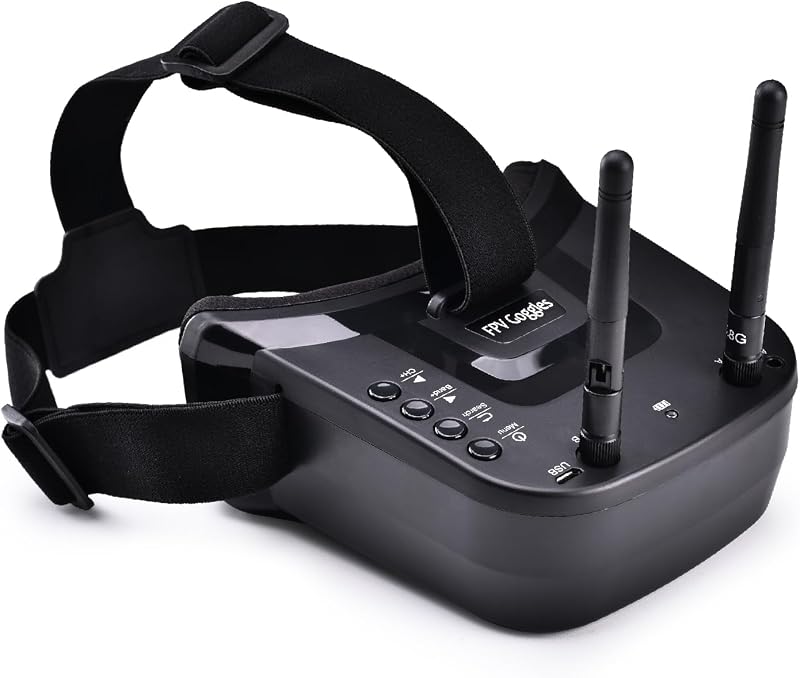
The 5.8G FPV Goggles with Antennas from Speedybee is an ultra-compact analog video headset featuring a smaller 3-inch screen. Designed for entry-level analog FPV cameras and transmitters on micro quadcopters or hobby RC vehicles, this lightweight unit suits tinkerers seeking simple, direct analog reception without the higher resolution or digital transmission protocols found on DJI platforms.
Final Verdict
When asking is dji goggles n3 worth it, the answer depends on your primary aircraft. For pilots invested in the DJI Avata 2 or the compact DJI Neo, the Goggles N3 offers an exceptionally balanced package. The integration of DJI O4 video transmission delivers crisp 1080p resolution, minimal 31 ms latency with Avata 2, and dependable range up to 13 km. The spacious internal design that welcomes eyeglasses without diopter swaps removes one of the most frustrating barriers in consumer FPV flying.
While pilots using older hand controllers will need to factor in compatible hardware upgrades, those already flying compatible gear receive a streamlined, high-performance visual link. With its comfortable fit, integrated 2.7-hour battery, and intuitive AR cursor control, the DJI Goggles N3 stands out as a practical, highly capable gateway into modern first-person aerial flight.
FAQ
Can you wear regular glasses with the DJI Goggles N3?
Yes. The DJI Goggles N3 features a spacious internal cavity engineered specifically to fit comfortably over standard eyeglasses, eliminating the need to install custom diopter lenses or adjust optical dials.
Which drones work with the DJI Goggles N3?
The DJI Goggles N3 is compatible with the DJI Avata 2 and the DJI Neo. The listing notes that both aircraft are sold separately and do not come included with the standalone headset.
What is the latency and maximum range of the DJI Goggles N3?
The headset uses DJI O4 digital transmission to reach a maximum transmission range of up to 13 km. When paired with the DJI Avata 2, transmission latency drops to 31 ms, while pairing with the DJI Neo yields an average latency of 58 ms.
How long does the battery last on the DJI Goggles N3?
Under benchmark test conditions at 25°C with screen brightness set to 6 and connected to an Avata 2, the integrated lithium-ion battery provides up to 2.7 hours of operating time.
Does the DJI Goggles N3 work with older DJI remote controllers?
No. The Goggles N3 works exclusively with the DJI RC Motion 3 and the DJI FPV Remote Controller 3. It is not compatible with the DJI RC Motion 2, DJI FPV Remote Controller 2, DJI RC-N3, or DJI RC 2.


