
As Amazon Associates, we earn from qualifying purchases. This means we may receive a small commission at no extra cost to you if you click through and make a purchase.
The DJI Mini 3 is an ultra-lightweight, folding camera drone built for aerial creators who demand stabilized ultra-high-definition capture in a pocketable footprint, delivering exceptional clarity without the regulatory friction that plagues larger aircraft. While casual shoppers frequently misspell the name as the dji mimi 3 when searching online, this capable quadcopter packs a 3-axis mechanical gimbal, 4K HDR recording, and an included screen remote that eliminates the need to clamp your smartphone to a transmitter. Our comprehensive dji mini 3 review finds that it stands out as one of the most practical travel quadcopters available, giving hobbyists premium aerial imaging capabilities right out of the box.
This lightweight aircraft suits travel content creators, social media videographers, and weekend adventurers who want high-grade 4K aerial footage without navigating mandatory FAA registration or Remote ID rules for recreational flights. However, commercial operators who require advanced omnidirectional obstacle sensing, or professionals seeking high-framerate 4K at 120 frames per second, should look toward larger, enterprise-tier flying platforms instead.



DJI Mini 3 at a Glance

| Feature | Specification |
|---|---|
| Takeoff Weight | Under 249 grams (with standard Intelligent Flight Battery) |
| Video Resolution | 4K HDR Video Capture |
| Still Photo Resolution | 48 MP (CMOS Sensor) |
| Gimbal Stabilization | 3-Axis Mechanical Gimbal |
| Standard Flight Time | Up to 38 minutes (2453 mAh Lithium Ion) |
| Wind Resistance | Level 5 (up to 38 kph) |
| Max Transmission Range | Up to 10 km (32,800 feet) HD Video |
| Remote Controller | DJI RC with built-in 5.5-inch HD Display |
| Wireless Connectivity | Wi-Fi (QuickTransfer up to 25Mb/s) and Bluetooth |
| Regulatory Status | No FAA Registration or Remote ID needed for recreational use |
4K HDR Video Quality and True Vertical Shooting
A central pillar of the dji mini 3 specs is its dedicated imaging hardware, centered on a CMOS sensor capable of capturing crisp 48 MP stills alongside smooth 4K HDR footage. Aerial videography often struggles in harsh lighting where bright skies wash out cloud details or steep terrain creates harsh shadows, but the inclusion of Dual Native ISO Fusion balances high-contrast scenes effectively. Whether filming coastal shorelines at midday or tracking city streets at dusk, the dji mini 3 4k video retains visible clarity across both highlights and shadow regions. Content creators who already utilize ground-level tools like gimbal stabilized vlogging cameras dji pocket setups will appreciate how smoothly this camera’s footage cuts alongside handheld gimbal productions.
The standout physical trick of this camera module is dji mini 3 true vertical shooting, a mechanical innovation that rotates the entire 3-axis gimbal 90 degrees. Traditional drones force creators to crop horizontal widescreen video down into a vertical frame, discarding over half of the sensor’s pixels and drastically reducing resolution. With true vertical orientation, the full native 4K sensor area captures tall landmarks such as waterfalls, towering redwood trees, and architectural monuments directly in a 9:16 aspect ratio. This yields pristine vertical video that is immediately ready for mobile platforms without digital cropping or quality loss.
For photographers, the camera outputs both standard JPG files and uncompressed RAW formats, stored onto an optional Micro SD card. Having RAW capability allows enthusiasts to perform thorough color correction, recover highlights, and pull shadow detail in post-processing software. While the listing does not specify flat logarithmic color profiles on this model, the standard color science and automatic HDR processing deliver vibrant, natural tones that require minimal post-capture adjustment for everyday video editing.
DJI RC Controller and Transmission Range
Flying the dji mini 3 with dji rc transforms the pilot experience compared to standard phone-clamp remotes. The bundled DJI RC features a built-in 5.5-inch HD display that comes with the DJI Fly application pre-installed. Bypassing your smartphone removes several common field annoyances: you never have to worry about draining your phone’s battery during flight, dealing with incoming phone calls interrupting your feed, or having a phone screen automatically dim due to thermal throttling in the sun. The remote’s screen is specifically engineered for crisp viewing even under direct outdoor sunlight, ensuring pilots retain a clear visual reference of framing and telemetry at all times.
Communication between the drone and controller relies on high-definition video transmission reaching up to 10 kilometers, or roughly 32,800 feet, in open areas free of interference. While civil aviation rules generally require maintaining direct visual line of sight with your aircraft, robust transmission headroom provides strong anti-interference performance when flying behind tree lines or near suburban Wi-Fi clutter. The live feed remains responsive and stable, giving pilots confidence as they maneuver around expansive rural spaces or open bodies of water.
When you finish your aerial session, offloading files does not require reconnecting cables or even powering on the main remote. With QuickTransfer functionality, you simply activate Wi-Fi directly between the aircraft and your mobile smartphone when placed nearby. The system transfers photos and MP4 video files at speeds reaching up to 25 megabytes per second, allowing rapid review and sharing directly from the field.
Flight Performance, Stability, and Wind Resistance
Despite its featherweight frame, the quadcopter offers commendable resilience when breezes pick up outdoors. The dji mini 3 wind resistance is rated at Level 5, meaning it can withstand sustained wind speeds of up to 38 kilometers per hour. Equipped with efficient brushless motors, the craft produces enough thrust to maintain rock-solid hovering stability over open fields, coastlines, and mountain lookouts. The manufacturer lists an operational ceiling capable of taking off at altitudes up to 4,000 meters above sea level, ensuring capable performance even on high-altitude mountain excursions.
Underpinning that aerodynamic stability is a physical 3-axis mechanical gimbal that counteracts pitch, roll, and yaw movements in real time. Digital electronic stabilization often introduces motion artifacts or warps corners in gusty conditions, but a motorized 3-axis gimbal physically isolates the camera from aircraft tilt. When flying through turbulent crosswinds, the horizon stays level and video remains fluid without jitter, mimicking the smoothness of larger, broadcast-tier camera rigs or specialized gear like the dji osmo 360 line.
For landing and tight maneuvers, downward positioning sensors and precise GPS hovering keep the aircraft firmly in place when you take your hands off the control sticks. If the wind begins to challenge the battery reserves or the connection signal drops, the automated GPS Return to Home system activates, charting a direct course back to the recorded takeoff point.
Battery Life and Travel Portability
The standard dji mini 3 battery life delivers an impressive endurance benchmark for an ultra-compact quadcopter. Powered by a standard 2453 mAh lithium-ion Intelligent Flight Battery, the drone achieves up to 38 minutes of continuous flight time when measured at a constant speed of 21.6 kph in windless conditions. In typical mixed-use conditions involving hovering, framing shots, and repositioning, pilots can realistically expect roughly half an hour in the air per charge. For extended shoots, those investing in the Fly More combo gain multi-battery flexibility that yields up to 114 minutes of total flight time across a full kit.
For creators seeking maximum airborne endurance, the listing notes compatibility with the Intelligent Flight Battery Plus, which pushes single-battery flight time up to an extraordinary 51 minutes. However, pilots must note a critical regulatory trade-off: installing the larger Plus battery adds extra weight, causing the total aircraft mass to exceed the critical 249-gram threshold. If you fly with the Plus battery in regions governed by strict sub-250g recreational exemptions, you lose that registration-free status and must comply with standard drone registration requirements.
When packed away, the foldable plastic arms collapse tightly against the chassis, producing a package small enough to slide into a jacket pocket or the side pouch of a camera bag. The lightweight construction avoids weighing down daypacks during strenuous hikes. The listing also notes that the standard aircraft weight includes the regular Intelligent Flight Battery, propellers, and a microSD card, though actual unit weight may vary slightly based on production batch materials and environmental factors.
Beginner Flight Features and Automation
Stepping into drone piloting can feel intimidating for first-timers, but the dji mini 3 for beginners includes a thoughtful suite of automated safety functions designed to build confidence immediately. Core features include one-touch Auto Takeoff and Landing, which automates the most precarious phases of flight at the touch of an on-screen icon. Once airborne, the craft engages precise satellite-guided hovering, refusing to drift even if the operator releases the control sticks entirely. Integrated GPS Return to Home (RTH) provides a dependable safety net, automatically navigating the drone back to its launch coordinates if the battery runs critically low or communication fails.
To help inexperienced pilots capture cinematic sequences without mastering complex dual-stick maneuvers, the system features automated QuickShots flight profiles. With a quick tap on the display, you can command the aircraft to execute dynamic, pre-programmed camera movements such as circling a subject, pulling straight back and upward, or spiraling overhead. Additionally, automated Panorama modes stitch wide-angle vistas together effortlessly, delivering sweeping aerial landscapes without manual editing work.
Before taking your maiden voyage, the manufacturer requires that the drone be activated through the official DJI Fly app, which must be downloaded from the official website. The app houses interactive learning tutorials, flight logs, and firmware updates to ensure you understand basic control logic and airspace rules before lifting off. Audio enthusiasts who frequently pair creator accessories like the dji osmo pocket mic with ground gear will appreciate the simplicity of adding pristine aerial b-roll to their production library using DJI’s unified software ecosystem.
DJI Mini 3 Pros and Cons
Pros
- Sub-249g weight skips recreational FAA registration
- Dedicated DJI RC features bright 5.5-inch screen
- True Vertical Shooting captures uncropped portrait video
- Level 5 wind resistance up to 38 kph
- Up to 38 minutes of standard flight time
Cons
- Optional Plus battery pushes weight over 249g
- Must activate via DJI Fly app before flying
- MicroSD card sold separately for footage storage
Who Should Buy the DJI Mini 3
Deciding is dji mini 3 worth it comes down to balancing its ultra-light design and convenient screen remote against your personal production requirements and regulatory tolerance.
Buy It If
- You want crisp 4K HDR aerial video without completing FAA registration or Remote ID documentation for recreational flights.
- You prefer a dedicated remote with a bright, built-in 5.5-inch screen so your smartphone stays free and cool.
- You produce short-form vertical video for mobile channels and want true mechanical 9:16 capture without losing native resolution.
- You travel frequently and need an ultra-compact, folding quadcopter with Level 5 wind resistance and up to 38 minutes of flight per battery.
Skip It If
- You require multi-directional obstacle avoidance sensors for automated tracking through dense tree canopies or cluttered spaces.
- You plan to fly exclusively with extended-capacity batteries and strictly refuse to register your aircraft with aviation authorities.
- You are looking for a simple toy drone purely for indoor stunt flips and casual backyard play without high-end 4K camera tech.
DJI Mini 3 Alternatives Worth a Look
If the feature set or flight profile of this quadcopter does not perfectly match your aerial goals, several alternative drones offer different approaches to recreational flying.
2K HD FPV Drone

The 2K HD FPV Drone is a beginner-oriented quadcopter built for adults, teens, and casual flyers. It includes altitude hold, one-key takeoff and landing, three adjustable speed modes, and headless mode to help newcomers practice orientation. It also ships with two batteries in a foldable, portable package. While it lacks the 3-axis mechanical gimbal, 4K HDR sensor, and dedicated screen controller of the Mini 3, it offers an approachable entry point for shoppers seeking a simpler camera quadcopter to learn basic piloting skills.
Mini Drone with 2 Batteries
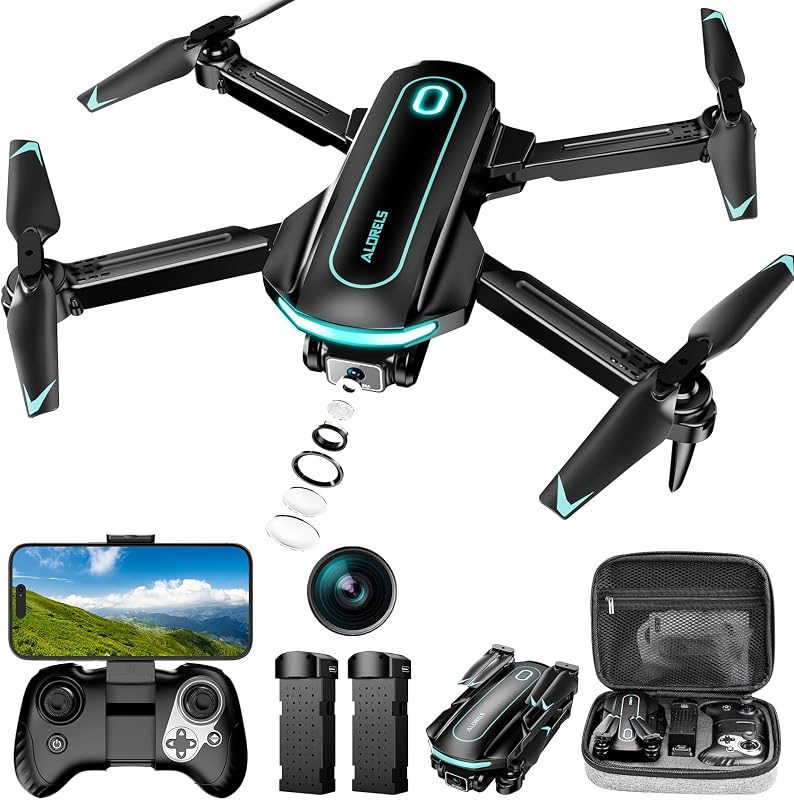
The Mini Drone with 2 Batteries is a compact, foldable unit designed primarily as a gift for kids and casual hobbyists. This model features a 1080P HD FPV camera, a dedicated carrying case, trajectory flight planning, gravity control, and fun 360-degree flip capabilities alongside standard one-key controls. Shoppers seeking an inexpensive, playful flyer for indoor tricks and casual video should consider this option over the more advanced 4K platform of the Mini 3.
Drone with 1080P Camera

The Drone with 1080P Camera is another lightweight quadcopter tailored for kids and beginner adults. It features altitude hold, headless mode, one-key takeoff, two included flight batteries, a protective carrying case, and built-in 360-degree flip maneuvers. While it offers basic 1080P aerial video for recreational experimentation, it lacks the Level 5 wind resistance, 10km transmission range, and stabilized 48 MP imaging that make the Mini 3 a serious creator tool.
Final Verdict
The DJI Mini 3 delivers a remarkably balanced aerial imaging solution that strips away the most frustrating hurdles of consumer drone ownership. By staying under the 249-gram threshold with its standard battery, recreational flyers can take to the skies without FAA registration or Remote ID requirements. Pairing that legal freedom with true 4K HDR video, Level 5 wind resistance, and a mechanically rotating vertical camera makes it an exceptionally versatile tool for travel videographers and landscape enthusiasts.
Adding the DJI RC controller elevates the entire flying workflow, freeing your phone from clamp-on mounts and bright outdoor glare. While creators demanding complex obstacle avoidance systems will need to look at heavier, more expensive alternatives, the Mini 3 stands as the premier lightweight travel quadcopter for anyone wanting professional-looking aerial video with minimal friction.
FAQ
Does the DJI Mini 3 require FAA registration in the United States?
No, FAA registration and Remote ID are not required in the United States if you are flying purely for recreational purposes and keep the aircraft at its standard weight under 249 grams using the standard Intelligent Flight Battery. However, if you install the heavier Intelligent Flight Battery Plus, the weight exceeds 249 grams, which triggers registration requirements. Commercial operators must always register regardless of aircraft weight.
What is True Vertical Shooting on the DJI Mini 3?
True Vertical Shooting is a physical hardware feature where the 3-axis mechanical gimbal physically rotates the camera 90 degrees into portrait orientation. Unlike traditional drones that crop a horizontal image and discard pixels, True Vertical Shooting utilizes the full 4K sensor, delivering uncropped, high-resolution vertical video ready for mobile viewing and social sharing.
Can the DJI Mini 3 withstand windy conditions?
Yes, the aircraft is rated for Level 5 wind resistance, capable of handling winds up to 38 kilometers per hour. Its brushless motors provide the necessary thrust to remain stable, and its 3-axis mechanical gimbal compensates for aircraft movement to keep your video smooth and level even when hovering in breezy conditions.
What is the advantage of buying the version with the DJI RC?
The DJI RC remote includes an integrated 5.5-inch HD screen with the DJI Fly app already installed. This allows you to fly without mounting your smartphone, eliminating issues with phone battery drain, screen dimming from outdoor heat, or flight interruptions caused by incoming phone calls and notifications.
How long does the battery last on the DJI Mini 3?
With the included standard Intelligent Flight Battery, the aircraft can fly for up to 38 minutes under windless test conditions at a constant speed of 21.6 kph. The flight time can be extended up to 51 minutes using the optional Intelligent Flight Battery Plus, though this battery increases the total weight beyond 249 grams.


