
As Amazon Associates, we earn from qualifying purchases. This means we may receive a small commission at no extra cost to you if you click through and make a purchase.
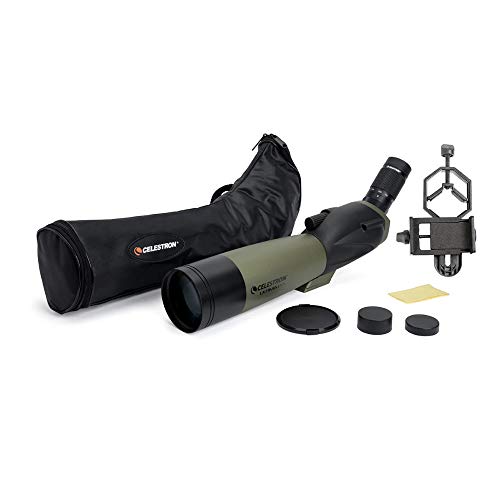
The Celestron Ultima 80 is an angled spotting scope engineered for long-distance observation across open fields, shooting ranges, and coastal nature reserves. Built around a substantial 80mm objective lens and an adjustable 20x to 60x zoom magnification system, this refractor optical tube gathers significant light to deliver clear, contrast-rich visuals during daylight and transitional dusk hours. With multi-coated glass elements, complete nitrogen weatherproofing, and bundled adapters designed for photography, it stands as a dependable, highly versatile field optic for visual tracking without demanding overly complicated gear.
This spotting scope suits outdoor enthusiasts who need reliable magnification for identifying distant wildlife, scoring bullet impacts downrange, or capturing telephoto snapshots through a connected phone. However, backcountry backpackers who prioritize ultralight packs or mobile spotters seeking handheld scanning convenience should look elsewhere, as the unit weighs 3.6 pounds and demands a stable support platform to yield steady, usable visuals.

Celestron Ultima 80 at a Glance

| Feature | Specification |
|---|---|
| Objective Lens Diameter | 80 mm (8 cm) |
| Magnification Range | 20x to 60x zoom |
| Viewing Angle | 45-degree angled eyepiece |
| Optical Coating | Multi-coated anti-reflective glass |
| Focal Length | 480 millimeters |
| Eyepiece Lens Description | 8mm to 24mm zoom eyepiece |
| Field of View | 34.6 feet |
| Exit Pupil Diameter | 4 millimeters |
| Weatherproofing | Waterproof and fogproof (dry nitrogen gas purged) |
| Weight and Dimensions | 3.6 pounds; 19.3″D x 3.5″W x 7.5″H |
Optical Clarity and Zoom Performance
Evaluating the core optical assembly in this Celestron Ultima 80 review highlights the practical benefits of an 80mm objective lens. Gathering light is the primary challenge for any high-magnification instrument, and an 80mm front aperture captures substantially more ambient illumination than smaller 60mm or 65mm compact tubes. Celestron treats every glass surface with anti-reflective multi-coatings to maximize contrast and transmission. In low-light environments, such as dawn tree canopies or overcast shooting ranges, the optical path maintains image brightness without washing out natural colors.
The integrated zoom mechanism relies on an 8mm to 24mm eyepiece delivering continuous magnification from 20x up to 60x. At 20x, the instrument yields its brightest picture and widest sightline, making it easy to locate subjects across open landscapes. As you dial magnification toward 60x, the exit pupil contracts toward its minimum threshold, which naturally dims the image and narrows the field of view to 34.6 feet. While daylight viewing remains sharp at higher powers, heat haze and atmospheric shimmer become more noticeable at the upper zoom limit. For wider, lower-power woodland scanning where portability outweighs zoom, a compact binocular like the Celestron Nature DX 8×32 offers broader situational awareness.
Focusing across this broad focal range is handled by a smooth, manual barrel dial. The focal length is rated at 480 millimeters, providing enough optical compression to pull distant subjects into clean view. The 45-degree angled eyepiece orientation also enhances comfort during extended glassing sessions, eliminating the neck strain typically caused by hunching over a straight-barrel scope when tracking birds high in tree branches.
Field Tracking for Shooting Ranges and Birding
Deploying the Celestron Ultima 80 for target shooting offers immediate utility for marksmen who need to spot projectile placements on paper targets downrange. At 100 yards and beyond, reading small-caliber bullet holes through standard rifle scopes is difficult. The 60x zoom ceiling allows shooters to inspect shot groupings without leaving the bench or calling a cold line. The 45-degree eyepiece permits the shooter to glance sideways from a seated firing position into the ocular lens without disrupting their rifle setup.
Field observers utilizing the Celestron Ultima 80 for bird watching will appreciate how the 80mm aperture resolves subtle plumage markings and bill shapes at extreme distances. Watching raptors perched across a canyon or waterbirds wading along mudflats requires significant optical reach that handheld binoculars cannot replicate. Although portable binoculars such as the Celestron Outland X 8×42 are easier to walk with on rugged trails, a stationary 80mm scope reveals fine details that smaller lenses miss entirely.
The trade-off for this optical power is target acquisition speed. With a narrow field of view of 34.6 feet at distance, tracking fast-flying songbirds through dense branches takes patience and methodical alignment. Spotters must learn to sight along the exterior of the tube or rely on the reflex finderscope noted in the product specifications to center erratic subjects quickly before fine-tuning the zoom ring.
Digiscoping and Smartphone Photography
Capturing field discoveries has become standard practice, and the Celestron Ultima 80 digiscoping capabilities are supported directly out of the box. Celestron bundles a dedicated smartphone adapter that clamps over the zoom eyepiece. This allows naturalists and target marksmen to align their phone camera lens with the ocular glass to record still photos or video clips of wildlife, target groupings, or landscape features without purchasing third-party brackets.
For photographers using dedicated camera bodies, the zoom eyepiece features an integrated T-adapter thread. By attaching a camera-specific T-ring (which must be purchased separately to fit your particular camera mount), users can mount a DSLR directly to the scope tube. In this configuration, the spotting scope functions as a manual 480mm telephoto lens. Because the optics rely entirely on manual adjustment, focusing requires careful attention to your camera screen or viewfinder.
While digiscoping with a smartphone is convenient, telephoto phone photography magnifies vibrations significantly. Tapping a phone screen at 60x zoom introduces noticeable jitter. Using a timer shutter release or a remote cable reduces shake, ensuring your captured shots remain crisp when documenting rare sightings or target scorecards.
Chassis Durability and Mounting Requirements
Thorough examination of the Celestron Ultima 80 specs demonstrates an optical body built to endure variable outdoor climates. The internal barrel is purged with dry nitrogen gas and sealed with O-rings, preventing moisture intrusion and internal glass fogging when transitioning between warm vehicles and cold morning air. The exterior housing resists moisture and physical wear, protecting delicate optical prisms from unexpected rain showers.
Weighing 3.6 pounds and measuring 19.3 inches in length, this optic requires a rigid support system. The underside features an extended Celestron Ultima 80 tripod mount plate that assists in balancing the scope along its center of gravity. While the listing specifications categorize the unit with an equatorial mount classification, field spotters typically pair the mounting plate with a fluid pan-head photo tripod or a sturdy bench clamp. Attempting to use a flimsy, lightweight plastic tripod will result in frustrating visual shake at 60x magnification.
Shoppers comparing large-aperture field instruments against dedicated astronomical instruments like the Celestron Omni AZ 102 will find the Ultima 80 far more portable for field transport. The included soft carrying case, eyepiece port cover, protective lens caps, and eyepiece pouch ensure the glass remains clean while riding in a vehicle trunk or gear bag.
Celestron Ultima 80 Pros and Cons
Pros
- Large 80mm objective lens captures ample light
- Nitrogen-purged housing ensures waterproof and fogproof durability
- Integrated T-adapter and smartphone mount for digiscoping
- Smooth manual focus dial enables quick adjustments
- Versatile 20x to 60x zoom magnification range
Cons
- Heavy 3.6-pound frame requires a sturdy tripod
- Field of view narrows down to 34.6 feet
- DSLR connection requires a separate camera T-ring
Check Celestron Ultima 80 on Amazon
Who Should Buy the Celestron Ultima 80
Buy It If
- You need strong 20x to 60x magnification to resolve small bullet impacts on paper targets at 100 yards and beyond.
- You want a complete optical setup with an included smartphone digiscoping adapter and a soft protective carrying case.
- You frequently observe wildlife in wet, humid, or changing weather conditions that require nitrogen-purged, fogproof optics.
- You prefer a 45-degree angled eyepiece for comfortable viewing from shooting benches or shared naturalist viewing heights.
Skip It If
- You need an ultralight spotting scope for long-distance wilderness backpacking where 3.6 pounds adds too much bulk.
- You want an integrated tabletop tripod included directly in the box without having to provide your own support system.
- You primarily track fast-moving birds in flight where high-magnification narrow fields of view slow down target acquisition.
Celestron Ultima 80 Alternatives Worth a Look
If the dimensions or specific features of the Ultima 80 do not match your field routine, several competing models offer different focal ranges, bundled accessories, or optical grades.
Spotter Scope

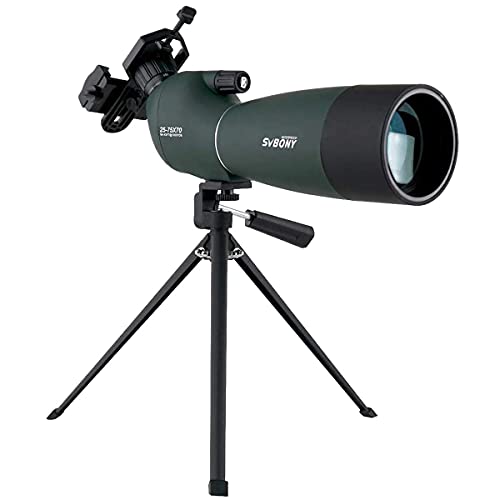
The Spotter Scope is an angled 25-75×70 optical instrument from SVBONY designed specifically for beginner bird watching and wildlife viewing out to 200 yards. It features a smaller 70mm objective lens, but pushes magnification up to 75x and includes a lightweight tripod alongside a phone adapter in the box. Shoppers who want an all-in-one starter package that already includes a support stand should consider this alternative.
HD Optics
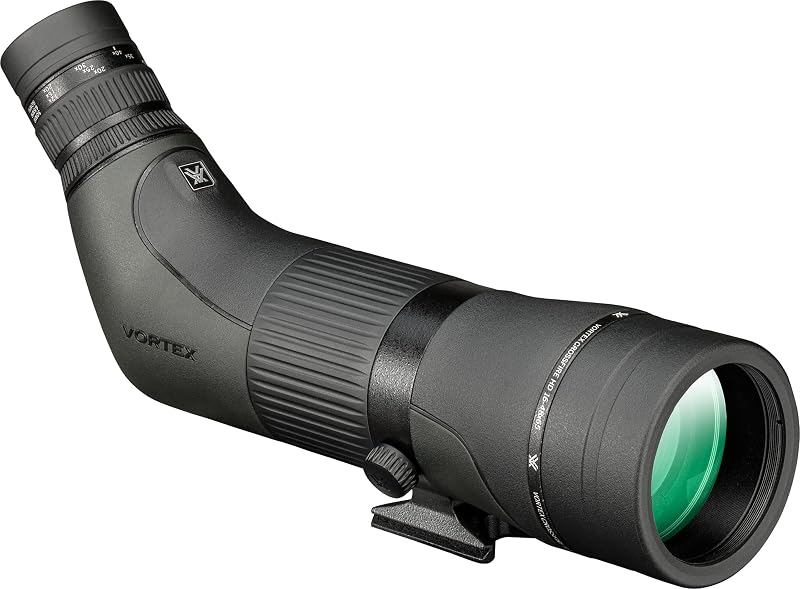
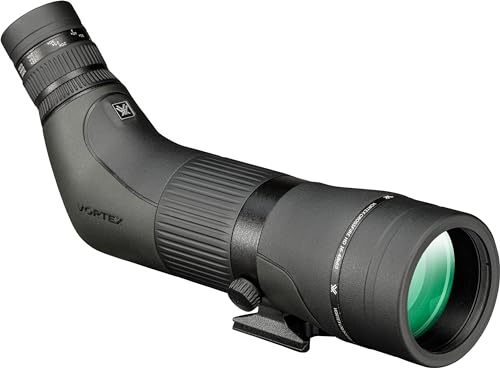
The HD Optics spotting scope, representing the Vortex Crossfire HD 16-48×65 angled model, incorporates high-definition glass, fully multi-coated lenses, and an Arca-Swiss compatible mounting foot. With a smaller 65mm objective lens, helical focus ring, and an unlimited unconditional warranty, it suits demanding outdoor users who prioritize premium optical correction and streamlined tripod mounting over raw objective lens size.
Waterproof Spotter Scope with Tripod

The Waterproof Spotter Scope with Tripod from Gosky delivers a 20-60×80 configuration featuring BAK4 high-definition prisms. Like the Ultima, it provides an 80mm light-gathering aperture, but packages a dedicated tabletop tripod, phone adapter, and carrying case together. Users who want the same 80mm light collection capabilities while securing a bundled tripod out of the box will appreciate this option.
Final Verdict
When asking if the Celestron Ultima 80 is worth it, the answer depends on your viewing environment and readiness to use a proper tripod. By pairing an 80mm multi-coated objective lens with a flexible 20-60x zoom eyepiece, this optic achieves impressive brightness and range clarity across daytime and dawn lighting conditions. The nitrogen-sealed chassis handles harsh field weather reliably, and the inclusion of both smartphone and DSLR digiscoping compatibility adds welcome functionality for nature photographers.
The main trade-off lies in physical footprint. At 3.6 pounds and over 19 inches long, the Celestron Ultima 20-60×80 requires deliberate pack space and a rigid tripod to deliver its full optical potential. For target shooters wanting clear bench checks and birders observing distant waterfowl from established blinds, it delivers proven optical capability and rugged practicality.
FAQ
Does the Celestron Ultima 80 come with a tripod?
The Celestron Ultima 80 includes an extended tripod mounting plate, soft carrying case, eyepiece covers, lens cloth, and smartphone adapter, but the listing does not include a tripod stand in the box. Users must supply their own photography tripod or bench clamp equipped with a standard mounting screw.
How do you attach a DSLR camera to the Celestron Ultima 80?
The zoom eyepiece features an integrated T-adapter thread beneath the rubber eyecup. To mount your DSLR camera, you need a brand-specific T-ring that attaches to your camera body’s lens mount, which then threads directly onto the eyepiece T-adapter.
Is the Celestron Ultima 80 completely waterproof?
Yes, the optical tube is filled with dry nitrogen gas and O-ring sealed. This construction prevents water intrusion during rainy weather and stops internal glass surfaces from fogging up during sudden temperature shifts.
What is the benefit of the 45-degree angled eyepiece?
An angled eyepiece allows comfortable viewing from lower tripod heights, making it easier to share the scope between observers of different heights. It also enables target shooters to glance into the eyepiece from a prone or seated bench position without contorting their neck.
Can the Celestron Ultima 80 be used for viewing stars and planets?
While designed primarily as a terrestrial spotting scope, the 80mm refractor aperture can view lunar craters, Jupiter’s moons, and bright star clusters at 20x to 60x magnification. However, it lacks astronomical star diagonals and tracking mounts designed specifically for deep-sky observation.


