As Amazon Associates, we earn from qualifying purchases. This means we may receive a small commission at no extra cost to you if you click through and make a purchase.
The Canon Rebel XT is an entry-level digital single-lens reflex camera centered on an 8.0-megapixel APS-C CMOS sensor and Canon’s DIGIC II image processor. Equipped with an optical viewfinder and native support for interchangeable glass, this older model represents an era when digital photography shifted firmly toward mainstream adoption. If you want a straightforward, distraction-free photographic tool to learn the fundamental exposure triangle without unnecessary digital gimmicks, this legacy camera still performs its core duties reliably, though its aging technology limits modern convenience and versatility.
This camera primarily suits photography students, thrifty hobbyists, and curious beginners who want tactile physical dials and interchangeable lens versatility without investing in expensive contemporary gear. It provides a tactile platform for practicing shutter timing, aperture control, and framing through a true optical path. Conversely, photographers who demand high-resolution files for heavy cropping, advanced low-light capability, video recording functionality, or seamless wireless connectivity should look elsewhere, as this legacy body does not provide modern multimedia features.


Canon Rebel XT at a Glance

| Attribute | Detail |
|---|---|
| Sensor Resolution | 8.0-megapixel CMOS sensor |
| Sensor Format | APS-C (3:2 aspect ratio) |
| Image Processor | Canon DIGIC II Image Processor |
| Lens Mount Compatibility | Canon EF and EF-S mount |
| Included Lens | Canon EF-S 18-55mm f/3.5-5.6 zoom lens |
| Continuous Shooting Speed | Up to 3 frames per second |
| Start-Up Time | 0.2 seconds |
| Display Monitor | 1.8-inch LCD screen |
| Expanded ISO Minimum | ISO 100 |
| Item Weight | 1.1 pounds (body) |
Sensor Performance and Image Quality
At the foundation of this camera sits an 8.0-megapixel CMOS imaging sensor utilizing a standard 3:2 aspect ratio. While 8.0 megapixels sounds conservative compared to modern mobile sensors and newer cameras, the physical Canon Rebel XT sensor size delivers genuine optical advantages. Because it uses an APS-C crop format, each individual pixel site remains relatively large, gathering daylight efficiently to render pleasing transitions between highlights and shadows. According to the manufacturer specifications, this 8.0-megapixel resolution produces enough visual clarity to yield sharp, photo-quality physical prints up to 16 x 22 inches in size.
Under good natural lighting, the Canon Rebel XT image quality exhibits natural color balance and pleasant skin tones, largely driven by the onboard DIGIC II image processor. The processor converts sensor readings directly into standard JPEG format files with dependable contrast. For newcomers learning composition, the output provides a realistic rendering of scenes without the excessive sharpening or artificial computational filtering often found in modern smartphones. If your photographic journey eventually demands higher pixel density, you might look at later generations such as the canon eos rebel t3, but for basic daylight photography, this sensor produces respectable stills.
In challenging low-light conditions, however, the sensor parameters reflect its era. The camera listing specifies an expanded ISO minimum of 100, providing clean, grain-free images in bright sunlight or controlled studio lighting. However, the listing does not specify expanded high-ISO maximum ceilings or advanced noise-reduction algorithms. Pushing an older imaging sensor beyond moderate sensitivity levels naturally introduces noticeable luminance and chroma noise, meaning users must rely on steady hands, wider lens apertures, or supplemental lighting when the sun dips below the horizon.
Lens System and Optical Versatility
The package comes standard with the Canon digital Rebel XT 18-55mm zoom lens, featuring a variable aperture range of f/3.5-5.6. This focal span covers moderate wide-angle framing at 18mm through short telephoto portrait perspective at 55mm, making it an adaptable everyday walkaround option. The listing specifies built-in optical image stabilization to help counter slight camera shake during handheld operation. While the maximum aperture of f/3.5 requires sufficient ambient light to achieve fast exposures, the included glass gives beginners immediate range for family gatherings, outdoor landscapes, and general documentary snapshots.
One of the strongest enduring benefits of this platform is its broad optical compatibility. The camera body accepts the complete catalog of Canon EOS Rebel XT lenses across both the EF and EF-S lens mounts. This dual-mount versatility allows photographers to attach everything from compact pancake primes and ultra-wide zooms to dedicated telephoto lenses originally designed for full-frame professional film and digital bodies. Investing in quality EF-mount glass remains a secure strategy because those lenses can transition seamlessly to newer bodies if you decide to upgrade later.
Having a mechanical zoom and manual focus ring on the lens barrel encourages disciplined photography habits. Beginners can experiment with focal length compression, selective depth of field, and framing nuances directly through glass elements rather than through digital zooming that degrades picture quality. Those interested in seeing how Canon expanded its beginner line with enhanced video or resolution features down the road can review models like the canon rebel t1i, but the core mechanical lens interaction starts right here.
Handling, Portability, and Build Quality
Tipping the scales at roughly 1.1 pounds for the camera body, this model ranks as a notably Canon Rebel XT lightweight DSLR. The manufacturer engineered the housing to shave down bulk compared to earlier, chunkier digital SLRs, delivering a compact chassis that tucks neatly into small messenger bags or backpacks. Its ergonomic right-hand grip provides adequate purchase for daily carry, allowing comfortable one-handed stabilization during long walks without causing excessive wrist fatigue.
The back of the camera houses an unmistakable marker of older digital engineering: a 1.8-inch LCD screen. By modern standards, this preview monitor is tiny, offering just enough real estate to verify basic composition, navigate menus, and inspect exposure histograms. It does not support touch controls or live preview framing. Photographers must compose their shots using the traditional optical viewfinder above the screen, a discipline that encourages proper hand-holding posture and total immersion in the frame.
Operating controls are primarily tactile, utilizing distinct mechanical buttons and a top command dial to alter settings. Rather than wading through nested digital menus on an expansive touch display, users switch operational modes using a physical mode dial. This physical workflow helps novice photographers build muscle memory, letting them feel the exact transitions between automated settings and creative exposure controls.
Shooting Speed and Automated Modes
Speed during daily shooting is anchored by Canon’s DIGIC II image processor, which achieves an ultra-responsive 0.2-second start-up time. Flipping the power switch brings the camera to life almost instantly, ensuring you rarely miss spontaneous moments while waiting for software interfaces to boot. In terms of continuous action, the camera captures sequential imagery at up to 3 frames per second, sufficient for tracking walking pets, playground candids, or casual outdoor sports scenes.
A closer look at the Canon Rebel XT DSLR camera specs reveals a shutter speed spectrum ranging from 0.333 seconds up to 1/200 of a second according to the listing details. While this operational shutter window imposes hard boundaries for high-speed sports freezes or extensive long-exposure nightscapes, it handles typical daytime scenarios well. The camera also incorporates six dedicated automated creative scene modes to help novices capture scenes without calculating exposure manually:
- Portrait mode, which configures settings for pleasing subject separation
- Landscape mode, tailored for maximum scene sharpness and depth
- Close-up mode, designed for capturing small subjects and plant life
- Sports mode, optimized for tracking motion at the fastest possible shutter duration
- Night Portrait mode, balancing flash illumination with ambient twilight
- Flash Off mode, preventing the built-in strobe from firing in sensitive environments
This array of modes makes the Canon Rebel XT for beginners an approachable platform that never overwhelms with technical jargon. Users can begin in complete automated comfort and progressively transition to semi-manual and full-manual shooting modes as their understanding of light, aperture, and shutter timing matures. For shooters considering how these entry-level systems evolved across subsequent decades, packages like the canon eos rebel t7 dslr camera double zoom lens kit with ef-s 18-55mm and ef 75-300mm lenses, 24.1 m show how modern versions expand shooting speeds and sensor counts.
Battery Life and Power Management
Power delivery for the camera comes via a dedicated rechargeable Lithium-ion battery pack, with a standalone wall charger included directly in the box. Dedicated battery chargers eliminate the need to tether the camera itself to an electrical outlet, allowing users to charge a spare battery while continuing to shoot with another.
One inherent advantage of a traditional DSLR architecture is its frugal power consumption. Because the camera relies on an optical mirror box and prism rather than an electronic viewfinder or an always-on LCD display, the Canon Rebel XT battery life benefits from minimal passive power drain. As long as you limit time spent reviewing pictures on the 1.8-inch rear screen, a single battery charge reliably covers several hundred shutter actuations during an afternoon photo walk. However, because older lithium-ion cells degrade naturally over time, picking up fresh, compatible replacement cells is a wise precaution for extended outings.
Canon Rebel XT Pros and Cons
Pros
- Lightweight 1.1-pound body easy to carry
- Fast 0.2-second start-up time
- Compatible with Canon EF and EF-S lenses
- Includes EF-S 18-55mm zoom lens
- Dedicated rechargeable Lithium-ion battery and charger
Cons
- Small 1.8-inch rear preview screen
- Modest 8.0-megapixel resolution limits heavy cropping
- No video recording capabilities
Check Canon Rebel XT on Amazon
Who Should Buy the Canon Rebel XT
Deciding whether this vintage camera fits your routine comes down to managing expectations regarding older digital imaging hardware. Answering whether is Canon Rebel XT worth it depends entirely on what you want to achieve with your photography.
Buy It If
- You want a lightweight, low-stakes DSLR to practice manual exposure fundamentals without distractions.
- You already own a collection of Canon EF or EF-S lenses and want an inexpensive backup body for daylight use.
- You prefer viewing scenes through a true glass optical viewfinder rather than an electronic screen.
- You intend to make moderate 16 x 22-inch prints or post uncropped photos online without spending heavily.
Skip It If
- You need to record video clips, vlogs, or high-definition interviews, as this camera shoots stills only.
- You frequently shoot in low light or indoor venues without flash assistance.
- You require a large, modern LCD preview screen or wireless image transfer directly to your phone.
Canon Rebel XT Alternatives Worth a Look
If the legacy features or limited resolution of an older DSLR do not align with your creative workflow, several alternatives from different categories merit consideration.
8K Digital Cameras for Photography
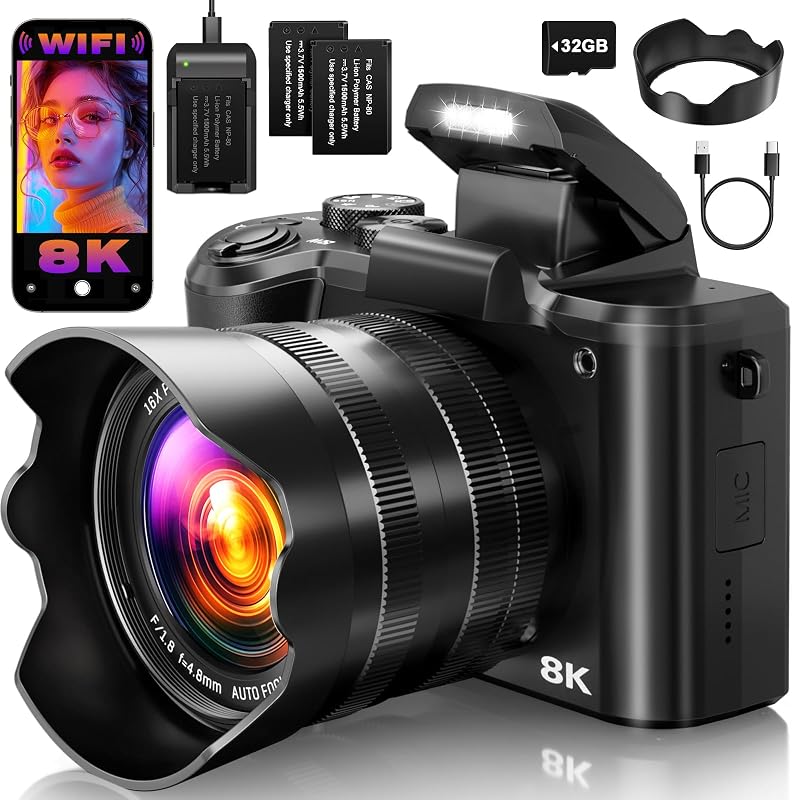
The 8K Digital Cameras for Photography is a modern multimedia compact camera featuring an 88MP sensor claim, 8K video capture, dual lenses, and built-in Wi-Fi connectivity. It includes two batteries, a charging stand, a touch screen, and a lens hood tailored for modern content creators. Pick this option over the Rebel XT if your priority is creating video content for YouTube, recording vlogs, and transferring files wirelessly to social media platforms without dealing with manual lens mounts.
1080p Full HD Video

The 1080p Full HD Video bridge camera, known as the KODAK PIXPRO AZ528, pairs a 16-megapixel sensor with a massive 52x optical zoom lens and optical image stabilization. It features full 1080p video recording, a 3-inch LCD display, 6fps burst shooting, and built-in Wi-Fi. Shooters who want immense zoom flexibility for wildlife and travel without buying and swapping multiple separate lenses will appreciate this bridge camera far more than an older interchangeable-lens DSLR body.
Nikon D7500 20.9MP DSLR Camera

The Nikon D7500 20.9MP DSLR Camera represents a much more powerful enthusiast-grade DSLR, bundling a 20.9-megapixel sensor with an AF-S DX NIKKOR 18-140mm f/3.5-5.6G ED VR zoom lens. This camera provides significantly higher resolving power, superior low-light sensitivity, modern continuous autofocus, and an extended zoom range. Anyone with a higher budget who wants a robust, modern DSLR platform capable of handling serious action, sports, and low-light assignments should choose the Nikon over an aging entry-level body.
Final Verdict
The Canon Rebel XT stands as a functional, historically significant camera that can still teach aspiring photographers the timeless fundamentals of exposure, depth of field, and framing. Its 8.0-megapixel sensor produces clean, attractive daylight images, and its compatibility with the extensive Canon EF and EF-S lens catalog provides a versatile upgrade pathway for optical experiments. Its lightweight body and instantaneous 0.2-second startup make it a charming, tactile companion for casual weekend photography.
At the same time, buyers must accept the physical limitations of an older generation. The tiny 1.8-inch rear screen, lack of video recording, basic JPEG output constraints, and narrow shutter speed range mean it cannot compete with contemporary mirrorless or bridge systems in convenience or high-ISO flexibility. If you approach it with clear expectations as a dedicated, low-cost educational tool for still photography, this veteran DSLR remains a practical and engaging instrument.
FAQ
What lenses can I use with the Canon Rebel XT?
The camera features native mount compatibility with both Canon EF and Canon EF-S lenses. This broad support allows you to attach compact entry-level zooms, wide-angle lenses, and professional-grade telephoto glass across the entire Canon SLR optical ecosystem.
Does the Canon Rebel XT shoot video?
No, the Canon Rebel XT does not shoot video. It was designed strictly as a still-image digital SLR camera. If you require video recording capabilities for vlogging or home movies, you should look toward modern bridge cameras, mirrorless models, or later-generation DSLRs.
What type of memory card and battery does this camera use?
The camera runs on a rechargeable Lithium-ion battery pack, which comes with a dedicated standalone wall charger in the box. The listing does not specify the exact memory card format or storage capacity limits supported by the camera body.
Can I transfer photos wirelessly from the Canon Rebel XT to a smartphone?
No, this model does not have integrated Wi-Fi, Bluetooth, or wireless capabilities. To view or edit your photos on a computer or phone, you must remove the memory card and read it with an external card reader or connect the camera using an appropriate cable.
How does the 8.0-megapixel resolution hold up for printing?
According to the manufacturer specifications, the 8.0-megapixel CMOS sensor provides sufficient optical detail to produce photo-quality prints up to 16 x 22 inches in size. For standard album prints, framing, and online sharing, 8.0 megapixels delivers ample clarity when properly exposed.